In this chapter:
- Be a thinking driver
- Be fit to drive
- Make good decisions
-Keep learning
-Plan your driving
-Predict the scene
-Think for yourself - Take responsibility
-You, the driver
-Your passengers
-Other road users
Driving gives you the freedom to get around — but it also involves certain risks. When you’re in the driver’s seat, you need to focus on the task of driving, make good driving decisions and look out for the safety of others. This chapter will help you think about the choices you can make as a driver to help keep yourself and others safe.
Be a thinking driver
You in the driver’s seat – part 1 – You’ve had your driver’s license for eight months now, and you’ve become a pretty good driver. This morning you need to take the car in by 9 a.m. for an oil change, and then pick up a friend who lives in the country. You both need to be back in town by noon. You’re not sure if you have enough time. As you were leaving the house, you had an argument with your roommate. Now you’re feeling angry and pressed for time.
You have to make many choices as a driver. You have to choose the best route to get to your destination, and decide how much time you need to get there. You have to make decisions about the safety of your passengers, especially if you’re caught in a dangerous situation. You have to decide how much risk to take. And you need to make sure you can focus on driving before you get behind the wheel.
A thinking driver puts safety first. Smart driving is about making choices that help keep you and others safe. The choices you make determine what kind of driver you will be.
A thinking driver chooses to:
- Be fit to drive
- Make good decisions
- Take responsibility
Be fit to drive
You in the driver’s seat – part 2 – It usually takes you 25 minutes to drive across town to the garage. When you leave home, it’s 8:45 a.m. To make matters worse, the traffic is heavy, slowing you down even more. You find yourself swearing under your breath. And you are getting angrier about what your roommate said. You feel so frustrated that you notice you’re having trouble concentrating on your driving.
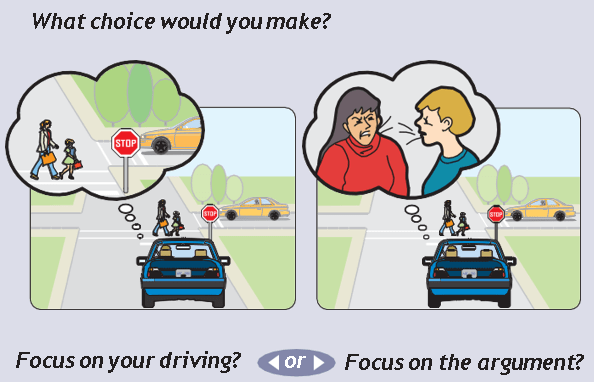
You need to be in good shape to drive — alert and able to focus. Feeling angry or frustrated can cloud your judgment and slow down your reaction time.
You also need to avoid driving if you have an injury or illness that makes it hard for you to think clearly or quickly. Never drive when you are overtired. Even if you don’t fall asleep, it’s hard to respond quickly when you feel tired.
A driver who is impaired by drugs or alcohol is one of the worst driving hazards. This is because drugs and alcohol cause mental confusion and slow reaction times. Impaired drivers are much more likely to cause crashes that lead to serious injury or death.
Make good decisions
You have to make quick and accurate decisions when you drive. Will you be tempted to run a yellow light because you are in a hurry? Will you take your eyes off the road, to send a text message while driving? Will you take a chance and drive after you’ve been drinking? Being a safe driver requires learning, planning, predicting and thinking for yourself.
Keep learning
You in the driver’s seat – part 3 – As you’re driving, you spot a playground sign. You know you have to slow down, but you can’t remember when the playground speed limits are in effect. The sign doesn’t say. Is the playground speed limit in effect today as you are driving through the playground? You can’t remember for certain.
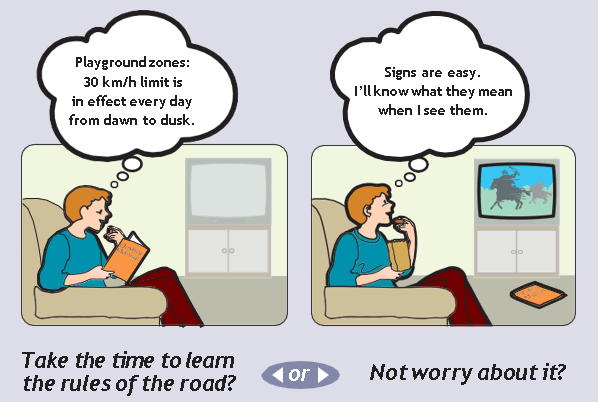
You’re reading this guide to learn about driving. This is the first step in becoming a good driver. You’ll also spend time practicing your driving skills, and may even take professional driver training to enhance your learning.
But it’s important to keep on learning even after you have your license. It will take time for you to gain driving experience.
You’ll continually learn how to handle new driving situations and conditions and will need to keep informed about changing vehicle technology. You’ll also need to learn about changes that are made to the rules and regulations of the road.
Your skills as a driver will also change. As you gain experience, your skills will increase, but you may become overconfident and too automatic in your driving. Health problems could affect your ability to drive safely. Throughout your driving years, it’s important for you to be honest with yourself about your skills and your readiness to drive.
Remember that driver education courses are available for beginning and experienced drivers. Choose one that is right for you (see chapter 9 — your license).
Plan your driving
You in the driver’s seat – part 4 – Now you’re definitely going to be late. You start worrying about missing your appointment for the oil change and being late to pick up your friend. You think about going faster.
What choice would you make?
Take a chance and speed? or Keep to the speed limit and plan your time better in the future?
Part of good driving is planning ahead. This means planning enough time to get to your destination and knowing the shortest and safest route. It may mean equipping your vehicle for winter driving conditions. Can you think of other driving plans you may need to make?
Predict the scene
You in the driver’s seat – part 5 – You’re driving too fast, and you forget to watch the traffic lights at the next intersection. Suddenly you find yourself coming up to the intersection and the light has already turned yellow.
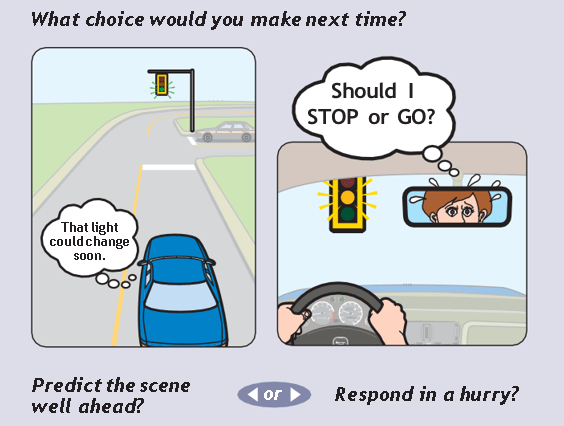
Think about: What would you do if a child suddenly ran in front of your car? Could you stop in time?
As a driver, you need to be aware of cues in the driving environment: signs, signals and road markings. Paying attention to these cues helps you predict what could happen so you’re prepared to respond.
It’s also important to predict what other road users — pedestrians, other drivers, motorcycle riders and cyclists — might do. You can predict what might happen by carefully observing the driving scene around you. Being aware of what others around you are doing will help you to make better driving choices.
Think for yourself
You in the driver’s seat – part 6 – There’s one more intersection before the garage. You have to turn left and there is no advance green arrow. You’ve sat through this light at other times because the traffic is always heavy here. You become more frustrated as you wait to turn. Cars are lined up behind you with their left-turn signals flashing. The driver behind is starting to honk at you. You see a space but hesitate because you’re not sure if the gap is big enough for you to make your turn.
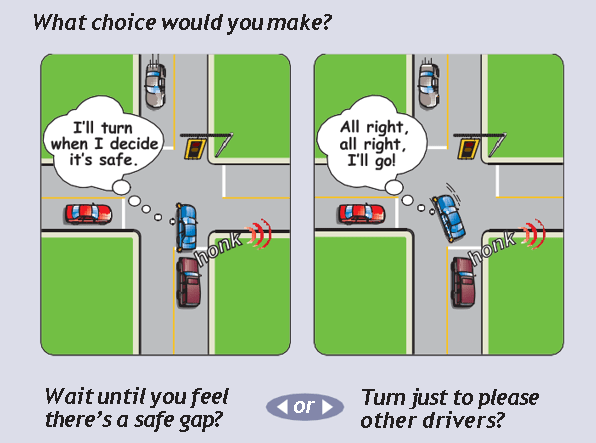
Another part of making good choices is knowing yourself and understanding the influences that shape your driving.
Think about: What will you do when people honk their horn at you? What will you do if someone is tailgating you? Will you be tempted to speed just because other drivers around you are going faster then the speed limit?
Influences from other drivers — at times you will feel pressure from other drivers, and you’ll have to decide what to do. Will you base your driving decisions on safety or will you allow other drivers to pressure you into doing something that might be unsafe?
Influences from the media — think of the images of cars and driving in ads and movies. Do these images generally promote safe driving?
Influences from peers — other people can influence your driving. Your friends may pressure you to drive faster or to race away from stoplights. You may think it will impress them if you turn up the volume on your car stereo system.
Take responsibility
Becoming licensed to drive means you are taking on new responsibilities to yourself, your passengers and other road users.
You, the driver
You in the driver’s seat – part 7 – You’ve been to the garage and now you’re on your way to your friend’s place. You’re relieved because it seems you have enough time after all. Then you notice a large truck ahead that’s going pretty slowly. You hate passing trucks, especially on a narrow road like this one.
What choice would you make?
Slow down and stay behind the truck? or Try to pass the truck even though you don’t feel comfortable doing so?
It’s important to know and accept the limits of your driving abilities and your vehicle. You also need to take responsibility for developing your driving skills and ensuring your own safety.
Your passengers
You in the driver’s seat – part 8 – You greet your friend as he climbs into the car. You’re happy to see him, but you’re surprised when he doesn’t put on his seatbelt.
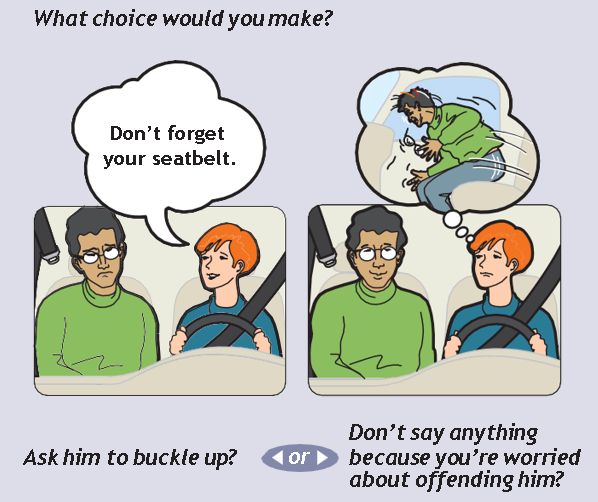
You’re responsible for the safety of your passengers. Make sure they are all wearing seatbelts. Children need special care and attention. Are they properly restrained with the right safety devices for their size? Remember, when you speed or take a chance at an intersection, you are putting your passengers as well as yourself in danger.
Crash fact: One out of every four people killed in car crashes were not wearing a seatbelt.
Smoking
It’s illegal to smoke in any motor vehicle when there are any passengers under 16 years old.
Children travelling in cars are especially vulnerable to second-hand smoke. These harmful effects are heightened in small enclosed places such as motor vehicles and can have immediate and serious, long- lasting health consequences.
Other road users
You in the driver’s seat – part 9 – You and your friend are almost back in town. As you approach an intersection, you notice a skateboarder heading along the sidewalk but near to a crosswalk.
What choice would you make?
Be cautious and slow down? or Take a chance and keep going?
You share the roadway with cars, trucks, trains, motorcyclists and cyclists. Pedestrians need to cross your driving path. Ambulances need you to move to the side of the road so they can respond to life‑threatening situations. You never know when an animal may dart into your path.
Use the information in this guide and in Tuning up for drivers to help you make responsible driving choices — choices that can help prevent many dangerous situations.
 Apperture Labs