In this chapter:
- Learning to drive
- The Graduated Licensing Program
- Getting your learner’s license (Class 7L)
- Getting your novice license (Class 7)
- Getting your Class 5 license
- Taking a road test
- Choosing a driving school
- New B.C. residents
- Re-examinations
- Keeping your license up-to-date
- Summary of license classes
- Responsibilities and penalties
- Driving in other locations
- Being a life-long learner
This chapter explains how to get your B.C. driver’s license. It also explains the penalties if you break the driving rules and regulations. Read this chapter to learn about the responsibilities involved in getting and keeping your license.
Learning to drive
To learn to drive, you’ll need someone to teach you and supervise your driving practice.
This is why one of the restrictions on a learner’s license, as you’ll find later in this chapter, is the requirement to have a qualified supervisor in the vehicle with you.
Choosing your supervisor
You need to choose a supervisor who will be serious about helping you become a skilled, safe driver.
- Is this person ready to commit the time needed to practice?
- Is this person a skilled, experienced driver? Your supervisor must have a valid Class 5 license and meet supervisor age requirements shown later in this chapter.
- Will this person provide a good example of safe driving? Can they be relied on not to drive while impaired by alcohol or drugs, speed or take other risks on the road?
- Is this person able to get information and ideas across clearly?
- Do they have the patience to guide you effectively?
Professional training
Professional training can help you learn faster and avoid developing bad driving habits.
You’ll find information to help you choose a driving school later in this chapter.
The Graduated Licensing Program
B.C.’s Graduated Licensing Program (GLP) is designed to reduce the number of crashes among new drivers of any age. Under GLP, new drivers gain experience gradually, under conditions that expose them to less risk. To get your full- privilege Class 5 license, you’ll go through several steps.
GLP allows you to take on more driving responsibilities as you gain experience.

Getting your learner’s license (Class 7L)
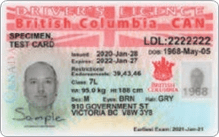
The first license new drivers receive is a learner’s license. You must be at least 16 years old to apply for your learner’s license. You’ll also need to pass the knowledge test and pass a vision and medical screening. This licence is valid for two years. You will need to re-take the knowledge test if you want to renew it.
To apply, go to your nearest driver licensing office. If you pass the tests, you’ll be issued a Class 7L license, an L (Learner) sign and a copy of Tuning up for drivers.
When you go to the driver licensing office
When you go to the driver licensing office to get your learner’s license, you should take:
- Primary and secondary identification — see the Identification (ID) section on the inside back cover for more information.
- A custodial parent or legal guardian if you’re under 19. (You may be able to apply to bypass this requirement if you are not living with a parent or legal guardian.)
- The fees for the knowledge test and Class 7L license.
- Glasses or contact lenses if you need them to drive.
The knowledge test
The knowledge test has 50 multiple-choice questions that measure how well you know the information in this guide. The test is taken at any of our driver licensing locations and can usually be done at a computer terminal. The test is not an open book test, and cellphones and electronic devices aren’t allowed while taking it. In some parts of the province, it’s only offered as a written test. The test is available in English, French, Arabic, Cantonese, Croatian, Farsi, Mandarin, Punjabi, Russian, Spanish and Vietnamese.
Make sure you arrive at the office at least one hour before closing to take your knowledge test. If you have a disability that will make it difficult for you to take the test, phone the licensing office ahead of time to let them know.
Vision and medical screening
Your vision will be checked to make sure you can see enough to drive safely. You’ll be tested for color vision, depth perception, field of vision, diplopia (double vision) and sharpness of vision. You may need to have further vision testing by an optometrist or ophthalmologist if you don’t pass the vision screening. If you need to wear glasses or contact lenses when you drive, this restriction will be shown on your license.
You will also be asked about your medical condition. If there is any question about your physical ability to drive, or if you have a progressive medical condition, you may need to go to a doctor for a medical examination. Your doctor’s report will be sent to RoadSafetyBC. The final decision whether to issue you a driver’s license will be made there.
Learner stage driving restrictions
While you are driving with a learner’s license, you must follow these restrictions:
- Qualified supervisor — a qualified supervisor must sit beside you when you are driving. Your supervisor must be 25 or older and hold a valid Class 1, 2, 3, 4 or 5 licence.
- Zero blood alcohol content — you must not drive after consuming any amount of alcohol.
- Zero blood drug concentration — you must not operate a motor vehicle while having the presence of certain drugs, including cannabis (THC), in your body.
- No hand-held or hands-free electronic devices — you must not use hand-held or hands-free communication devices (for example, cellphones, music or portable gaming devices, GPS systems) while driving.
- L sign — you must display the official L (Learner) sign in your back windshield or on the rear of your vehicle when you are driving. It must be visible to drivers behind you. We’ll give you this sign when you get your learner’s licence.
- Passenger limit — only two passengers may be in the vehicle with you: your supervisor and one additional passenger.
- Restricted driving hours — you may drive only between 5 a.m. and midnight.
Driving tip: Free replacement L signs are available at any driver licensing office.
Getting your novice license (Class 7)
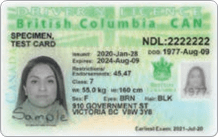
To get your novice license, you must pass the Class 7 road test. This test assesses whether you are competent to drive on your own. By the time you take the Class 7 road test, you will have had your learner’s license for at least one year. You will have spent many hours practicing with a supervisor. You’ll be given a driver experience log when you get your learner’s license — use it to register your practice hours. You should get at least 60 hours of practice. This helps develop the skills and experience you need to pass the road test and build the foundation for life- long safe driving.
The Class 7 road test
The Class 7 road test is conducted by a driver examiner who marks your ability to drive in a safe, smooth and controlled manner. The road test takes about 45 minutes. You must provide a safe vehicle to use for your road test. Pets or passengers, other than the examiner or other authorized people, are not allowed during your road test. You can prepare for the test by reviewing this guide and using the Tuning up for drivers guide to help you practice.
Here are some things you can expect during your road test.
Before you start — the examiner checks that you know where the controls are, use your seatbelt, and adjust the seat, mirrors and head restraints for maximum safety, see chapter 2, Pre-trip check.
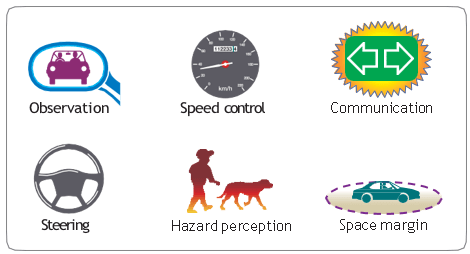
Using your skills — the Class 7 road test assesses your ability to perform the see-think-do skills: observation, hazard perception, speed control, space margins, steering and communication. For more information about these skills, see chapter 5, see-think-do.
Doing the maneuvers — your Class 7 road test may include:
- Intersection maneuvers (driving through, turning right, turning left)
- Backing up
- Entering traffic
- Pulling over and stopping on the side of the road
- Changing lanes
- Parking on a hill
- Starting on a hill
- Angle parking
- Parallel parking
- Stall parking (driving forward and backing up)
- Two- and three-point turns
- Merging on and off a highway
- General driving (for example, driving straight, driving on hills and curves)
Getting feedback — at the end of the test, the examiner will discuss your results with you. Make sure you ask questions if you don’t understand something. Whether you have passed or failed, you can learn how to improve your driving. You may take the test again in 14 days if you don’t pass.
Novice stage driving restrictions
When you are driving with a novice license, you may drive unsupervised with the following restrictions:
- Zero blood alcohol content — you must not drive after consuming any amount of alcohol.
- Zero blood drug concentration — you must not operate a motor vehicle while having the presence of certain drugs, including cannabis (THC), in your body.
- No hand-held or hands-free electronic devices — you must not use hand-held or hands-free communication devices (for example, cellphones, music or portable gaming devices, GPS systems) while driving.
- N sign — you must display the official N (Novice) sign in your back windshield or on the rear of your vehicle when driving. It must be visible to drivers behind you. You’ll receive this sign when you get your Class 7 licence.
- Passenger limit — only one passenger may be in the vehicle with you unless:
- The passengers are your immediate family (“Immediate Family” means your parents, children, spouse, brothers, sisters and grandparents, including step and foster relationships), or
- If you are accompanied by a supervisor sitting beside you who is age 25 or older holding a valid Class 1, 2, 3, 4 or 5 license, or
- If you are taking driver training and are supervised by a licensed driver training instructor.
Driving tip: Free replacement N signs are available at any driver licensing office.
Graduated Licensing Program (GLP) penalties
When you’re a new driver, your record is closely monitored by the Superintendent of Motor Vehicles. If you get a traffic violation ticket or other driving offence, you could receive a warning letter, probation or prohibition from driving. In addition to the regular driving penalties, there are extra penalties for GLP drivers.
- You may be fined and have penalty points recorded on your driving record if you break any one of the learner or novice stage driving restrictions.
- You may also be fined and have penalty points recorded on your driving record for speeding or other traffic violations.
- More points or more serious offences could result in a prohibition from driving for one month to a year or more.
- If you violate the blood alcohol restriction, or operate a vehicle while under the influence of drugs, you may receive an immediate roadside suspension or prohibition. These will be recorded on your driving record and you may face a further prohibition as a result.
- If you receive a driving prohibition in your learner stage, your learner stage will be extended, because you will not accumulate any more time toward graduating to the novice stage until you have served your prohibition and have your licence reinstated.
- If you receive a driving prohibition in your novice stage, you’ll lose any time you have accumulated toward graduating out of GLP. When your license has been reinstated following the prohibition, you will have to accumulate an additional 24 consecutive prohibition-free months to be eligible to graduate from GLP.
Getting your Class 5 license
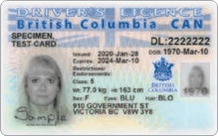
After you have held your novice license for at least 24 consecutive months without a driving prohibition, you may take the Class 5 road test. Passing this test means you exit the Graduated Licensing Program and get your full-privilege driver’s license.
The Class 5 road test
The Class 5 road test requires a higher level of driving skill than the Class 7 road test. It gives you the chance to show that you are now a safe, experienced driver with excellent vehicle control skills. The road test takes about one hour. You must provide a safe vehicle to use for your road test. Pets or passengers, other than the examiner or other authorized people, are not permitted during your road test.
Using your skills — the Class 5 test includes the same skills as the Class 7 test: observation, hazard perception, speed control, space margins, steering and communication. At some points during the test, you’ll be asked to identify the hazards you see while you are driving. You will need to look ahead and use your mirrors to identify all the hazards beside, behind and in front of you.
Driver examiners will mark you on the see-think-do skills you read about in this guide.
Doing the manoeuvres — your Class 5 road test may include:
- Intersection maneuvers (driving through, right turn, left turn)
- Lane changes
- Entering and exiting a highway or freeway
- Three-point turns
- Pulling over and stopping
- Reverse stall parking
- General driving (for example, driving straight, driving on hills and curves)
- Hill park
- Parallel park
Getting feedback — like the Class 7 road test, you have an opportunity to discuss your results with the examiner when you have completed the Class 5 test. Listen and learn. Improving the safety of your driving is important. You may take the test again after seven days if you don’t pass it the first time. You’ll have to wait 14 days to take the test a third or subsequent time.
Strategies: getting ready for road tests – Here are some suggestions to help you get ready for your Class 7 and Class 5 road tests:
- Use Tuning up for drivers. It’s designed to help you prepare for your road tests. It gives step-by-step instructions for each of the maneuvers. If you are preparing for the Class 7 road test, work through the Tuning up lessons with your supervisor. You don’t require a supervisor when preparing for the Class 5 road test, but it’s still a good idea to work with a friend or family member.
- Practice hazard perception by naming the hazards out loud. Ask your supervisor to identify any hazards you missed.
- For both the road tests you need to know the signs, signals, rules and regulations. Review the previous chapters of this guide to make sure you are familiar with them.
- Think about taking driving lessons. For more information, see the Choosing a driving school section later in this chapter.
- Take time to get plenty of practice. You should plan on getting at least 60 hours of practice to prepare for your Class 7 road test.
Driving tip: If you aren’t familiar with English- language driving terms, here are some words to help you practice hazard perception:
- Car
- Bus
- Too close
- Pedestrian
- Bump
- Can’t see
- Bicyclist
- Children
- Animal
- Construction
- Truck
- Wet road
- Curve
- Warning sign
- Dangerous driver
- Rough pavement
- Turning right
- Hill
- Pulling out
- Ice
- Blind spot
- Motorcyclist
- Snow
- Turning left
If you see a hazard you don’t know the English word for, you may point at it.
Taking a road test
Booking road tests
For all driver licensing inquiries including commercial road test bookings call:
- In Metro Vancouver: 604-982-2250
- Greater Victoria: 250-978-8300
- Toll-free throughout B.C.: 1-800-950-1498
When you come for your road test, bring with you:
- Primary and secondary identification — see the Identification (ID) section on the inside back cover for more information.
- A safe vehicle.
- Valid vehicle registration, license and insurance papers.
- Your current license.
- The fees for the road test and photo license.
- Glasses or contact lenses if you require them to drive.
Driving tip: You’ll be charged a fee if you don’t show up for your scheduled road test and don’t provide either 48 hours notice or a valid reason for missing the appointment.
Strategies: ensuring your vehicle is safe – For your road test, you need to provide a safe, reliable vehicle that meets legal requirements. Also, make sure you are familiar with the vehicle.
If your vehicle is unsafe or does not meet requirements, your road test may be cancelled and you will have to reschedule your appointment to a later date. Here is a list of some of the typical reasons that a road test may be cancelled:
- Brake lights, signal lights or headlights not working, or badly cracked or missing lenses — these lights help you to be seen in traffic, so they need to function properly.
- Cracked windshield or illegally tinted windows — it’s important that you and the driver examiner be able to see out the windshield, so a badly cracked windshield just won’t do. Tinted windows may reduce your ability to see other road users — and their ability to make eye contact with you. B.C. law only allows certain windows and only certain portions of the windshield to be tinted and limits the degree of tinting — no aftermarket tinting on the windshield or front side windows is allowed.
- Horn not working — check to see that it works.
- Vehicle not properly licensed or insured — B.C.-licensed vehicles must display a valid license plate and insurance decal. Remember that passenger cars must display two license plates — one mounted on the front and one on the vehicle. Make sure the insurance permits you to drive the vehicle (if you are renting a vehicle, the rental agreement must name you as a driver).
- Seatbelts not working or frayed — for your road test, make sure both the driver and passenger seatbelts work properly, and that the seating area is clean.
- Unsafe tires — make sure the tires are in good condition, have plenty of tread and are properly inflated. Temporary spare tires may not be used on a road test (they are intended only to get the vehicle to the nearest repair shop at reduced speeds so that the proper tire can be repaired or replaced).
- Airbag or Brake and ABS warning lights stay on — if these lights stay on, they may indicate a serious safety problem.
- Driver’s side and passenger side doors or windows not operating — for safety reasons both the driver’s side and passenger side doors must open and close properly, from both the inside and the outside. There are times on the road test that you or the driver examiner may need to open a window, so they need to function properly.
- Faulty exhaust — a leaking exhaust pipe or missing muffler is unsafe and dangerous — it may cause carbon monoxide poisoning. Excessively loud mufflers are illegal and interfere with conducting your road test.
- Unsafe or illegal vehicle modifications — some modifications are illegal and unsafe:
- Aaccessory “racing” steering wheels — these wheels are not equipped with airbags, and installing one in a 1998 or later car in place of an airbag- equipped steering wheel not only deprives the driver of airbag protection but can potentially disable all the vehicle’s airbags.
- Excessively raised or lowered vehicles — excessively lowering or raising a vehicle can affect steering and braking control in an emergency.
- Fuel gauge on “empty” — nobody likes to run out of gas or electricity, and you certainly don’t want this to happen on your road test.
Make sure you know how to use the heater and defroster and windshield wipers — you may need to use them to keep the windows clear while on your road test.
Also, remember to turn off your cellphone and car radio — you want to concentrate on your driving during the road test.
As well, make sure your vehicle is clean and tidy inside, and that lights and windows are clean.
Loose objects inside can be dangerous if you have to stop suddenly, so these should be removed or stored in the trunk.
Warning! Make sure the vehicle insurance covers you to drive the vehicle. For example, some insurance categories limit vehicle use to drivers with more than 10 years driving experience. It’s your responsibility to ensure that your vehicle is properly insured for use on your road test. Check with your local Auto plan broker if you have any questions about your coverage. If you’re planning to rent a vehicle, check with the rental agency to find out if they allow you to drive their vehicle and use it for your road test.
Choosing a driving school
You can prepare for the Class 7 or Class 5 road test by taking lessons from a professional driving instructor. There are good reasons to take driving lessons. Learning to drive skillfully and safely is not easy. Qualified instructors are often more effective than family members or friends at training new drivers.
If you are preparing for the Class 5 road test, a professional driving instructor can help you brush up on your skills.
When choosing a driving school, here are some questions you may want to ask:
- Is your school licensed? Are the instructors licensed?
- Can I see a written policy of your rates (including all charges), hours, number of people in a training vehicle and refunds? The school must provide this to you.
- Can I see a course outline?
- Do you use various methods of instruction (for example, one-on-one, classroom groups, etc.)?
- How experienced are your instructors? How much recent training have they had?
- How do you involve parents/guardians or adult supervisors in new-drivers education?
- How do you keep your practice cars safe and well maintained?
- Do you have a vehicle with standard transmission if I want to learn how to drive one?
- What do I need to know before starting your course (i.e., type of clothing, equipment, gear, etc.)?
Finally, ask other people: Have you heard good things about the school?
New B.C. residents
You may use your valid driver’s licence from another province, state or country for the first 90 days you live in B.C. After this time, you must have a B.C. driver’s licence to drive in B.C. You’ll need to turn in your old license and pass the applicable driver tests.
You’ll need to provide proof that you are licensed in another jurisdiction. In most cases, your previous driver’s license is enough. The class of license you held, combined with your driving experience, will be used to decide which class of B.C. license you will be assigned and what tests you may need to take.
It’s best to apply for your B.C. driver’s license well within 90 days of moving to British Columbia. New residents who hold a Canadian, American, Australian, Austrian, Dutch, French, German, Japanese, New Zealand, South Korean, Swiss or United Kingdom license can usually complete their license exchange the same day. For more information, check with a driver licensing office.
Driving tip: If you want to apply for a full-privilege B.C. driver’s license (Class 1, 2, 3, 4, 5 or 6), you need to prove you have held a license for at least two years and present this proof when you first apply for your B.C. license. Otherwise, you will be placed in B.C.’s Graduated Licensing Program. If you hold only an out-of-province learner’s license, you are eligible to apply for a Class 7 or 8 GLP learner’s license.
Re-examinations
Each year in B.C., almost 3,000 people are notified by RoadSafetyBC to come in for a re-examination. The most common reasons for a re-examination are:
- A driver’s medical report indicating a health problem.
- A police report indicating that the driver was unsure of how to handle a common driving situation.
If the re-examination is for vision screening and a signs and signals test only, you don’t need an appointment. If it also includes a road test, you’ll need to call your local driver licensing office within 30 days of receiving your notice to book a road test appointment. When you go for your test, you need to take primary and secondary identification (see the Identification (ID) section on the inside back cover) and glasses or contact lenses if you need them for driving. It’s also a good idea to take a licensed driver with you in case you don’t pass the test.
Prepare for your re-examination by reviewing this guide. Consider taking a refresher course from a driving school to help you brush up your skills. You may also want to get a copy of Tuning up for drivers from the driver licensing office. This will help you practise your driving.
Keeping your licence up-to-date
| Situation | What to do |
| If you have changed your address. | You’re required to update the address on your licence within 10 days of moving. There are three ways to change the address on your driver’s licence: 1) Use the provincial government’s Multiple Address Change web service at www.addresschange.gov.bc.ca/ 2) Go to any driver licensing office. There is no fee to change your address. Note: If you have an EDL, you’ll need to book an in-person appointment at a driver licensing office to change your address. A fee is charged for a replacement EDL showing your new address. |
| Your licence is lost or damaged. You have changed your name. Your licence is about to expire. | Go to a driver licensing office. To get your new licence, you must settle all fines and debts owed to the B.C. government. You will need the proper identification (see the Identification (ID) section on the inside back cover), your old licence (unless it is lost), and money for the licence fee. If you have changed your name, you require legal proof of your change of name (for example, a Marriage Certificate or Change of Name Certificate). A new photograph may be taken. |
| Your licence has expired. | You must settle all fines and debts owed to the B.C. government, and take your expired licence. Make sure you have the proper identification (see the Identification (ID) section on the inside back cover) and money for the licence fee. If your licence expired more than three years ago, you will need to pass a vision screening, road signs test and road test. |
Summary of licence classes
| Class | Typical vehicles | Minimum age |
Class 1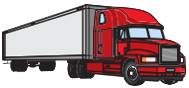 | Semi-trailer trucks and all other motor vehicles or combinations of vehicles except motorcycles. | 19 |
Class 2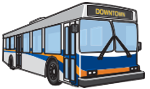 | Buses, including school buses, special activity buses and special vehicles. Trailers or towed vehicles may not exceed 4,600 kg except if the bus and trailers or towed vehicles do not have air brakes. Any motor vehicle or combination of vehicles in Class 4. | 19 |
Class 3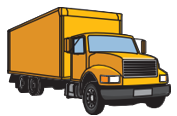 | Trucks with more than two axles, such as dump trucks and large tow trucks, but not including a bus that is being used to transport passengers. Trailers may not exceed 4,600 kg except if the truck and trailers do not have air brakes. A tow car towing a vehicle of any weight. A mobile truck crane. Any motor vehicle or combination of vehicles in Class 5 | 18 |
Class 4 (unrestricted)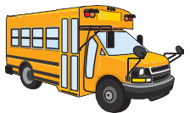 | Buses with a maximum seating capacity of 25 persons (including the driver), including school buses and special activity buses and special vehicles used to transport people with disabilities. Taxis and limousines. Ambulances. Any motor vehicle or combination of vehicles in Class 5 | 19 |
Class 4 (restricted) 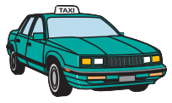 | Taxis and limousines. Ambulances. Special vehicles with a seating capacity of not more than 10 persons (including the driver) used to transport people with disabilities. Any motor vehicle or combination of vehicles in Class 5 | 19 |
Class 5 or 7*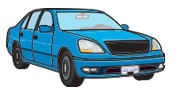 | Two-axle vehicles including cars, vans, trucks and tow trucks. Trailers or towed vehicles may not exceed 4,600 kg. Motorhomes (including those with more than two axles). Limited-speed motorcycles** and all-terrain vehicles (ATVs). Passenger vehicles used as school buses with seating capacity of not more than 10 persons (including the driver). Construction vehicles and utility vehicles. Three-wheeled vehicles — does not include three-wheeled motorcycles (trikes) or motorcycle/sidecar combinations. Does not include Class 4 vehicles or motorcycles. | 16 |
Class 6 or 8* | Motorcycles, all-terrain cycles, all-terrain vehicles (ATVs). | 16 |
Class 4 or 5 with heavy trailer endorsement (code 20)  | Trailers or towed vehicles exceeding 4,600 kg provided neither the truck nor trailer has air brakes. Any motor vehicle or combination of vehicles in Class 5. | 18 |
Class 4 or 5 with house trailer endorsement (code 07) 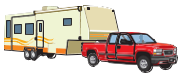 | Recreational (house) trailers exceeding 4,600 kg provided neither the truck nor trailer has air brakes. Any motor vehicle or combination of vehicles in Class 5 | 18 |
Drivers in B.C.’s Graduated Licensing Program are issued Class 7 and/or 8 driver’s licences.
Limited-speed motorcycles — cannot be operated on a learner’s licence other than a Class 6 or 8 motorcycle learner’s licence. These are motorcycles, mopeds, and motor scooters with:
- An engine displacement of 50 cc or less (or less than 1.5 kW of power if other than a piston engine),
- A transmission that doesn’t require shifting or a clutch,
- A maximum speed of 70 km/h,
- Wheels that are at least 254 mm (10 in) in diameter, and
- A dry weight of 95 kg or less.
Air brakes
To operate vehicles equipped with air brakes on a highway (other than a vehicle defined as a construction vehicle), you must have a B.C. driver’s licence with an air brake endorsement (code 15).
Restrictions, conditions and endorsements
Depending on your fitness and ability, your licence may include certain restrictions, conditions or endorsements. For example, you may be required to wear corrective lenses (eyeglasses or contact lenses) while driving.
Recreational trailers
Fast fact:
A Class 5 or 7 driver’s licence permits towing trailers weighing up to 4,600 kg. Some recreational trailers exceed this weight, and to tow them you need either:
- A Class1, 2 or 3 driver’s licence, or
- A Class 4 or 5 driver’s licence with a heavy trailer endorsement (code 20), or
- A Class 4 or 5 driver’s licence with a house trailer endorsement (code 07)
Responsibilities and penalties
As a licence-holder, you have legal responsibilities. Having a B.C. driver’s licence is a privilege — not a right. You must insure your vehicle and drive safely to protect you and other road users.
Driver’s licence
Do:
- Always carry your licence when driving.
- Keep your licence current.
Don’t:
- Lend your licence to anyone else.
- Ever use a licence that isn’t valid.
- Alter your licence in any way.
Identity theft and driver licence fraud
Identity theft is one of the fastest-growing crimes in North America. Identity theft occurs when someone uses your personal information without your knowledge or consent to commit a crime, such as fraud or theft. Victims of identity theft suffer financial losses, a poor credit rating and a damaged reputation.
A driver’s licence has become a universally accepted and trusted form of identification. If your driver’s licence is stolen, obtained fraudulently, scanned or faked, it can be used as a tool for committing crime.
You can’t entirely control whether you become a victim of identity theft, but you can take steps to minimize your risk.
Protecting you from fraud
There’s a tough penalty to help protect you from people who commit driver’s licence and identification card fraud. People who commit these offences now face fines of between $400 and $20,000, up to six months in prison, or both. Offences covered by the law include:
- Make false or misleading statements, failing to disclose required information, presenting fraudulent records or fraudulently using records to obtain or in attempting to obtain a driver’s licence or identification card.
- Assisting someone to fraudulently obtain or attempt to obtain a driver’s licence or identification card in the ways mentioned above.
- Using or possessing a driver’s licence or identification card that belongs to someone else.
- Allowing someone else to use or possess your driver’s licence or identification card.
- Using or possessing a fictitious or invalid driver’s licence or identification card.
- Altering a driver’s licence or identification card.
Strategies: preventing identity theft and driver licence fraud
- Keep your driver’s licence in a secure place on your person. Don’t put your licence in a large pocket or in a large or open purse where it may easily be stolen or fall out. Never leave it in plain view inside your vehicle.
- Store your driver’s licence in a safe place when you’re not operating your vehicle. Don’t leave your licence lying around, particularly where strangers can easily see it.
- Don’t share or post pictures of your driver licence on social media (e.g. Facebook or Twitter).
- Make sure to get your driver’s licence back immediately after you use it for identification, such as at a store. Don’t leave it as a security deposit — it contains valuable personal information that could be stolen.
- Keep a list of your identification including your driver’s licence and credit cards in a safe place in your home. Include card numbers and phone numbers of the card issuers so that you can notify them if they are lost or stolen.
- If you lose your driver’s licence, report the loss immediately to the police.
- If you find yourself in the unfortunate position of being a victim of identity theft, in addition to immediately notifying the police, report the incident to PhoneBusters — National Call Centre: 1-888-495-8501 (toll-free).
- Remember, it’s your identity — protect it!
Insuring your vehicle
As a driver, you must ensure that the vehicle you are driving has a valid and current licence plate as well as adequate insurance.
Warning! The vehicle licence plate must carry an unexpired decal to show that it is insured. A driver caught without current insurance could face a large fine.
Outstanding fines and debts
Any outstanding fines or debts you owe to B.C. courts, the provincial government must be settled before you can obtain or renew a driver’s licence. These include outstanding liquor fines, tolls and arrears with the British Columbia Family Maintenance Enforcement Program.
Fast fact: Any outstanding fines or debts you owe to B.C. courts, the provincial government must be settled before you can get a new driver’s licence. Unpaid provincial violation tickets or unpaid driver penalty premiums may also affect whether you can buy or renew your Autoplan insurance.
Penalties for unsafe driving
If you choose to drive unsafely, you could be fined and prohibited from driving. A prohibition means it is illegal for you to drive for a specific amount of time. And if you are caught driving while you are prohibited, your vehicle could be impounded and you may be subject to fines or a jail term. There is a $250 fee to have your licence reinstated after a prohibition.
Warning! Driving without having a valid driver’s or learner’s licence, or without the proper licence class, or driving contrary to licensing restrictions or conditions, could breach your insurance coverage. That means that if you crash, your insurance claim may be denied. You could be responsible for paying the costs of your own injuries, or damage that you might cause to your vehicle, or to other people or property.
In chapter 1, you in the driver’s seat, you were asked to make a number of choices as you drove. Here are some of the driving fines and penalties you might have received if you had made all the wrong choices:
| Offence | Fine* | Points |
| Speeding in a school zone (1–20 km over speed limit) | $196 | 3 |
| Speeding (1–20 km over speed limit) | $138 | 3 |
| Going through a red light | $167 | 2 |
| Improper turn at an intersection | $109 | 3 |
| Passing without clear view | $109 | 3 |
| Failing to yield to a pedestrian | $167 | 3 |
| Using an electronic device (effective June 1, 2016) | $368 | 4 |
| Total | $1254 | 21 |
Fine includes the 15 per cent victim surcharge levy. Your passenger would also have received a $167 fine if they had refused to wear their seatbelt. (If your passenger had been under 16, you would have received the fine.) Most fines may be reduced by $25 if paid within 30 days.
In addition to any fines at the time of your driving offences, you would also receive a driver penalty point bill. The bill is based on the number of points you have accumulated during the year, and is issued because people with driving offences are more likely to be involved in a crash. Your 17 points would cost you over $2,500 on your driver penalty point bill.
You will pay a Driver Risk Premium (DRP) if you have:
- One or more Criminal Code driving convictions and/or 10-point Motor Vehicle Act convictions, and/or
- One or more excessive speeding convictions, and/or
- Two or more roadside suspensions
The DRP is assessed and calculated based on your offences over a three-year period, and applies to offences that occurred on or after January 1, 2008.
A bad driving record may also result in driver improvement action, including warning letters and driving prohibitions. The threshold for intervention is more stringent for drivers in the Graduated Licensing Program.
Driver Improvement Program
RoadSafetyBC is responsible for the Driver Improvement Program.
Any time a driving offence is entered on a record, that record is reviewed under guidelines specified by RoadSafetyBC. Every case is looked at on an individual basis. If the driver continues to drive unsafely and is convicted of more offences:
- The driver may get a warning letter that they could lose their driving privileges unless there is improvement.
- The driver could be placed on probation. If there are more driving offences during the probationary period, they may be prohibited from driving for a specific period of time.
- If the driver rapidly accumulates offences, a driving prohibition may be initiated without previous warnings.
Penalties for impaired driving
Impaired driving remains one of the major causes of crashes in B.C. It kills more than 100 people each year and thousands more are injured.
You risk a lot by driving impaired. There are penalties under British Columbia’s Motor Vehicle Act and under the Criminal Code of Canada.
Immediate and severe penalties apply if:
- You drive with a certain amount of alcohol or drugs in your system, or
- You refuse to provide a breath sample
As well, the penalties become more severe for repeat offences.
Note: You may be prohibited if a police officer considers your ability to drive to be affected by alcohol or drugs. You do not have to have a BAC level of over .08 or a BDC of 2 nanograms or more THC.
Fast fact: B.C. now has tougher drinking and driving laws. You can count on penalties adding up to $600 to over $4,000 — even if it’s the first time you’re caught — and more time off the road.
Criminal Code penalties
If you’re convicted of a Criminal Code driving offence for impaired driving due to alcohol or drugs, you’re looking at some very serious penalties which could include lifetime driving prohibitions and time in jail.
| Driving while impaired or Blood Alcohol Content (BAC) over .08 or refusal to provide sample | Impaired driving causing bodily harm | Impaired driving causing death | |||
| 1st Offence | 2nd Offence | 3rd Offence | |||
| Prohibition from driving | 1–3 years | 2–5 years | 3 years – lifetime | Up to 10 years | Up to lifetime |
| Fine | $1,000 and up | No maximum | No maximum | No maximum | No maximum |
| Jail | 0–5 years | 30 days – 5 years | 4 months – 5 years | Up to 10 years | Up to life imprisonment |
Graduated Licensing Program
Penalties are strict when you are in GLP. If you violate the zero blood alcohol or zero blood drug concentration restriction, you may be subject to various penalties, including an immediate roadside suspension or prohibition, a fine, driver penalty points and/or having your vehicle impounded.
The suspension or prohibition and the penalty points will be recorded on your driving record and may lead to a much longer More violations could lead to an even longer prohibition period.
If you are prohibited from driving during the novice stage, you will lose any time you have accumulated toward graduating out of GLP. This means that once your licence is reinstated after a prohibition, you start at the beginning of the novice stage again, and you will need to be prohibition-free for 24 consecutive months before you’re eligible to take the road test to exit GLP.
Fast fact: If you are prohibited from driving during your N stage, you will lose any time you have accumulated toward graduating out of the Graduated Licensing Program. In other words, the clock is reset to zero.
Other costs of impaired driving
Besides the penalties listed above, there are still other costs involved if you are caught driving while impaired:
Money — if you are convicted of impaired driving and you cause a crash, your insurance claim could be denied, including claims for damage that you might cause to your vehicle, or to other people or property. You could be responsible for paying all these costs. As well, your insurance rates will increase and you will receive a driver penalty bill.
Job — an impaired driving conviction can prevent you from holding certain jobs.
Travel — an impaired conviction could create problems for you when travelling to certain countries, including the U.S. and Mexico.
Fast fact: If you drive while prohibited, you may face significant penalties including a stiff fine and jail.
Vehicle impoundment
In addition to impounding vehicles operated by impaired drivers, police can also impound the vehicle you are driving if you are caught committing any of the following offences:
- Driving while unlicensed
- Driving while suspended or prohibited
- Excessive speeding (40 km/h or more over the posted limit)
- Street racing or stunt driving
- Riding (or allowing a passenger to ride) while improperly seated
Police can immediately impound the vehicle for seven days, which could escalate to 30 or 60 days for repeat offenders. The owner is then required to pay the vehicle towing and storage fees to get their vehicle back.
It’s important for vehicle owners to understand that they are responsible for making sure that only licensed drivers use their vehicles. For example, if an employer allows a prohibited or unlicensed driver use of a company vehicle, the vehicle could be impounded.
Driving in other locations
Do you like to travel? You need to be aware that rules, signs and traffic controls can change when you cross a border. If you drive in another country, particularly overseas, you may find yourself driving on the left side of the road, going around a complex roundabout or looking at unfamiliar traffic signs. To be a safe driver, think ahead and find out the driving rules of the area you’re travelling to. You may be able to find out some information from guidebooks. The Internet is making it easier to learn about driving in other jurisdictions (see chapter 10, need to know more?).
Driving tip: Check to make sure your vehicle insurance will cover you before you leave Canada.
Being a life-long learner
Some people stop learning as soon as they pass their test. You may know people who still drive the same way now as they did when they got their driver’s licence many years ago. This may not be safe because even if their driving skills and knowledge haven’t changed, other things have. Road signs may be different now. Traffic has probably increased. Vehicles have changed — the car they are driving now may be quite different from the one they learned to drive on.
In your driving career, you may take on additional driving challenges such as towing a trailer or driving a large recreational vehicle. You will need to get information to help you know how to drive safely. You may decide to take driving lessons or practise with a driver experienced in this type of driving.
Even if you do not change the type of vehicle you drive, your driving will probably change with age and experience. Research shows that it takes about five years for new drivers to develop into fully experienced drivers who are able to do several driving tasks at once. But after that, people still need to work at keeping their driving skills sharp and up-to-date if they want to be safe on the road.
Strategies: sharpening your skills – Here are some ways to help you keep sharp and up-to-date:
- Use feedback. Ask a friend to watch your driving and give you some suggestions for improvement.
- Know your vehicle. Make sure you know all the controls of any vehicle you drive. The owner’s manual is a good place to start.
- Keep up with the driving guides. Pick up a copy of the current guide to make sure you are up-to-date.
- Take advanced training. You may decide to take a course in defensive driving skills or a refresher course.
- Know yourself. You may experience physical and mental changes that affect your driving. Be aware of your condition. Regular medical checkups will help.
 Apperture Labs