Keeping left
In New Zealand, vehicles drive on the left-hand side of the road.
It is essential to keep left, because if you don’t you are likely to cause a head-on crash. This is one of the worst types of crash, as it almost always results in death or severe injury.
What is a road?
The legal definition of a road is very broad. It includes not only streets and highways, but also any place the public has access to – including bridges, beaches, riverbeds, car parks, reserve lands, wharves and road shoulders.
Because of this, you should apply road rules at all times when you’re driving, even when you aren’t on a public road.
Keeping left on a laned road
Most roads in New Zealand have lanes marked on them with a white line or raised studs.
When driving on a laned road, it is important to drive your vehicle within your lane.
Where there are two or more lanes on your side of the centre line:
- Keep in the left-hand lane as much as you can
- Don’t use the lane closest to the centre line if you will hold up other vehicles
The lane closest to the centre line should only be used when:
- You want to pass another vehicle
- You want to turn right
- The left-hand lane is full with other traffic or is blocked
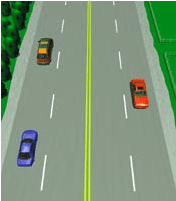
Keeping left on an unlaned road
An unlaned road is a road with no marked white lines or raised studs.
To stay well out of the way of oncoming vehicles, always keep as close as possible to the left side of the road.
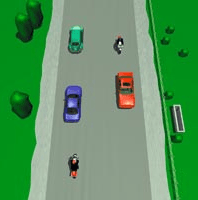
Driving tip
When driving on an open road with a centre line, your driver’s seat should normally be in the centre of your half of the road (except when driving a left-hand drive vehicle).
Reduce your speed to stay in this position when driving around bends.
Keeping left on a curve
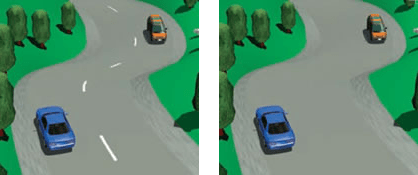
Keep well to the left when you are driving around a curve (a bend in the road), whether you are on a laned or unlaned road.
This is particularly important because you can’t always see what’s around the corner. As well as other vehicles coming the other way, there could be cyclists, horses, pedestrians or an object on your side of the road.
Giving signals
Signals enable you to tell other road users that you are changing your direction or position on the road. Because of this, knowing when and how to give signals is a very important part of being a safe driver.
Drivers usually signal using their indicators. However, you may sometimes need to use hand signals, if your indicators can’t be seen.
When to give signals
You must signal for at least three seconds before you:
- Turn left or right
- Move towards the left or right (for example, when you pull back into the left lane after passing another vehicle)
- Stop or slow down
- Move out:
- From a parking space
- To pass another vehicle
- To change lanes.
Important
Don’t assume that other drivers have seen your signals.
Using your indicators
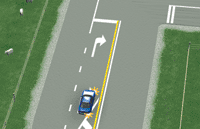
Your indicators are usually flashing yellow lights on both sides of the front and rear of your vehicle. They signal your intentions to other road users.
Use your left indicator when you are:
- Turning left
- Moving towards the left (for example, when you pull back into the left lane after passing another vehicle, or returning to the kerb)

Use your right indicator when you are:
- Turning right
- Moving towards the right (for example, when moving out of a parking space)
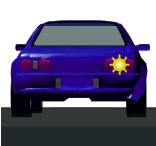
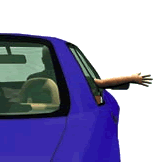
Important
Don’t just rely on the other driver’s signal. Is the vehicle slowing down? Is the vehicle in the right place on the road in relation to the signal?
Stopping
Your stop lights (the red lights at the back of your vehicle) let people behind you know that you’re slowing down or stopping. Stop lights come on automatically when you use the brake pedal (footbrake). Keep your foot on the brake pedal to keep the brake light on to warn other drivers.
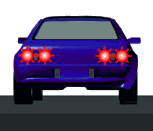
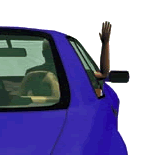
Tip: Tapping the brake pedal will flash the stop lights to warn other drivers.
Hazard lights
When you turn on your hazard lights, both indicator lights flash at the same time as a warning to other road users. You should only turn on your hazard lights when your vehicle becomes a temporary hazard to other road users, such as when:
- You’re changing a tyre on the side of the road
- Your vehicle has broken down and is being towed
Receiving signals
There are a variety of other signals that other road users will use to communicate to you. You must know what these signals are and what to do when you see them.
Flashing lights and sirens
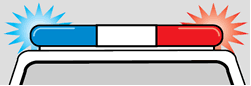
If an emergency vehicle (such as an ambulance, fire engine or police car) is coming towards you or behind you, and is using sirens and/or flashing red, blue, or blue and red lights, you must pull over and, if necessary, stop and allow it to pass.
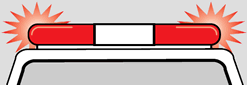
If a police car is following you with its siren on and/or flashing blue, or blue and red lights, you must pull over and stop as soon as possible.
If asked to, you must give the following to a police officer:
- Your name, address and date of birth
- Your driver licence
- The name of the vehicle’s owner
Doctors, nurses or midwives on urgent business may use a roof-mounted green flashing light. If you see these, you must pull over and allow the vehicle to pass.
When service vehicles, such as tow trucks and road maintenance vehicles, use flashing yellow lights, they are warning you to be careful around them. When you see these lights, slow down and be prepared to stop, if necessary.
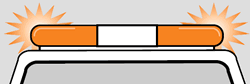
Oversize vehicles may use flashing yellow lights and pilot vehicles may use flashing yellow and purple lights. These mean you must pull over and, if necessary, stop, and let all the vehicles pass.
Red flashing signals outside a fire station or airport mean you must stop and remain stopped until the lights stop flashing.

Police officer directing traffic
When a police officer is directing traffic, you must stop or go where the officer directs you. A police officer’s directions overrule:
- Traffic signals
- Road signs
- The give way rules
If a police officer is controlling an intersection, be careful to get into the correct lane. If you don’t, you may have to go the wrong way.
Show the officer where you want to go by using your indicators.
Turning
Turning can be dangerous, because it usually means you have to cross the path of other vehicles. Remember turning traffic gives way to traffic that is not turning.
How to turn
To legally and safely make a left or right turn:
- Do a thorough check for other vehicles – in front, behind and to the sides
- Remember to check over your shoulder for your blind spots (the areas of road to the sides of your car that you can’t see in your mirrors)
- Watch for pedestrians
- Signal for at least three seconds
- Turn when safe
If you are turning left, use your left indicator. If you are turning right, use your right indicator.
Be prepared to stop, even if the other driver should give way to you.
Important
When turning or changing lanes remember to always check your blind spots.
Turning from a driveway
If you are driving out of a driveway:
- Slow down to a complete stop at the end of the driveway
- Check the road and footpath for hazards, pedestrians and other vehicles
- Give way to:
- Pedestrians on the footpath
- Vehicles along the road
Making a left turn
If you are turning left into another street or driveway:
- Stay in the left lane or keep to the left side of the road
- Slow down before you turn
- Check your mirrors and your blind spot
- Signal for at least three seconds
- Turn when safe
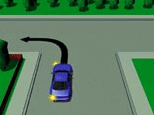
Making a right turn on a road with no marked lanes
In this situation:
- Slow down before you turn
- Check your mirrors and look over your right shoulder to check your blind spot
- Signal for at least three seconds
- Move close to the centre of the road
- Turn when safe
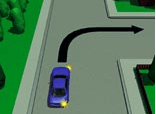
Important
You should move into a similar position on the road you’re turning into as your position on the road you’ve just left.
For example, if you are on the left-hand side of the road, you should stay on the left-hand side of the road after you’ve turned; or if you are in a lane next to the centre line, you should turn into the lane next to the centre line.
Making a right turn on a road with a centre line
In this situation:
- Slow down before you turn
- Check your mirrors and look over your right shoulder to check your blind spot
- Signal for at least three seconds
- Move towards to the centre line
- Turn when safe
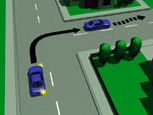
Making a right turn from the left-hand side of the road
If there are other vehicles moving fast or following too closely, or if the road is narrow, it may be best to wait on the left-hand side of the road to make the turn, rather than stopping in the middle of the road and holding up traffic.
In this situation:
- Signal left for at least three seconds
- Move across to the left-hand side of the road
- Wait there until it is safe to turn
- Signal right for at least three seconds before you turn
- Move when it is safe
If a vehicle in front of you has also stopped to turn right, it’s best to wait behind them and then use the same position to turn from.
Take extra care on roads where traffic is moving quickly.

Safe turning tip
If you have stopped to turn right, keep your wheels pointed straight ahead until you start to turn. That way, if you are hit from behind you are less likely to be pushed into the path of oncoming traffic.
Making a right turn from a right-turn bay
A right-turn bay is an area where vehicles that are turning right can wait until it is safe to turn, without holding up vehicles going straight through.
You can’t use the right-turn bay to overtake a vehicle travelling straight ahead.
As you approach the right-turn bay, the road will be painted with a white triangle with diagonal lines inside it, followed by one or more right-turn arrows.
You can only drive over the white diagonal lines if you are turning right.

Turning on or off a road with a flush median
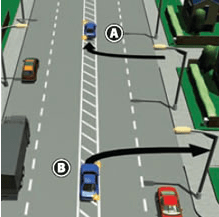
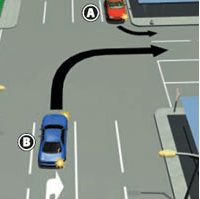
A flush median is a strip in the centre of the road that is marked with white diagonal lines within parallel lines. It provides a place for vehicles that are turning right, or vehicles that have turned right onto the road from a side road or driveway.
You can only drive onto the flush median to:
- Wait to move into a gap in the traffic flow after you have turned right (car A in the diagram below)
- Slow down and wait before turning right (car B in the diagram below)
Important
When using a flush median, watch out for pedestrians who might be waiting on the flush median to cross the road.
Making a U-turn
You are normally allowed to make U-turns, as long as the road is clear in both directions and it is safe to do so. Make sure you have enough room to complete the turn and don’t create a hazard for oncoming vehicles.
You aren’t allowed to make U-turns if a ‘No U-turn’ sign is displayed.
Making a turn over a no-passing line
You can cross over the solid yellow no-passing line (if it is safe to do so) when making a turn to enter a driveway or side road.
However, bear in mind that no-passing lines are often marked where visibility is limited, so special care is required. It may be safer to turn further along the road, where visibility is better.
Using lanes correctly
Lanes are painted on the road to separate traffic. It’s important that you use lanes correctly. The information below will help you do that.
Lane rules at intersections
Make sure you are in the correct lane for the direction that you are travelling. Follow the direction of any arrows marked on the road.
If there are no arrows:
- Turn left from the left-hand lane
- Turn right from the right-hand lane
- Use either lane to go straight ahead
Ideally, you should stay in the same lane all the way through the intersection. Don’t change lanes unless you can do so safely.
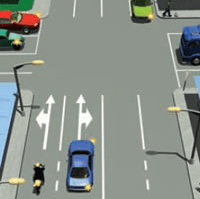
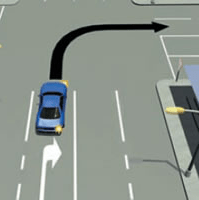
Making a right turn at an intersection with marked lanes
When turning right from a road that has more than one marked lane in each direction into another road with more than one marked lane in each direction:
- Make sure you are in the right-turn lane
- Signal for at least three seconds before turning
- Turn into the appropriate lane of the road
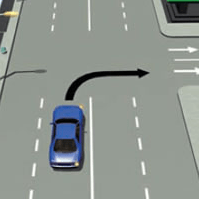
Making a right turn into a one-way street
When turning into a one-way street:
- Turn from the lane next to the centre line (if in a two-way street)
- Signal for at least three seconds before turning
- Turn into the closest lane of the one-way street
Making a right turn from a one-way street
When turning right from a one-way street, you should stay in the same lane throughout the turn. That means:
- If you’re turning from the left-hand lane of the one-way street, turn into the left-hand lane of the two-way street
- If you’re turning from the right-hand lane of the one-way street, turn into the lane immediately to the left of the centre line of the two-way street
Remember to signal for at least three seconds before turning.
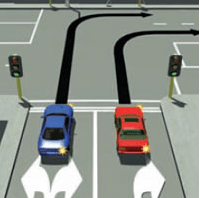
Two vehicles turning into the same road at a laned intersection
When two vehicles are turning into the same road at an intersection that has more than one marked in lane in both directions:
- Both vehicles must show they want to turn by signalling for at least three seconds
- Both vehicles stay in their own lane throughout the turn, that is:
- Car A turns from the left-hand lane into the left-hand lane
- Car B turns from the right-hand lane into the right-hand lane
Changing lanes at an intersection
Ideally, try to get into the correct lane before you get to the intersection. However, if you must change lanes:
- Make sure it’s safe before you start
- Signal for at least three seconds before changing lanes
- Before changing lanes, look over your shoulder to check that there are no vehicles in your blind spot
Never change lanes suddenly.
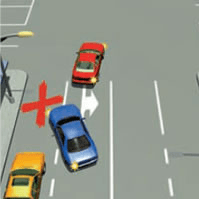
Passing lanes
When there are passing lanes, drive in the left-hand lane unless you are passing another vehicle.
If you’ve been driving slower than the speed limit, don’t speed up when you reach a passing lane if other vehicles are following – give them the opportunity to pass you safely.
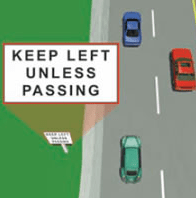
Special vehicle lanes
Special vehicle lanes have signs or markings that indicate they are only for the use of specific kinds of vehicles, such as buses, cycles, taxis or vehicles carrying a specified number of passengers (transit lanes).
Other vehicles may use special vehicle lanes only to make a turn, but must give way to any vehicles entitled to use the lane.
Some special vehicle lanes operate 24 hours a day for the use of the designated vehicles. Others have times of operation specified on their signs, for example, ‘4 pm to 6 pm’. In that case, you may be able to stop in them outside of these times.
Important
If you are turning at an intersection where there is a cycle lane, give way to cyclists going straight through.
Following distance
It’s very important to make sure you have a safe distance between you and the vehicle in front, so you will have enough time to stop if you need to stop suddenly.
Several seconds can pass from the time you see the hazard until you come to a complete stop. This is because you need time to react to the hazard and take action – putting your foot on the brake – as well as time for the brakes to slow the vehicle down.
The faster you are going, the longer it will take to stop. This means you must increase your following distance as you increase your speed.
Important
Some people take longer to react to hazards than others.
If you’re tired, or your reaction times are slower than normal, take this into account and increase your following distance.
Keeping a safe following distance
A good way to make sure you always keep a safe following distance is to use the two-second rule or the four-second rule, which are explained below.
The two-second rule
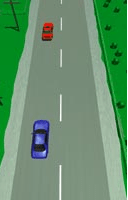
Under normal conditions, the two-second rule is an easy way to make sure you have left enough following distance between your vehicle and the vehicle in front, no matter what speed you’re travelling at.
To check if you are travelling two seconds behind the vehicle in front:
- Watch the vehicle in front of you pass a landmark – such as a sign, tree or power pole – at the side of the road.
- As it passes the landmark, start counting ‘one thousand and one, one thousand and two.
- If you pass the landmark before you finish saying those eight words, you are following too closely – slow down, pick another landmark and repeat the words to make sure you have increased your following distance.
The four-second rule
In bad weather, when the road is wet or slippery, or when you’re towing a trailer, you need to increase your following distance to four seconds, because you’ll take longer to stop if you need to.
To check that you are travelling four seconds behind the vehicle in front, follow the instructions above for the two second rule, but count ‘one thousand and one, one thousand and two, one thousand and three, one thousand and four’ instead.
Important
When you’re following another vehicle and you don’t intend to overtake them, you must leave enough space in front of your vehicle for vehicles behind to pass you.
Passing
Many serious crashes on New Zealand roads are caused by dangerous passing.
To safely pass another vehicle, you need to be extremely careful. You need to have a clear view of the road ahead, to make sure you can finish passing safely. You must also pay close attention to the vehicle you are passing, in case it changes its course.
Passing on the right
Passing on the right can be dangerous, especially if you have to:
- Change your path of travel
- Enter a lane or part of the road used by oncoming vehicles
Before passing, always ask yourself ‘is it really necessary to pass?’ Don’t pass just because you are feeling impatient with the car in front – that’s often when crashes happen.
If you do decide to pass, follow the rules shown below.
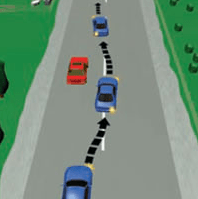
Before you pass:
- Make sure you will be able to see at least 100 metres of clear road ahead of you once you have finished passing – if not, don’t pass
- Look well ahead to make sure there are no vehicles coming towards you
- Look behind to make sure there are no vehicles passing you
- Signal right for at least three seconds before moving out to pass
Before pulling in front of a vehicle you have passed:
- Make sure you can see the vehicle in your rear view mirror
- Signal left for at least three seconds
Important
Take extra care, and leave extra room, when passing cyclists, horses or pedestrians, as the wind gust of your vehicle could affect their balance.
Passing on the left
You can only pass on the left when:
- There are two or more lanes on your side of the centre line and you are able to pass safely by using the left-hand lane
- You are directed to by a police officer
- The vehicle you are passing:
- Has stopped, or
- Is signalling a right turn, or
- Is turning right
At all other times, when you are passing, you must pass on the right.
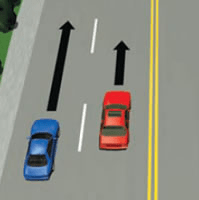
Important
Keep a safe distance behind the vehicle you are about to pass. Follow the two-second rule.
If you are being passed by another vehicle:
- Move as far to the left of the road as possible
- Never speed up to stop the other vehicle from passing you
No-passing line
On some sections of road there will be a solid yellow line painted on your side of the centre line. This line is called a no-passing line.
No-passing lines are usually there because it’s unsafe to cross the centre line to pass, because features like hills and curves make it impossible to see if there is oncoming traffic.
Sometimes no-passing lines are marked because:
- There is already a passing lane on your side of the road and you must use that to pass
- The road is multi-laned, so you do not need to cross the no-passing line to pass
You must not pass another vehicle if it means you have to cross over a no-passing line on your side of the centre line.
If you see a dashed yellow line on your side of the centre line, that means that a no-passing line is about to start.
While you may come back over the dashed yellow line to finish passing, you must not cross it to start passing.

As shown in the picture above:
- You may come back over the dashed yellow line between A and B to finish passing
- You must not cross the solid yellow line between C and D
You can pass at a no-passing line if:
- You stay on your side of the solid yellow line, and
- You can see 100 metres of clear road in front of you for the whole time while you are passing, and
- The lane is wide enough for two vehicles

Passing on a three-laned road
If there is no solid yellow line on your side of the centre line, you may use the centre lane to pass as long as:
- There are no vehicles in that lane, and
- You can see 100 metres of clear road in front of you for the whole time while you are passing
Don’t use the centre lane to pass if there is an oncoming vehicle in the centre lane.

Where you must not pass
Remember, it is against the law to cross over a no-passing line on your side of the centre line to pass another vehicle. But this isn’t the only situation where you mustn’t pass. This page shows you other situations where passing is both unsafe and illegal.
Don’t pass any vehicle that has stopped, or is slowing down, for people on a pedestrian crossing.
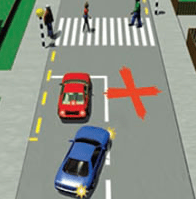
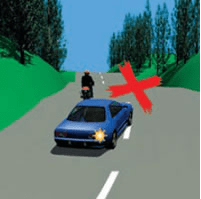
Don’t pass any vehicle when you are coming to a blind corner or curve. (A blind corner or curve is where you can’t see what’s around the corner.)

Don’t pass any vehicle when you can’t see at least 100 metres of clear road in front of you for the whole time while you are passing.
Don’t pass any vehicle at an intersection if it means you might get in the way of:
- Vehicles coming towards you
- Vehicles coming out of side roads

Don’t pass:
- Any moving vehicle when you are less than 60 metres from a railway level crossing
- Any vehicle that has stopped for a train
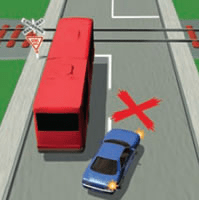
Don’t pass any vehicle if it means you have to drive over a flush median.
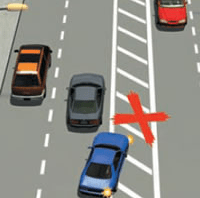
Passing at an intersection
In some situations, you are allowed to pass another vehicle at an intersection; however, you need to be very careful when doing this.
Passing on the left at an intersection with one lane on your side of the road
In this situation, you can pass on the left if there is enough room in your lane for you to pass and the vehicle you are passing:
- Has stopped, or
- Is signalling a right turn, or
- Is turning right
Don’t pass if the vehicle has signalled a left turn.
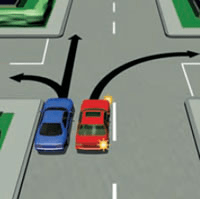
Passing on the left at an intersection with more than one lane on your side of the road
In this situation, you can pass on the left if the vehicle you are passing is in a different lane and you can pass safely.
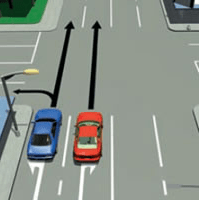
Passing on the right at an intersection with more than one lane on your side of the road
In this situation, you can pass on the right if you are turning right or going straight ahead.

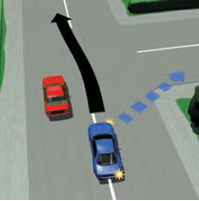
Passing by crossing the centre line at an intersection
You can cross the centre line to pass another vehicle if you can see that:
- The way in front of you is clear, and
- There are no vehicles coming out of any side roads
Be very careful that the vehicle you’re passing isn’t slowing down to turn right. The driver may have forgotten to indicate.
Merging
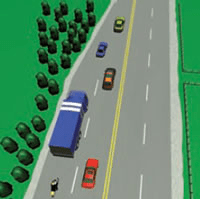
Sometimes on a road, two lanes will merge into one lane.
The lanes merge where the broken lane lines stop. It’s important to make sure that all vehicles from both lanes have plenty of space in which to merge safely. The instructions in this section show you how.
Merge like a zip
The best way to merge is like a zip – where a vehicle from the left lane goes and then a vehicle from the right lane goes, and so on.
As you merge, let one vehicle from the other lane go first, and then go.
Leaving a merge lane after turning right at an intersection
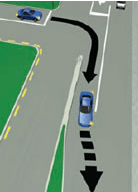
Some roads have a merge lane to help vehicles that have turned onto the road join the traffic flow.
If you are in a merge lane at an intersection:
- Show you want to merge by signalling for at least three seconds
- Move into a safe gap in the traffic
- Adjust your speed and following distance
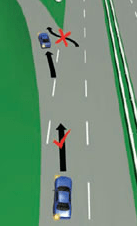
Using on-ramps when entering and leaving a motorway
Motorway on-ramps are similar to merge lanes.
When using an on-ramp to enter a motorway:
- Change your speed to match the speed of the motorway traffic
- Use the whole length of the on-ramp to adjust your speed – don’t change speed suddenly just as you enter the motorway
- Signal right for at least three seconds
- Move into a safe gap in the traffic
- Don’t enter the motorway at a sharp angle
- Adjust your speed and following distance
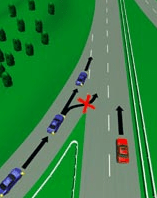
When using an off-ramp to leave a motorway:
- Watch for exit signs
- Signal left for at least three seconds
- Move into the left-hand lane as soon as possible
- Keep up with the traffic flow until you are on the off-ramp
- Don’t leave the motorway at a sharp angle
- Adjust your speed
Motorway driving
Motorways are designed so that traffic can flow with as little disruption as possible. On a motorway, you shouldn’t come across things that hold up traffic flow, such as:
- Intersections
- Turning vehicles
- Parked vehicles
- Pedestrians
- Cyclists
Although the number of ‘everyday’ driving hazards are reduced on motorways, you still need to drive carefully as motorway traffic usually moves very quickly.
Motorway signs
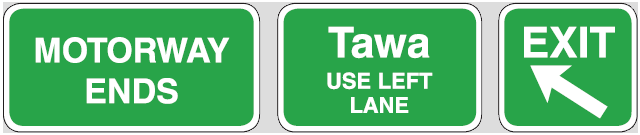
Most motorway signs are green with white around the edges.
Pay special attention to signs that show the beginning and end of the motorway, as well as signs that show particular exits.
Safe driving on motorways
When driving on a motorway:
- Keep left, unless you are passing
- Watch for exit signs
- Get into the correct exit lane in plenty of time
- Signal for at least three seconds before you change lanes
- You must not stop your vehicle, except in an emergency
- You must not make a U-turn
- You must not stop to let down or pick up passengers
- If you miss your exit, don’t stop and reverse – instead, drive on to the next exit
Breakdowns on motorways
If you break down on a motorway:
- Indicate and steer your vehicle as far off the road as possible – don’t stop suddenly
- Lift up the bonnet and boot and, if possible, hang something white on the driver’s door handle or window – this will show you need help
- Turn on your hazard lights or use a safety triangle to warn approaching traffic
- At night, turn on the inside light
- If you don’t have a mobile phone and it isn’t safe to walk to a telephone, stay in your car and wait for help
- Don’t stand on the motorway
- If you need help from other drivers, leave plenty of space for them to stop – remember, vehicles travel fast on a motorway and it will take a while for them to slow down.
Towing
To tow a trailer on a car licence (a Class 1 licence), the weight of your vehicle plus the weight of the trailer must not exceed 4500 kg (including the load you are carrying).
You must take extra care when towing a trailer or another vehicle. This is because, with the extra weight behind it, your vehicle will feel different to drive.
Follow the safe towing guidelines below whenever you tow a trailer or another vehicle.
Note: the term ‘trailer’ includes caravans, boat and horse trailers.
Important
If you are towing a trailer or another vehicle, check your rear-view mirror often to make sure you aren’t holding up vehicles behind you.
Safe towing guidelines
- Refer to the car manufacturer’s recommendations before towing a trailer, in particular the weight limits recommended.
- Refer to the loading limits for the tow bar you are using.
- Be aware that overloading and uneven loading of car trailers can seriously affect a car’s handling.
- When driving a light vehicle (for example, a car or light truck), you must not tow more than one trailer or vehicle at a time.
- You must be able to see behind the towed trailer or vehicle. If you can’t see behind with your rear-view mirrors, you may need to fit a special mirror.
- There must be no more than 4 metres between your vehicle and the trailer or vehicle it is towing.
- The towing connection and safety chain that holds the trailer/vehicle must be safe and strong.
- The maximum speed for a light vehicle towing a trailer on the open road is 90 km/h.
- The maximum speed for towing a motorcycle is 30 km/h.
- You must not tow a motorcycle unless it is mechanically disabled.
- At night, the back of the trailer/towed vehicle must show a red light.
- If you’re towing a disabled vehicle at night, its headlights must light up the towing connection.
- Remember, you will be slower and less stable than other traffic when towing. Check behind often to see if other vehicles are held up behind you.
- If the road is winding or narrow and vehicles can’t pass you, stop at a safe place and let them pass.
- Leave more space than usual between your vehicle and the one in front, so that others can pass you.
- Remember that the added weight behind you means you will need more space to stop. Increase your following distance from two seconds to four seconds.
Important
When towing a horse trailer, take extra care as the horse may move – especially when you brake or travel around corners – and this could affect the movement of the trailer.
Reversing
When reversing, take special care to make sure that the way is clear. Every year, young children are killed and injured by reversing vehicles. If you are in any doubt about whether the way behind you is clear, get out and check.
Reversing guidelines
Follow the guidelines below whenever you are reversing:
- Before you move off, make sure it is safe to reverse. The best way to do this is to walk around the vehicle and make sure there are no children or other obstacles in your path.
- Don’t rely on your mirrors alone. Always turn around and look over your shoulder.
- Try to reverse in a straight line.
 Apperture Labs