How to park safely
It’s not only moving vehicles that are potential hazards on the road. Parked vehicles can be hazards too. That’s why it’s important to follow the safe parking rules and guidelines shown in this section.
Safe parking rules
By law, you must follow these rules when parking:
- Indicate for at least three seconds before slowing down to park.
- Park parallel to the road and as close to the left as possible, unless you are parking in an area where angle parking is permitted. There will be lines on the road (or signs) to show where you can angle park.
- Move as far off the road as possible when stopping or parking on a road with fast-moving traffic.
- Always check for passing vehicles, cyclists and pedestrians before opening your door.
- Be careful when pulling out of a parking space. Don’t forget to:
- Check for vehicles
- Signal for at least three seconds before pulling out
- A motor vehicle must not be parked on the road during the hours of darkness unless it is clearly visible to other road users. This means it should be lit by street lights, or you should turn on the tail lights and the side light nearest the centre of the road on the front of the vehicle.
- A light, flat-decked vehicle that is parked on the street at night must display a rear red light that:
- Is on the side of the vehicle closest to the centre of the road
- Is visible at a distance of 100 metres
Safe parking guidelines
Following the guidelines below will ensure that when you park your vehicle it won’t move forward or backward:
- When parking uphill on a steep road:
- Turn the front wheels away from the kerb
- Leave your car in first gear if it’s manual or in park if it’s automatic
- When parking downhill on a steep road:
- Turn the front wheels towards the kerb
- Leave your car in reverse gear if it’s manual or in park if it’s automatic
Safety tip
When there is lots of traffic, it’s a good idea to get out of your car on the side away from the traffic.
Where not to park
For your own safety, and the safety and convenience of other road users, there are certain areas where you must not park. You risk being fined and/or having your vehicle towed away if you park in these areas.
You must not park or stop your vehicle:
- On the right-hand side of the road, except in a one-way street
- Where it will be in the way of other people using the road (including pedestrians)
- Near a corner, curve, hill, traffic island or intersection, if it will stop other people from seeing along the road
- On the road, if you can park the vehicle off the road without damaging grass or gardens
- On any footpath
- On a traffic island (whether it is flush or raised)
- On, or closer than 6 metres to, an intersection, unless there are parking spaces or a notice telling you that you can park there
- On, or closer than 6 metres to, the approach side of a pedestrian crossing
- On a marked bus stop or taxi stand
- Closer than 6 metres to a bus stop marked only by a sign
- In front of, or closer than 1 metre to, a vehicle entrance
- Alongside another parked vehicle – that is, you must not double-park
- On ‘no stopping’ lines (broken yellow lines) marked within 1 metre of the edge of the road, which you may see near pedestrian crossings, intersections, driveways or narrow roads
- Where traffic signs say you must not stop or park
- Where a sign says that part of the road is reserved for specified kinds of vehicles (for example, bus, taxi or goods service vehicles) – in many cases, this restriction is marked by a broken yellow line more than 1 metre from the kerb
- On, or closer than 50 centimetres to, a fire hydrant, unless somebody who can move the vehicle stays with it
- On a yellow circle on the road containing a rectangle (as shown below) or between the circle and the footpath, unless somebody who can move the vehicle stays with it


Parking signs
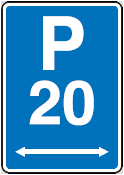
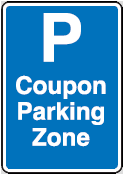
You must obey all parking signs.
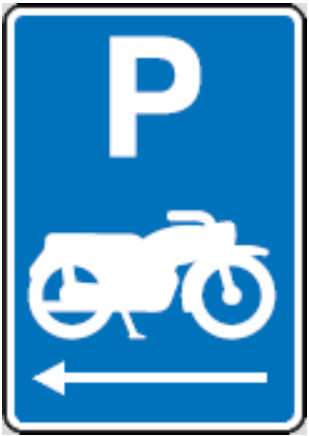
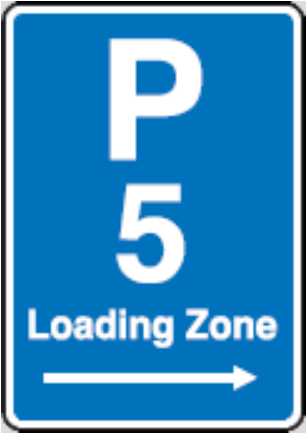
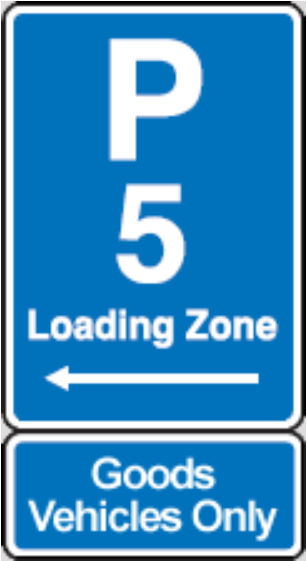
Examples of parking signs
Any parking sign that has a red border around the outside means that you cannot stop there at any time, unless other times are shown.
Below are some examples of parking signs and what they mean.
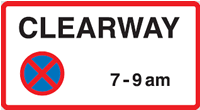
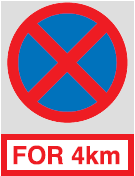
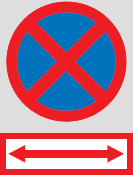
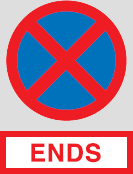
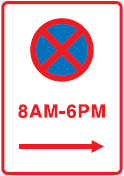
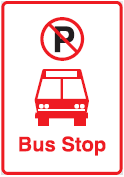
All other parking signs apply between 8 am and 6 pm, other than public holidays covered by section 44(1) of the Holidays Act 2003 (Christmas Day, Boxing Day, Good Friday, etc.), unless other times are shown.
Parking for people with disabilities
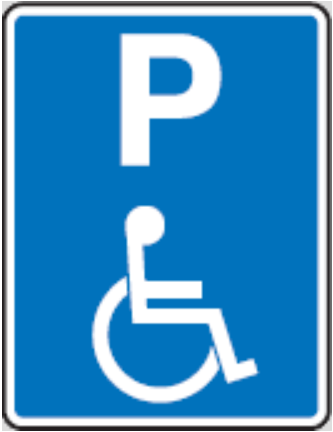
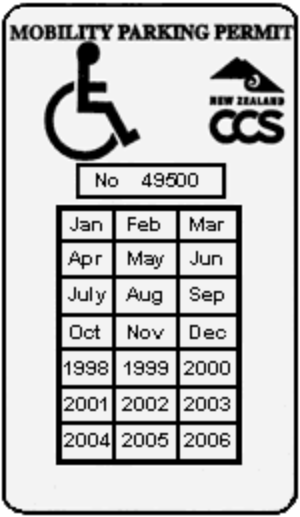
Parking areas with the sign shown below are set aside to give mobility parking permit holders easy access to places such as supermarkets, libraries and community centres.
To park here you must display a mobility parking permit on your front window. Otherwise, you may be fined or have your vehicle towed away.
Stopping at intersections, railway level crossings and pedestrian crossings
When traffic is heavy, queues of vehicles can build up quickly.
If you find yourself in a traffic queue, it is important that you don’t block other roads, railway lines or pedestrian crossings.
Always follow the blocking rule.
Blocking rule
You must not go into or attempt to cross the intersection, railway level crossing, pedestrian crossing or an area controlled by pedestrian traffic signals, unless there is space for your vehicle on the other side of the intersection or crossing.
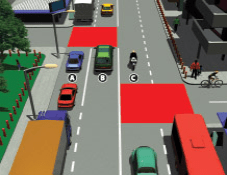
In the illustration above, vehicle A must not go into the intersection because there is no space ahead.
Vehicles B and C can go into the intersection because there is enough space ahead.
You must not go into, or attempt to cross, a pedestrian crossing, unless there is space for your vehicle on the other side of the crossing.
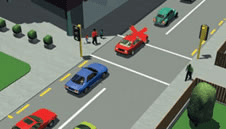
The vehicle in the illustration above is blocking the area controlled by pedestrian traffic signals.
 Apperture Labs