Driving in bad weather
If it is raining, icy, snowing or foggy, conditions on the road will be more dangerous. You need to drive with extra care.
Tips for driving in bad weather
Check your car
Effective brakes, tyres, windscreen wipers, lights and steering are even more crucial in wet weather. Check your vehicle regularly to make sure they are all in good condition.
Adjust your driving
Wet, frosty or icy roads can be very slippery. You need to increase your following distance because it takes longer to stop on a slippery surface. You should increase your following distance by using the four-second rule).
Watch your visibility
Visibility (how far you can see) can be seriously reduced by rain, snow or fog. This can increase the risk of a crash. To improve visibility, keep all windows and mirrors clean. Don’t let windows fog up – turn on the demister or open a window.
Brake carefully
Unless your vehicle has ABS brakes, don’t brake too hard when it is wet. You may go into a dangerous skid. Instead, pump the brakes gently.
If your vehicle has ABS brakes, never pump the brakes in an emergency. Keep the pedal pressed down hard and steer out of trouble. Don’t become over-confident in your driving just because your vehicle has ABS brakes.
Reduce speed
On a wet road, driving at the speed limit could be too fast for the conditions. You can lose control very easily in the wet, especially if you have to brake suddenly, so slow down.
Dip your headlamps in fog
If you drive with your lamps on full beam in fog, the light will just reflect back on you. Dip your lights – it will be much easier to see.
Don’t just turn your park lights on. They are hard for oncoming drivers to see and do little to improve your vision.
You can use front fog lights when driving in fog. These have a wide, low beam and produce either a white or yellow light.
Rear fog lights, which produce a high-intensity red light, should only be used when visibility is very bad. (In normal conditions they can dazzle drivers following you.)
Fog lights should be switched off as driving conditions improve.
Night driving
When to use headlights
You must turn on your vehicle’s headlights:
- From 30 minutes after sunset, until 30 minutes before sunrise
- At any other time when you can’t clearly see a person or vehicle 100 metres away
Never drive with just the park lights on.
When to dip your vehicle’s headlights
You must dip your vehicle’s headlights:
- When other vehicles are coming towards you, so that you don’t blind the oncoming driver
- When you are following other vehicles
- When a police officer is directing traffic
- When you park

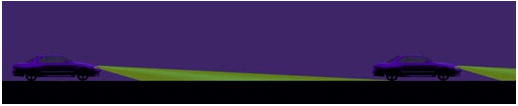
If there is plenty of street light, you should be able to drive with your headlights dipped the whole time.
Speed at night
At night, just as during the daytime, you must drive at a safe speed. This means that:
- On a road with lanes, you must be able to stop in the length of clear road you can see in front of you
- On a road with no lanes, you must be able to stop in half the length of clear road you can see in front of you.
Safety tips for night driving
Driving at night is more dangerous than driving during the day. To improve your safety on the road at night:
- Make sure your windscreen and lights are clean
- Never wear dark glasses
- Watch for pedestrians and cyclists – they are harder to see at night
- Stop and rest if you are sleepy
- Don’t blind other drivers with your vehicle’s headlights – dip them when vehicles are coming towards you or when you are following another vehicle
- If you are blinded by the lights of oncoming vehicles:
- Slow down or stop
- Try to keep your eyes on the left side of the road, so you aren’t looking directly at the light
- Drive at a speed that means you can see the road at least two seconds ahead

Use markers to guide you when driving at night
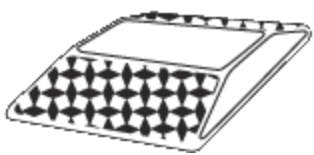
Many roads have reflectors and guide posts to help you ‘read’ the road at night. Some examples of these are shown below.

Left side of road marker post

Right side of road marker post indicating left-hand bend

Left side of bridge

Right side of bridge



Important
Be aware that at night, because most road signs are highly reflective, your lights shining on them may make you think you can clearly see further than you really can. Make sure you drive more slowly and carefully at night, particularly on unfamiliar roads.
Road works
Road repair crews often have to work on roads to keep them in good condition. This means you will sometimes come across heavy vehicles, machinery and workers on the road, which you must be careful around.
The road surface itself can also be dangerous when under repair, as it may be uneven or have new seal.
When you see a road works sign, always slow down and be ready to stop.
Obey the signs
If there are road works on the road ahead, it will always be clearly signposted.
Slow down and read the signs. They will prepare you for the particular hazards you are about to face.
Two of the signs commonly used to indicate road works are shown below.
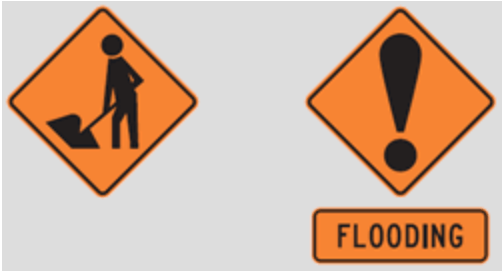
Because it can be dangerous to drive through road works or on new seal, temporary speed limit signs are often posted. You must drive at or below the speed shown on the temporary speed limit sign.
Obey any directions given
Road repair crews may sometimes need to stop traffic. They may use temporary traffic signals or hand-held ‘Stop/Go’ signs (shown below) to do this.


Follow all directions given to you, otherwise you could be involved in a serious crash.
Important
Crashes can happen when drivers ignore road works warning signs and temporary speed limits. Don’t take these warnings lightly. You don’t know what’s ahead, so slow down and take care.
Sunstrike
Sunstrike can occur at any time, but is most likely during sunrise or sunset, when the sun’s rays hit your windscreen at a low angle. This can make it difficult, or even impossible, to see. This is a very dangerous condition to drive in.
To avoid a crash, follow the guidelines shown below.
Reducing the danger of sunstrike
- Be prepared for possible sunstrike when driving at sunrise or sunset, especially when turning or driving towards the sun.
- Be especially careful in winter, when sunstrike is more likely to occur because the sun is lower in the sky.
- Keep your windscreen clean, inside and out. Dust and grime on the windscreen can make the effects of sunstrike much worse.
- Wear sunglasses when driving with the sun in your eyes.
- Use your car’s sun visors to block the sun.
- If you experience sunstrike, it may be best to pull over and wait for a few minutes until your eyes adjust or visibility improves.
- Be careful if snow has fallen and the sky is clear – sunlight shining on snow can cause ‘snow blindness’, which produces similar effects to sunstrike.
Road surface
There are three main types of surface used on New Zealand’s roads and highways:
- Asphalt
- Chip-seal
- Gravel
You may need to adjust your driving to suit the particular surface you are driving on and how each type of surface can affect your vehicle’s handling. You should also be alert for changes in the road surface.
Asphalt
Asphalt has a smooth, black appearance and produces a low level of road noise when you drive over it. It’s often used on busy roads and curves because it stands up well to wear caused by braking vehicles.
Asphalt provides good overall grip, but has reduced skid resistance when it is wet. This means you should slow down and take extra care when driving on asphalt in wet weather.
Chip-seal
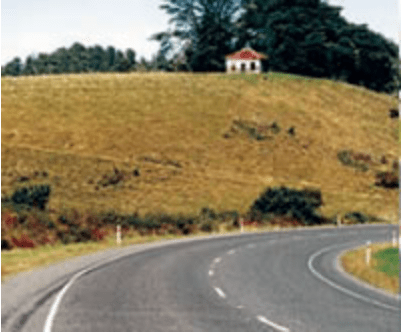
Chip-seal consists of a thin layer of stones set in tar. It has a rough appearance when in good condition, but may wear smooth with age and frequent use.
Worn chip-seal has reduced skid resistance, so be alert for smooth patches as you drive.
Slow down on newly laid chip-seal. There may be patches of loose chips, which can increase your risk of skidding. Loose chips can also be thrown up when vehicles drive over them and could break your windscreen.
Gravel
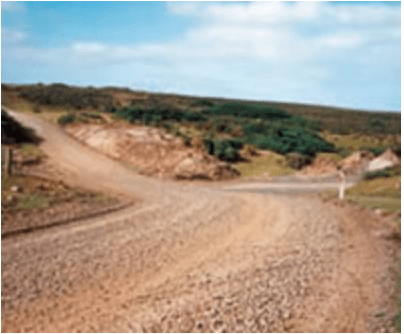
Gravel (sometimes called ‘metal’) is usually only used on roads that don’t have much traffic. Gravel roads tend to be minor roads in rural areas.
Because gravel can move under your wheels, it offers very low skid resistance. Loose stones may also be thrown up by vehicles. Because of this, you need to drive very carefully on gravel roads. Adjust your speed to suit the conditions.
You will also need to take extra care in dry weather, as your visibility may be reduced by dust that will be thrown up by any vehicles in front of you. Always increase your following distance to stay back from the dust cloud.
 Apperture Labs