Traffic signs used, including signs giving orders, warning signs, direction signs, information signs and road works signs.
Although The Highway Code shows many of the signs commonly in use, a comprehensive explanation of our signing system is given in the Department’s booklet Know Your Traffic Signs, which is on sale at booksellers. The booklet also illustrates and explains the vast majority of signs the road user is likely to encounter.
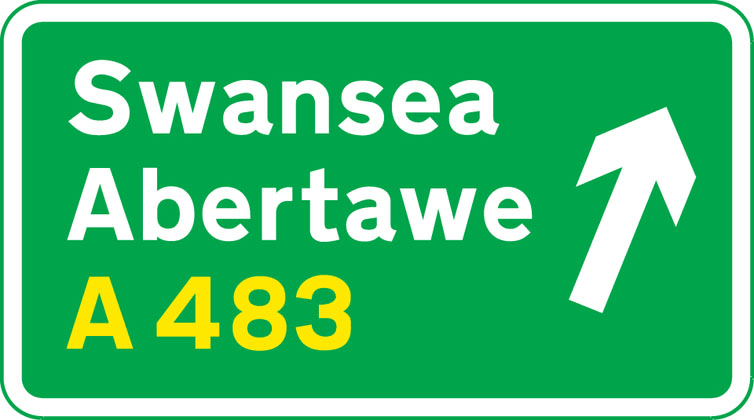
The signs illustrated in The Highway Code are not all drawn to the same scale. In Wales, bilingual versions of some signs are used including Welsh and English versions of place names. Some older designs of signs may still be seen on the roads.
Signs giving orders
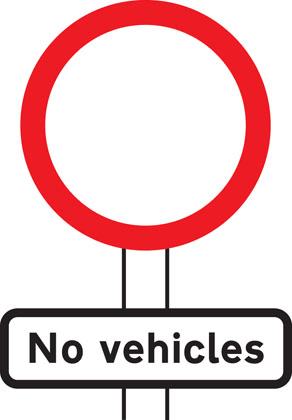
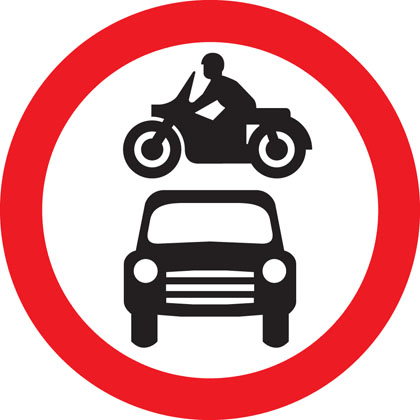
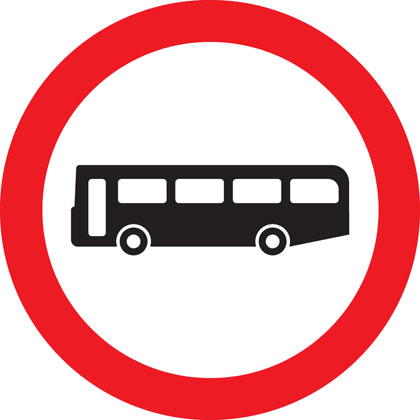
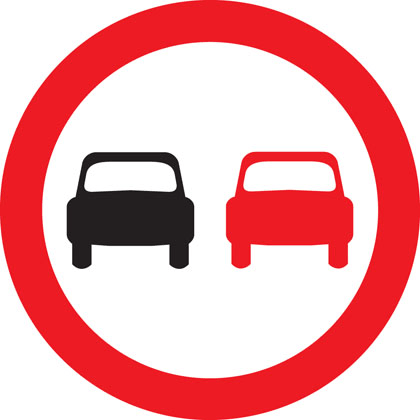
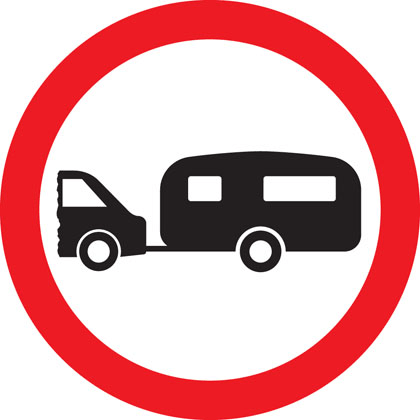
Signs with red circles are mostly prohibitive. Plates below signs qualify their message.
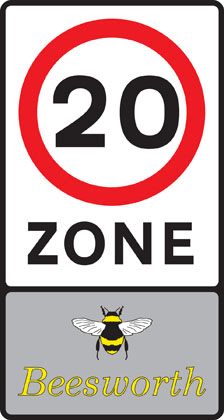
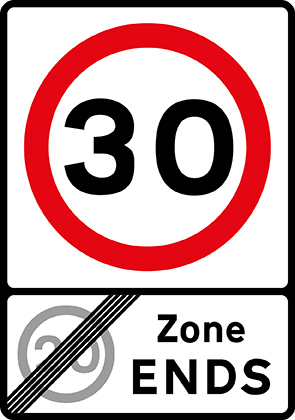
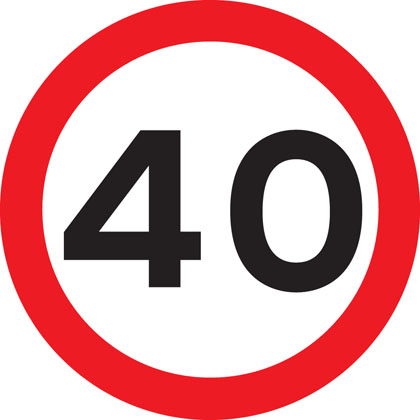
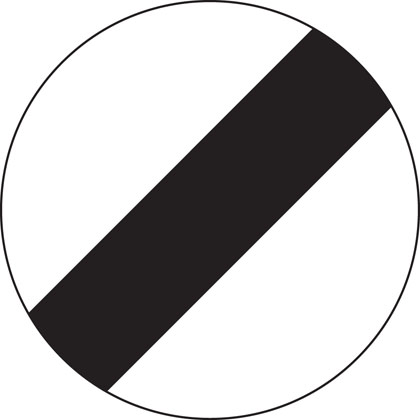
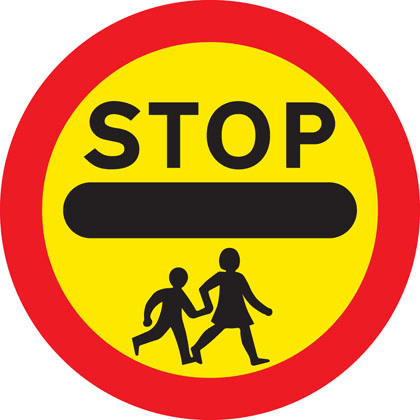
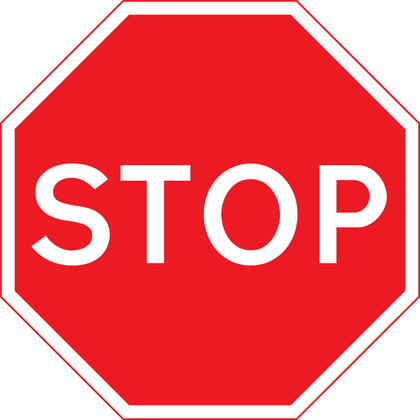
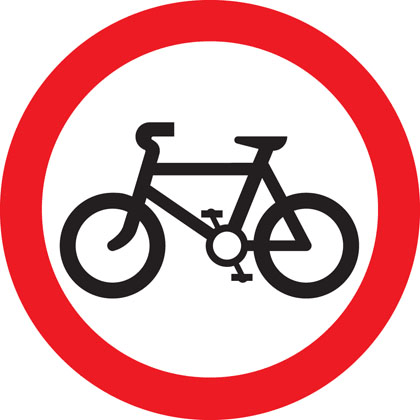
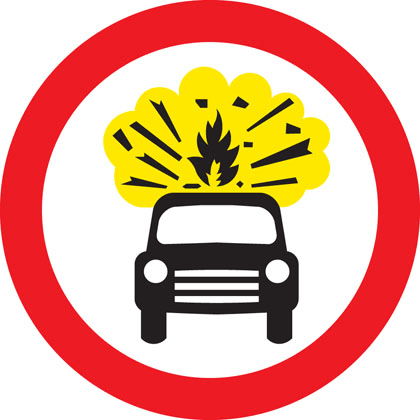
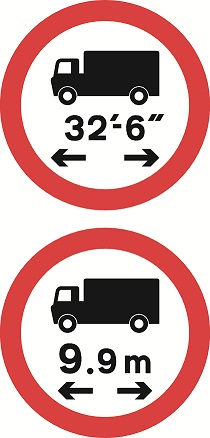
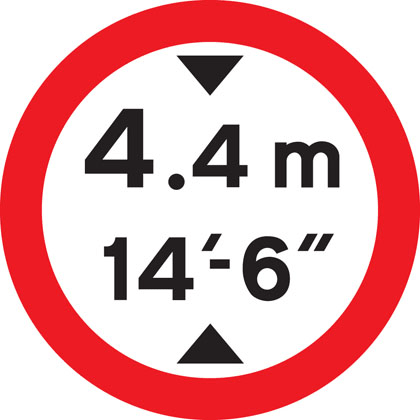
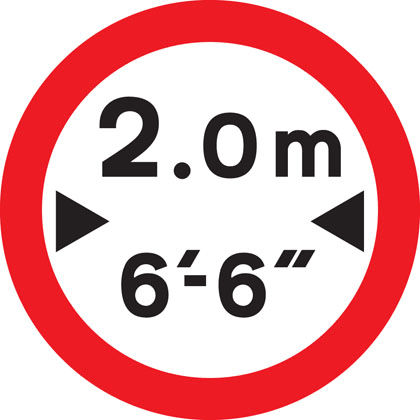
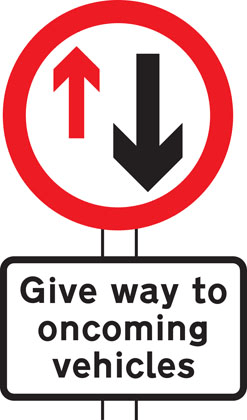
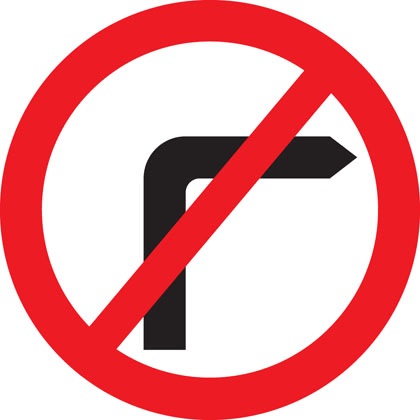
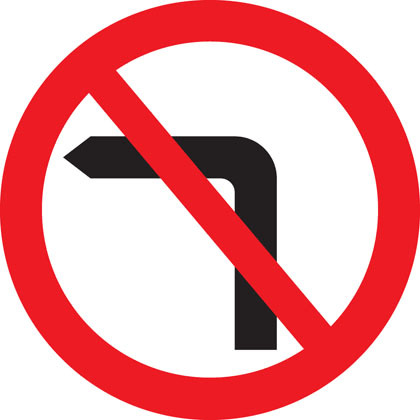
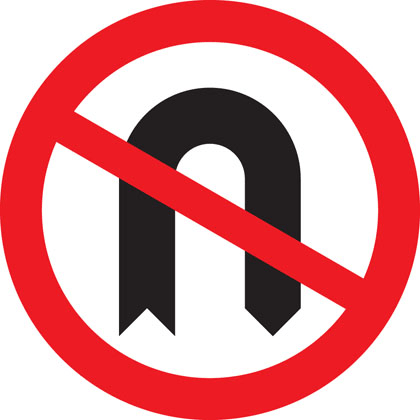
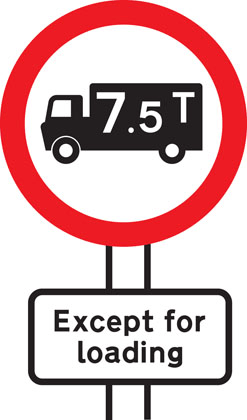
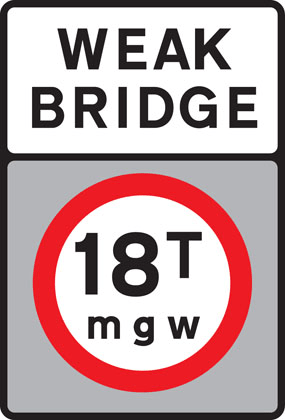
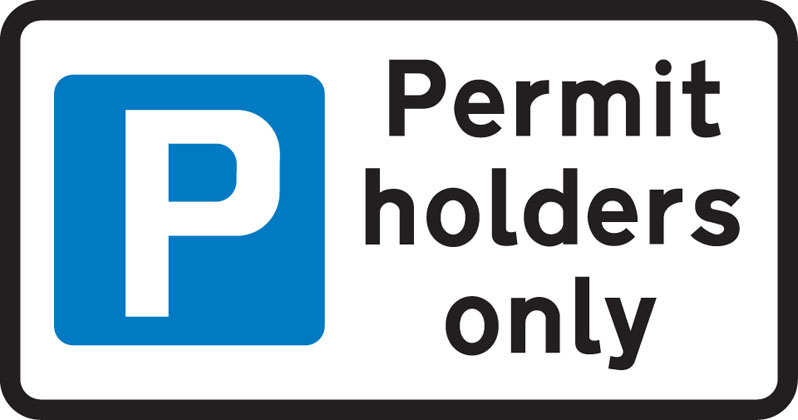
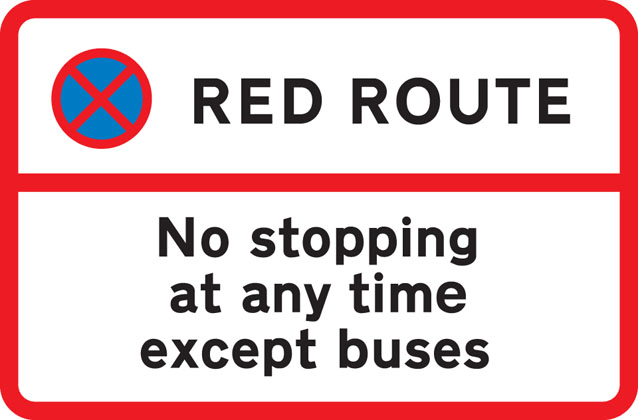
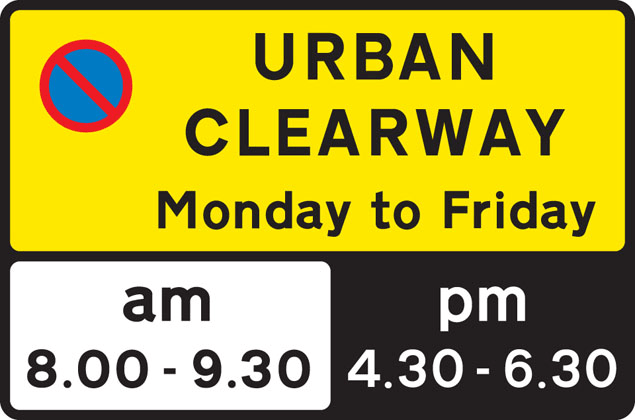
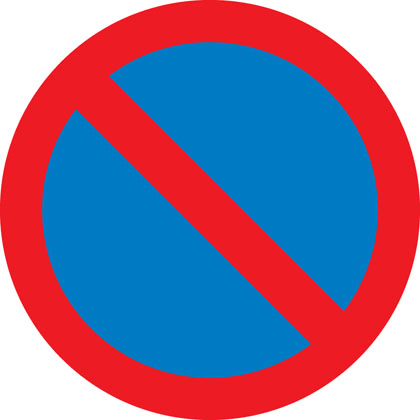
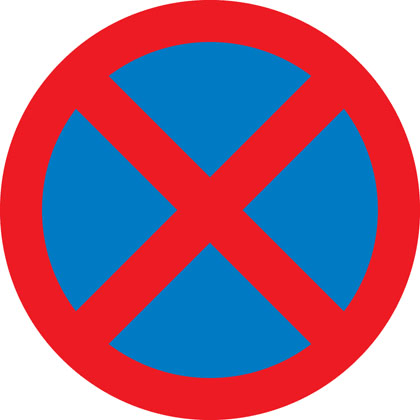
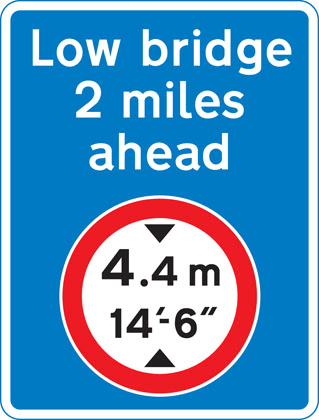
Entry to 20 mph zoneEnd of 20 mph zoneMaximum speedNational speed limit appliesSchool crossing patrolStop and give wayGive way to traffic on major roadManually operated temporary STOP and GO signsManually operated temporary STOP and GO signsNo entry for vehicular trafficNo vehicles except bicycles being pushedNo cyclingNo motor vehiclesNo buses (over 8 passenger seats)No overtakingNo towed caravansNo vehicles carrying explosivesNo vehicle or combination of vehicles over length shownNo vehicles over height shownNo vehicles over width shownGive priority to vehicles from opposite directionNo right turnNo left turnNo U-turnsNo goods vehicles over maximum gross weight shown (in tonnes) except for loading and unloadingNo vehicles over maximum gross weight shown (in tonnes)Parking restricted to permit holdersNo stopping during period indicated except for busesNo stopping during times shown except for as long as necessary to set down or pick up passengersNo waitingNo stopping (Clearway)
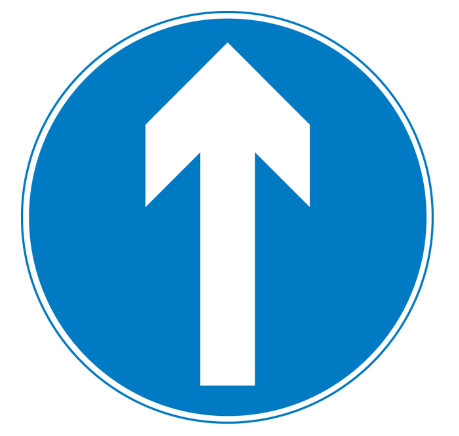
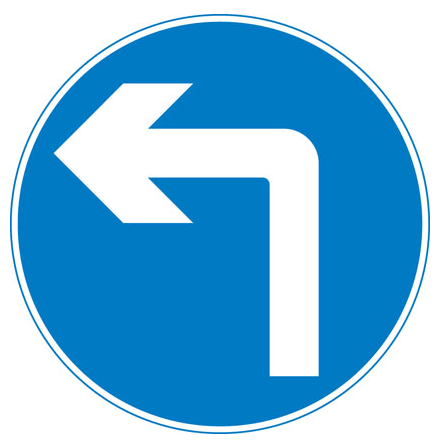
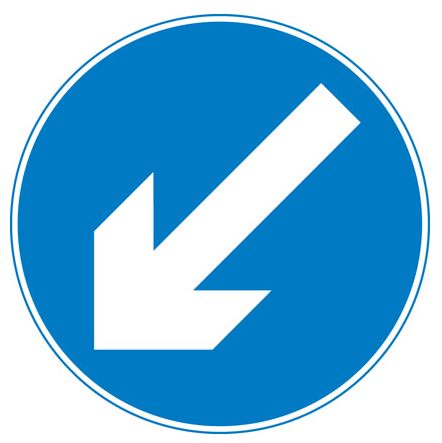
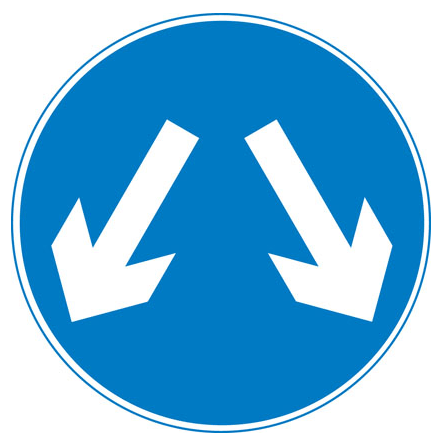
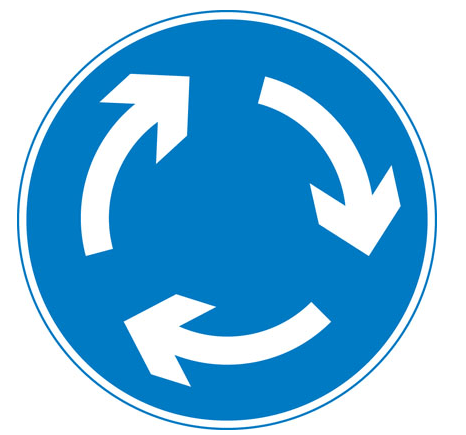
Signs with blue circles but no red border mostly give positive instruction.
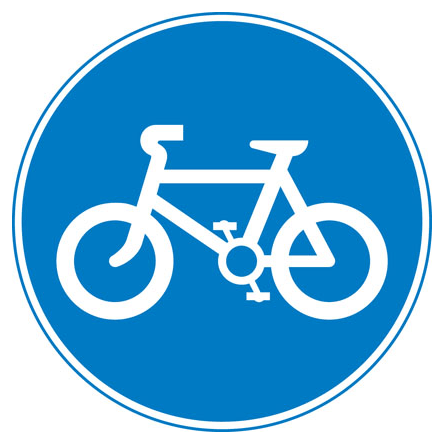
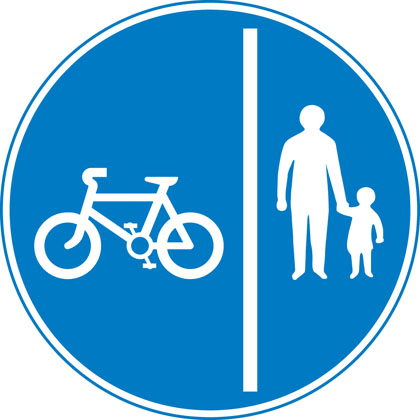
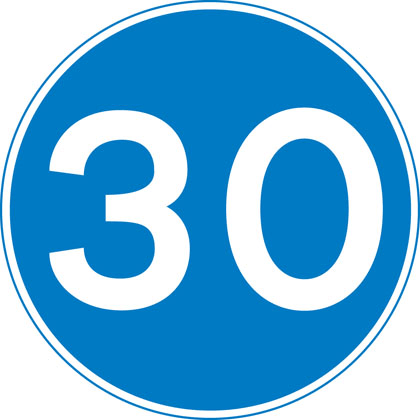
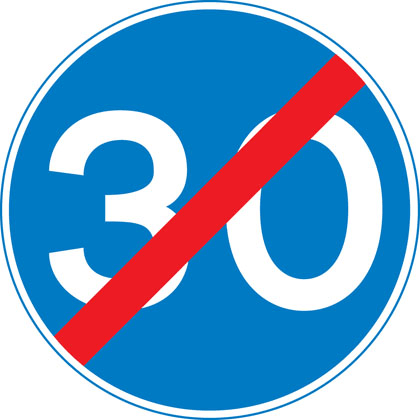
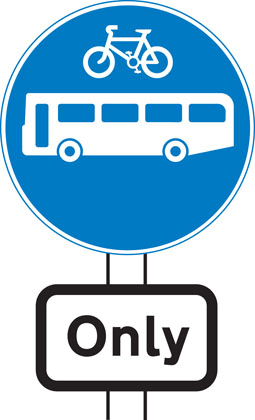
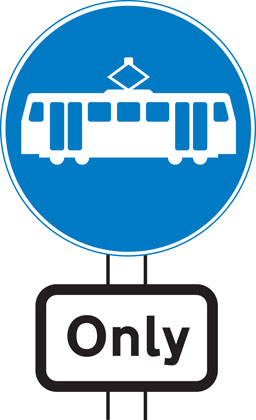
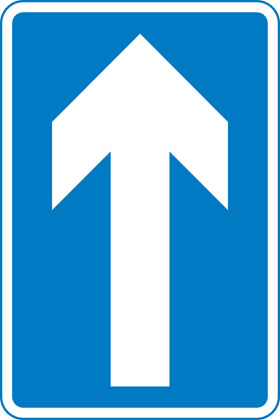
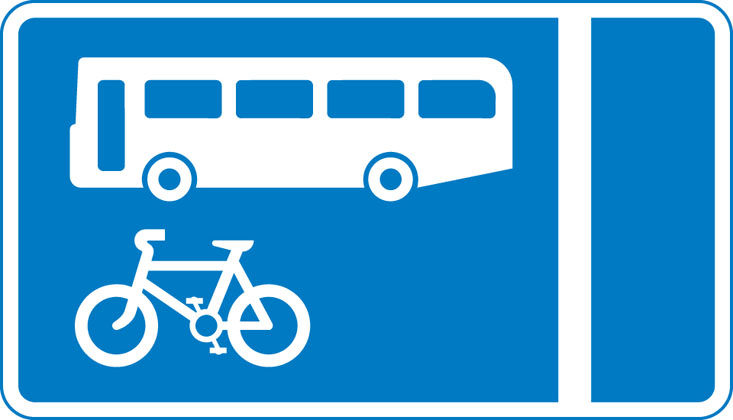
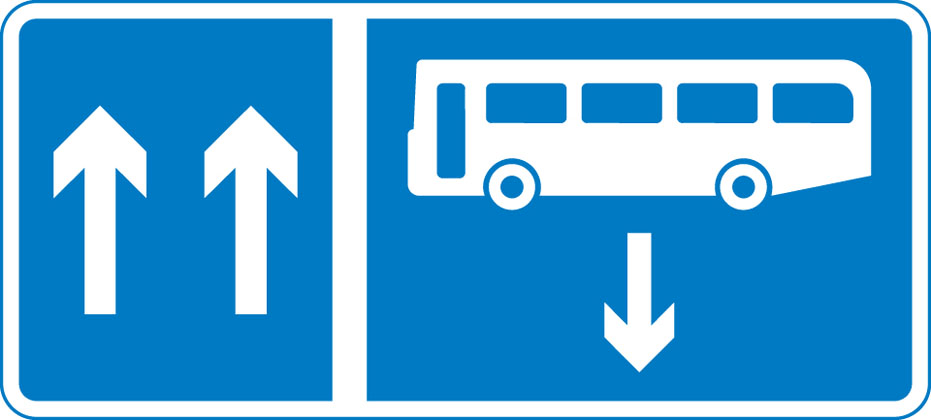
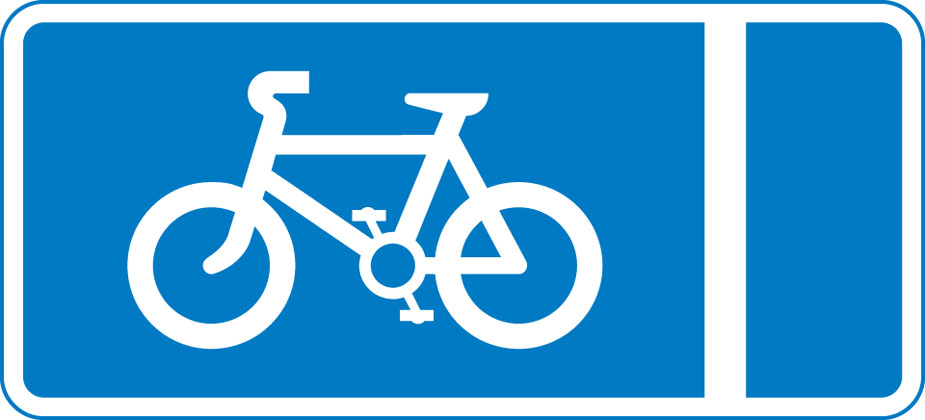
Ahead onlyTurn left ahead (right if symbol reversed)Turn left (right if symbol reversed)Keep left (right if symbol reversed)Vehicles may pass either side to reach same destinationMini-roundabout (roundabout circulation – give way to vehicles from the immediate right)Route to be used by pedal cycles onlySegregated pedal cycle and pedestrian routeMinimum speedEnd of minimum speedBuses and cycles onlyTrams onlyPedestrian crossing point over tramwayOne-way traffic (note: compare circular ‘Ahead only’ sign)With-flow bus and cycle laneContra-flow bus laneWith-flow pedal cycle lane
Warning signs
Mostly triangular
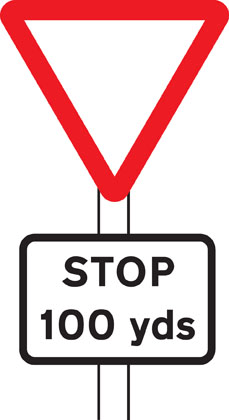
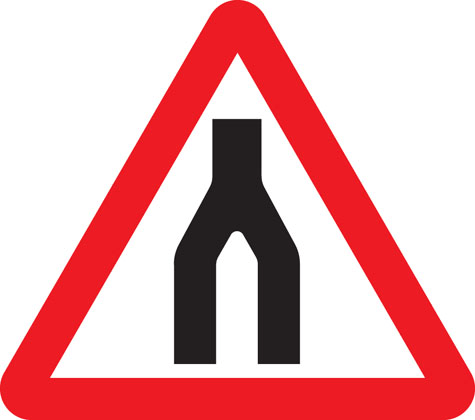
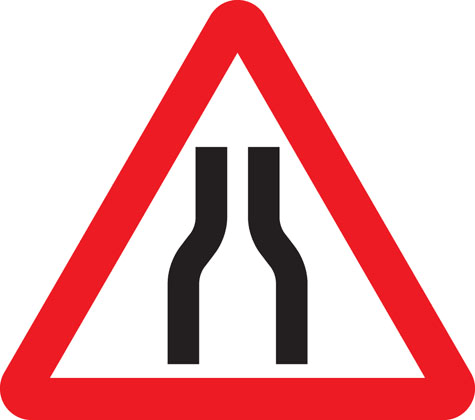
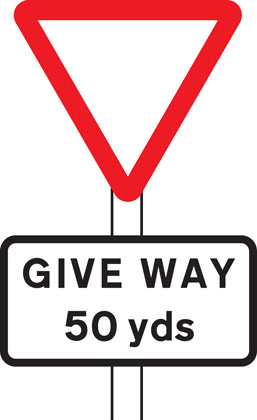
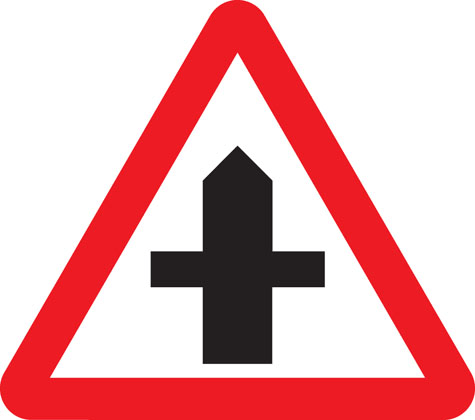
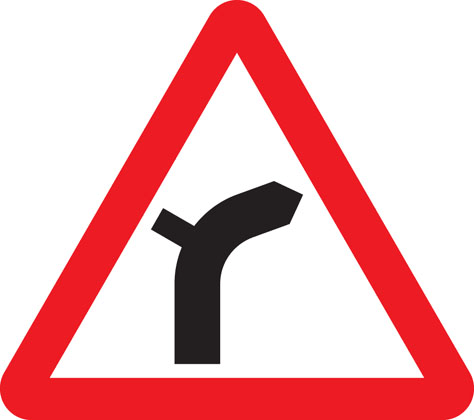
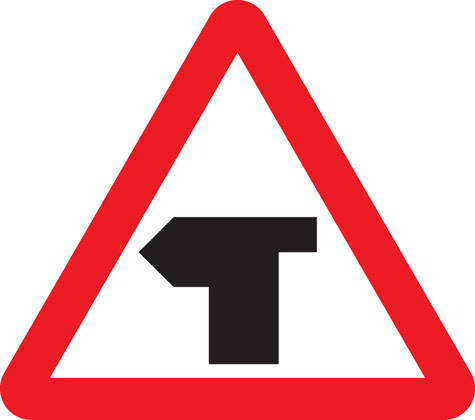
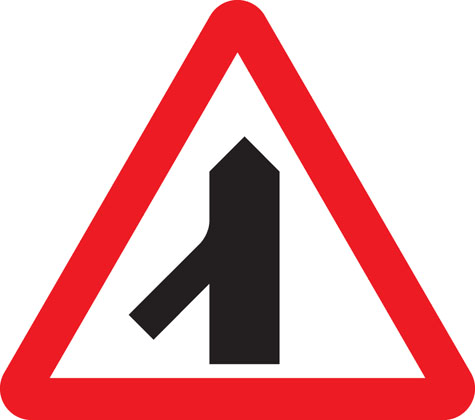
Distance to ‘STOP’ line aheadDual carriageway endsRoad narrows on right (left if symbol reversed)Road narrows on both sidesDistance to ‘Give Way’ line aheadCrossroadsJunction on bend aheadT-junction with priority over vehicles from the rightStaggered junctionTraffic merging from left ahead
The priority through route is indicated by the broader line.
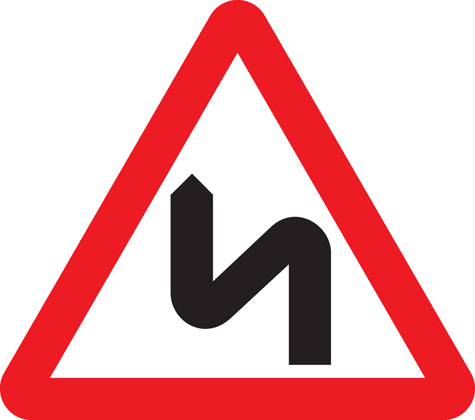
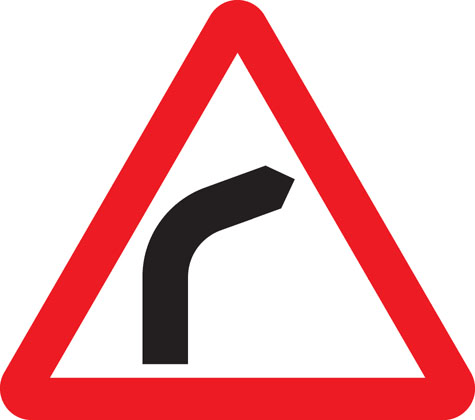
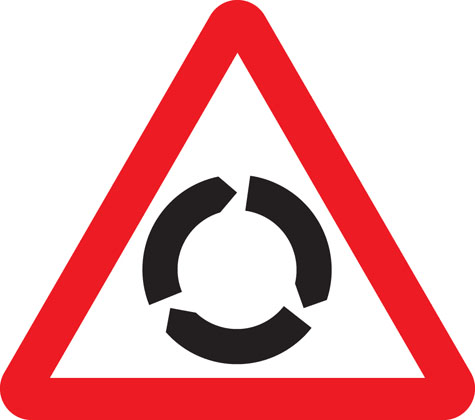
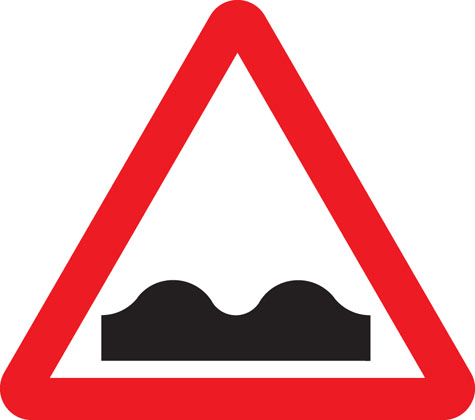
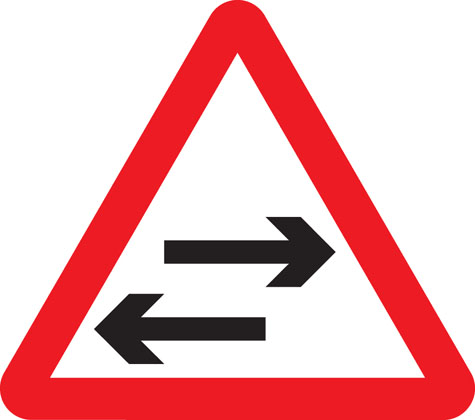
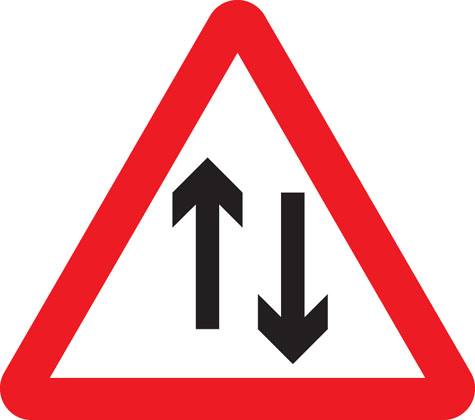
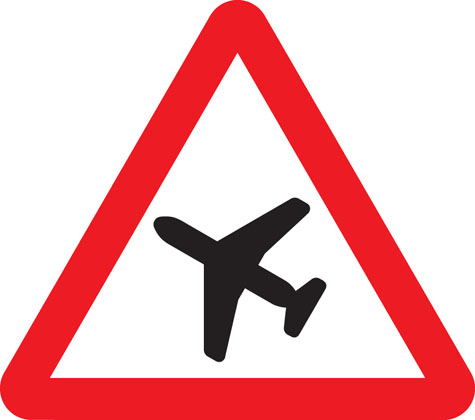
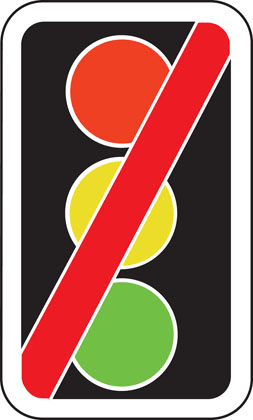
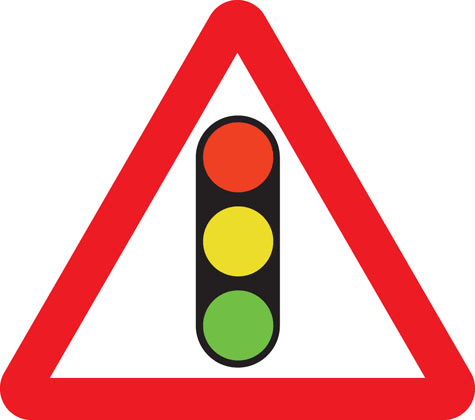
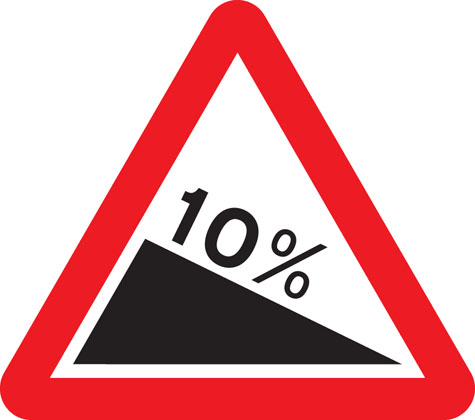
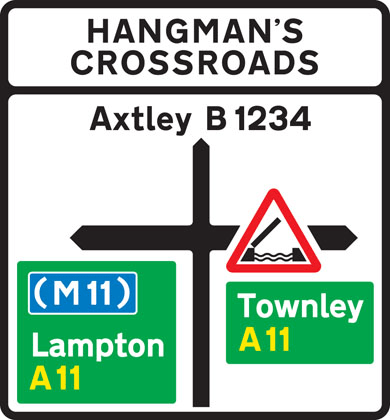
Double bend first to left (symbol may be reversed)Bend to right (or left if symbol reversed)RoundaboutUneven roadPlate below some signsTwo-way traffic crosses one-way roadTwo-way traffic straight aheadOpening or swing bridge aheadLow-flying aircraft or sudden aircraft noiseFalling or fallen rocksTraffic signals not in useTraffic signalsSlippery roadSteep hill downwardsSteep hill upwards
Gradients may be shown as a ratio i.e. 20% = 1:5
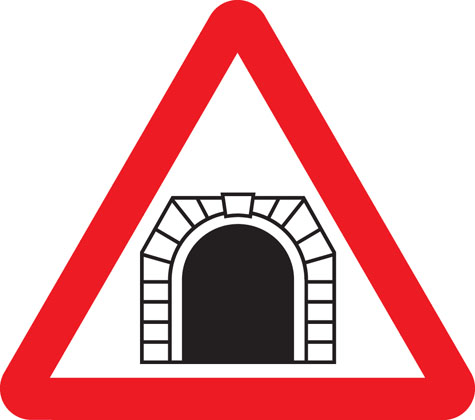
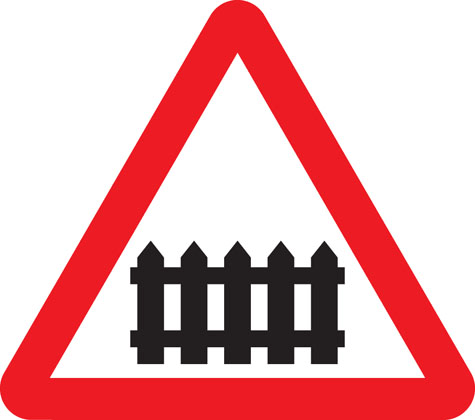
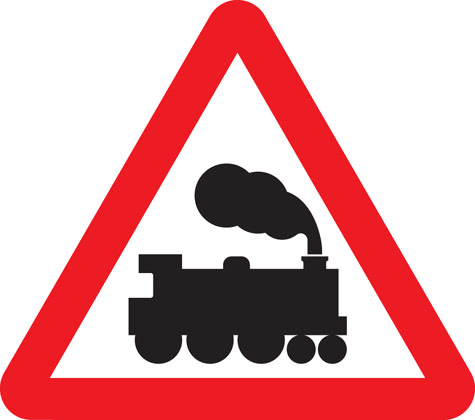
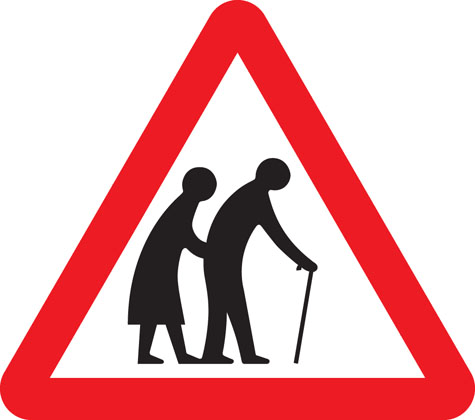
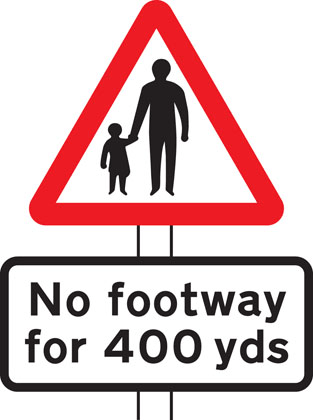
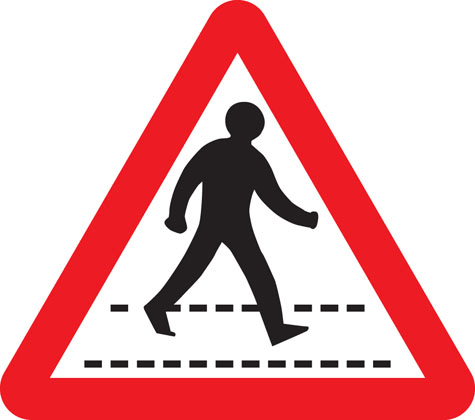
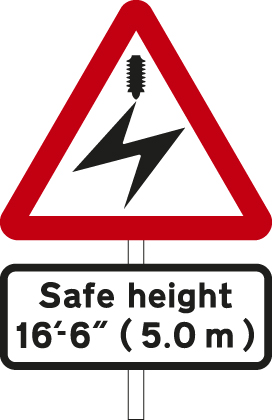
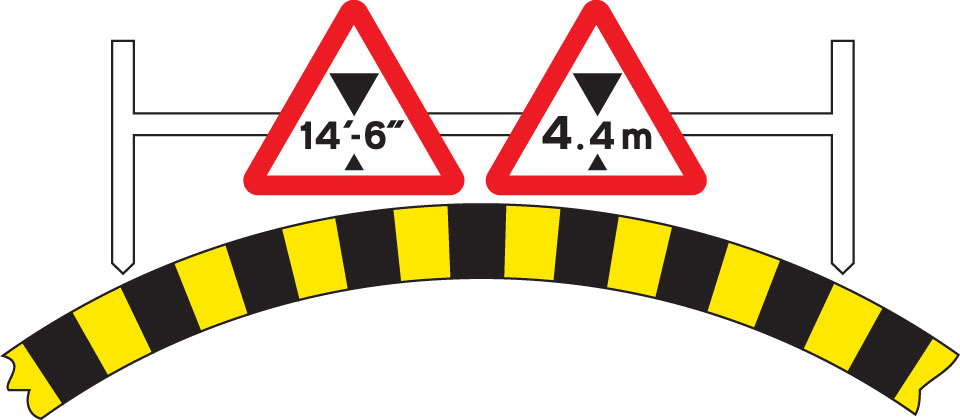
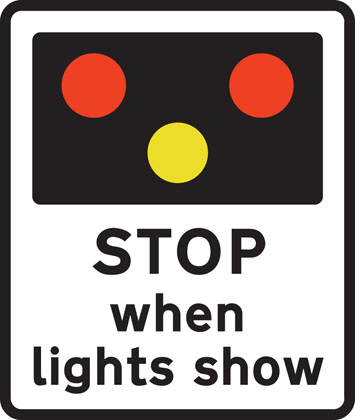
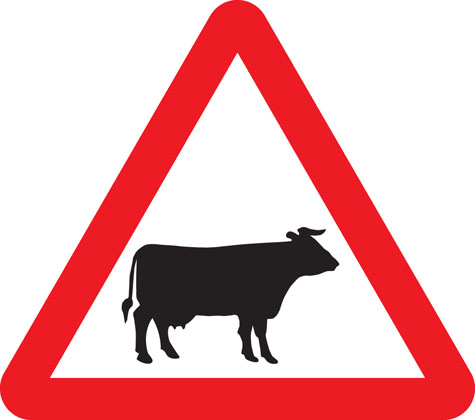
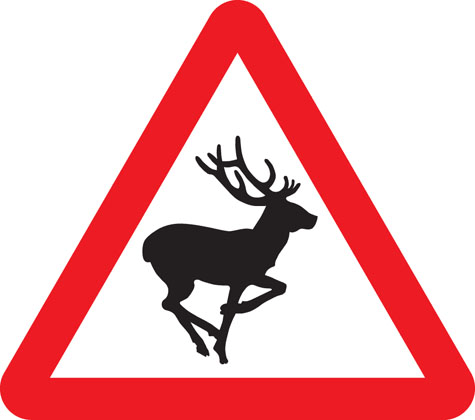
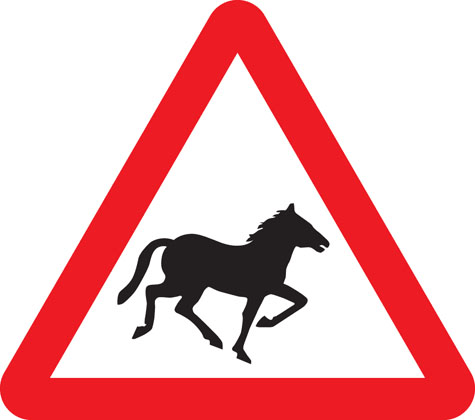
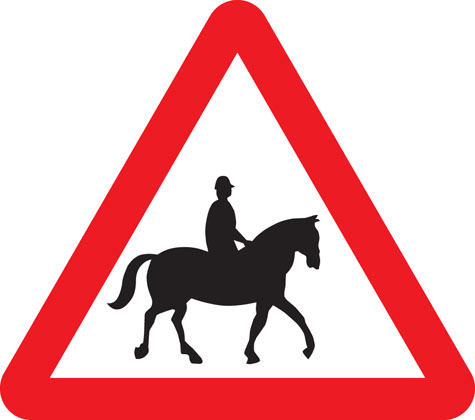
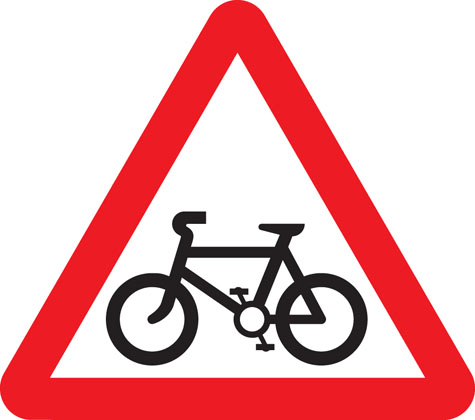
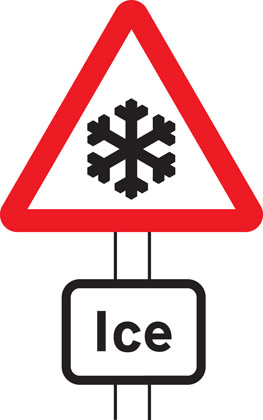
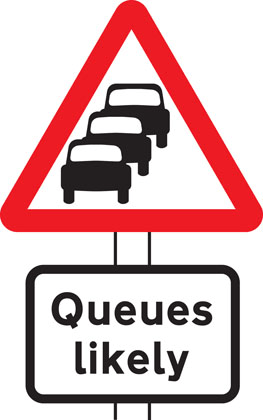
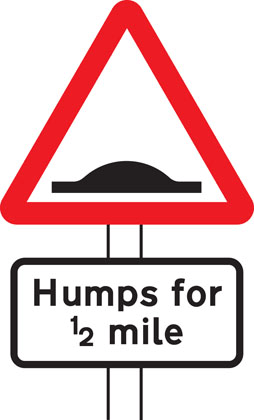
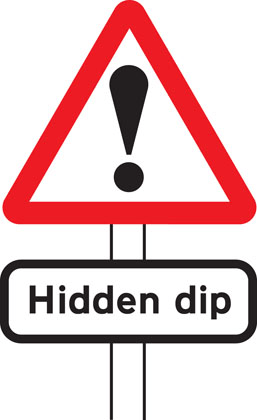
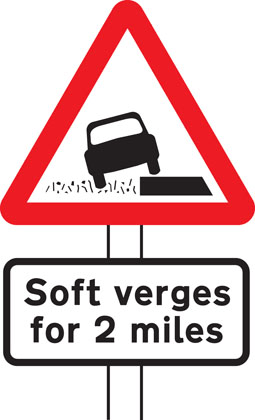
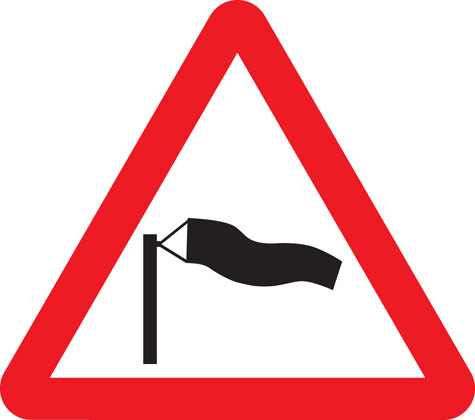
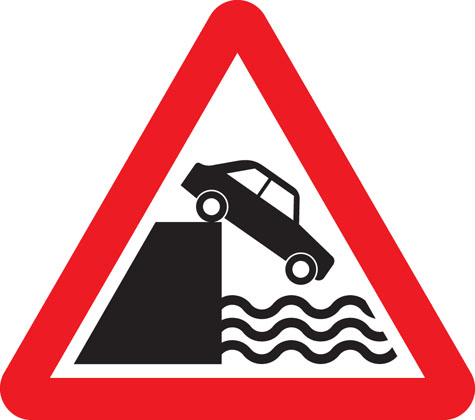
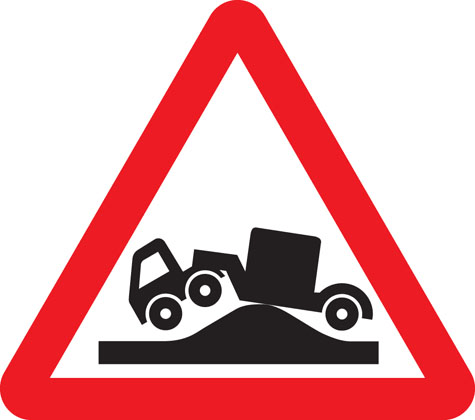
Tunnel aheadTrams crossing aheadLevel crossing with barrier or gate aheadLevel crossing without barrier or gate aheadLevel crossing without barrierSchool crossing patrol ahead (some signs have amber lights which flash when crossings are in use)Frail (or blind or disabled if shown) pedestrians likely to cross road aheadPedestrians in road aheadZebra crossingOverhead electric cable; plate indicates maximum height of vehicles which can pass safelyAvailable width of headroom indicatedSharp deviation of route to left (or right if chevrons reversed)Light signals ahead at level crossing, airfield or bridgeMiniature warning lights at level crossingsCattleWild animalsWild horses or poniesAccompanied horses or poniesCycle route aheadRisk of iceTraffic queues likely aheadDistance over which road humps extendOther danger; plate indicates nature of dangerSoft vergesSide windsHump bridgeWorded warning signQuayside or river bankRisk of grounding
Direction signs
Mostly rectangular
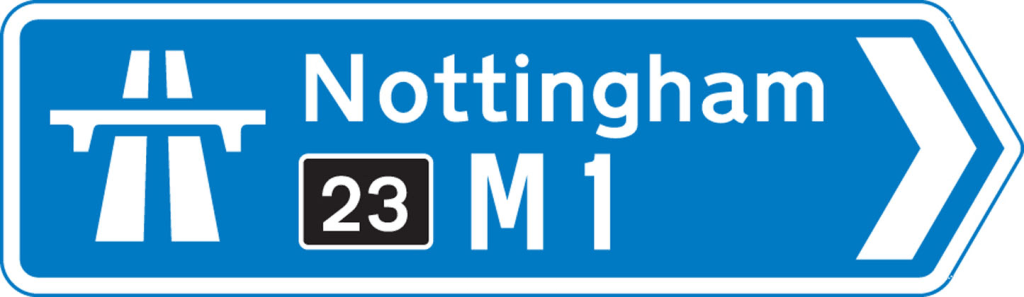
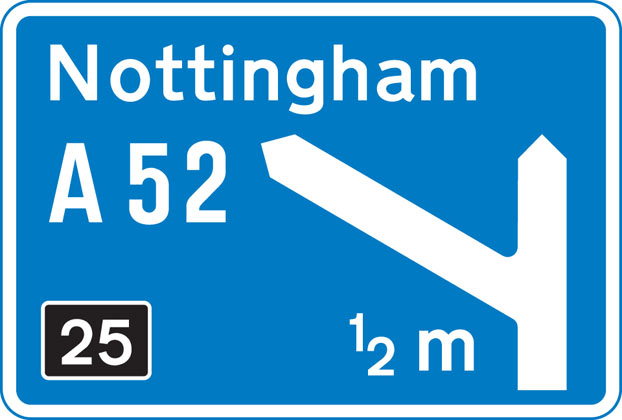
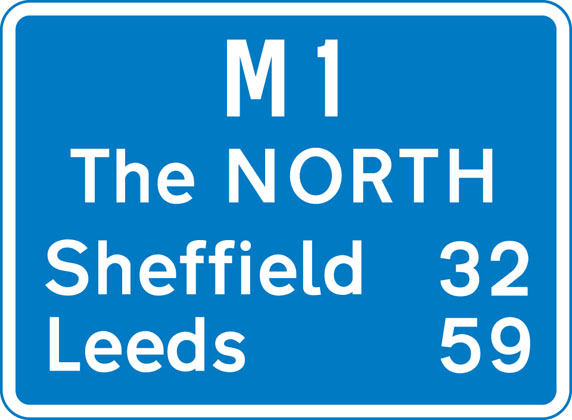
Signs on motorways – blue backgrounds
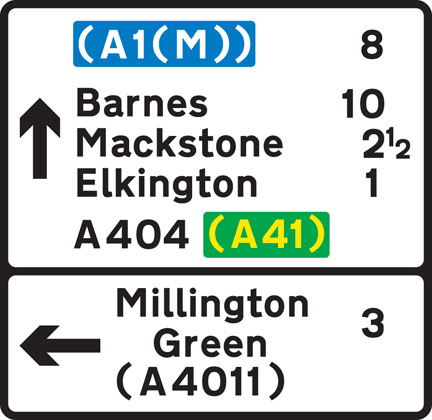
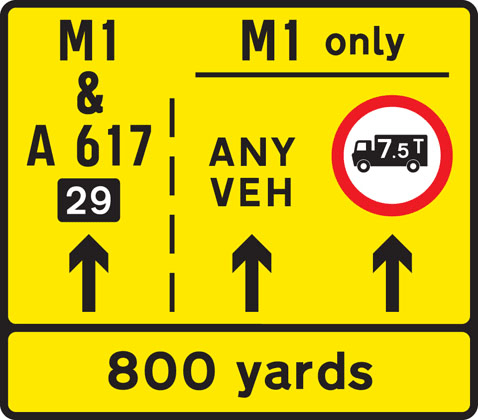
At a junction leading directly into a motorway (junction number may be shown on a black background)On approaches to junctions (junction number on black background)Route confirmatory sign after junctionDownward pointing arrows mean ‘Get in lane’ The left-hand lane leads to a different destination from the other lanes.
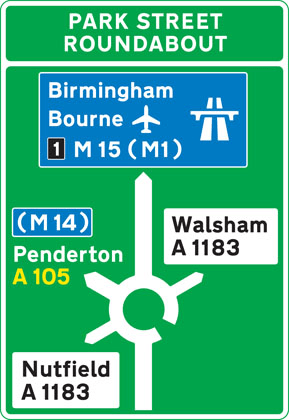
Signs on primary routes – green backgrounds
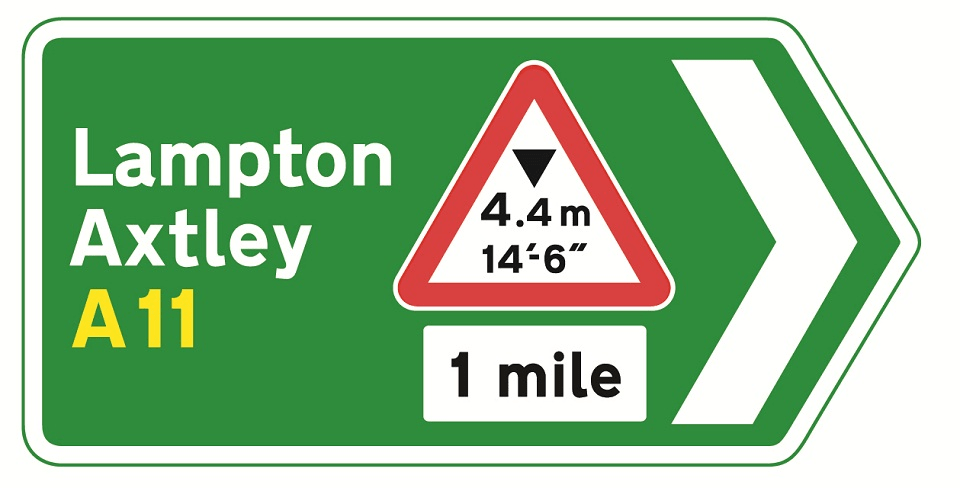
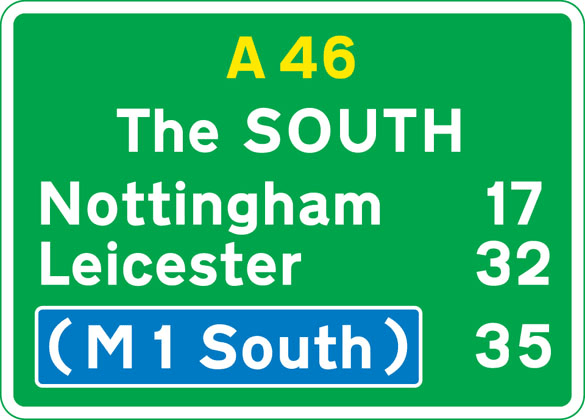
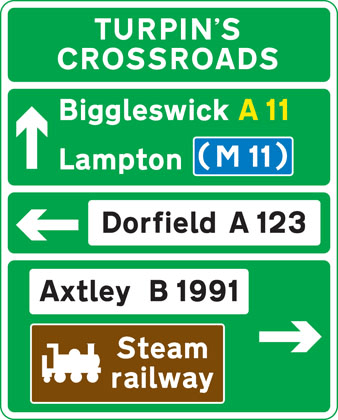
Blue panels indicate that the motorway starts at the junction ahead. Motorways shown in brackets can also be reached along the route indicated. White panels indicate local or non-primary routes leading from the junction ahead. Brown panels show the route to tourist attractions. The name of the junction may be shown at the top of the sign. The aircraft symbol indicates the route to an airport. A symbol may be included to warn of a hazard or restriction along that route.
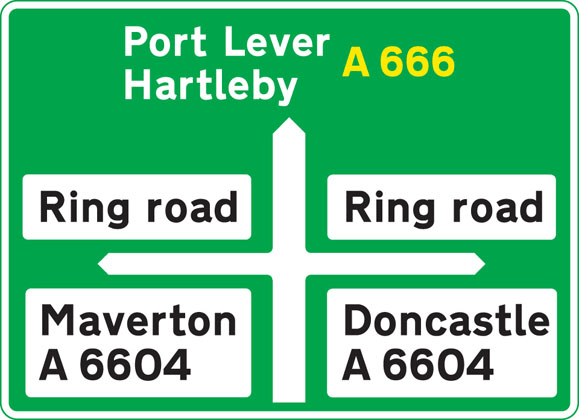
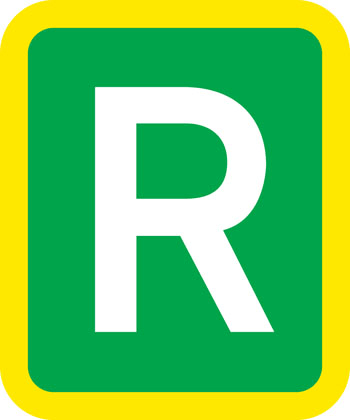
On approaches to junctionsAt the junctionRoute confirmatory sign after junctionOn approaches to junctionsOn approach to a junction in Wales (bilingual)Primary route forming part of a ring roadPrimary route forming part of a ring road
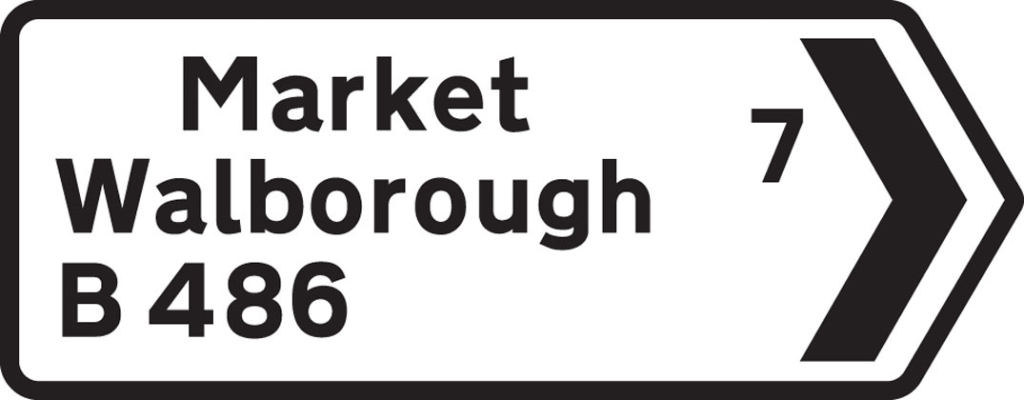
Signs on non-primary and local routes – black borders
Green panels indicate that the primary route starts at the junction ahead. Route numbers on a blue background show the direction to a motorway. Route numbers on a green background show the direction to a primary route.
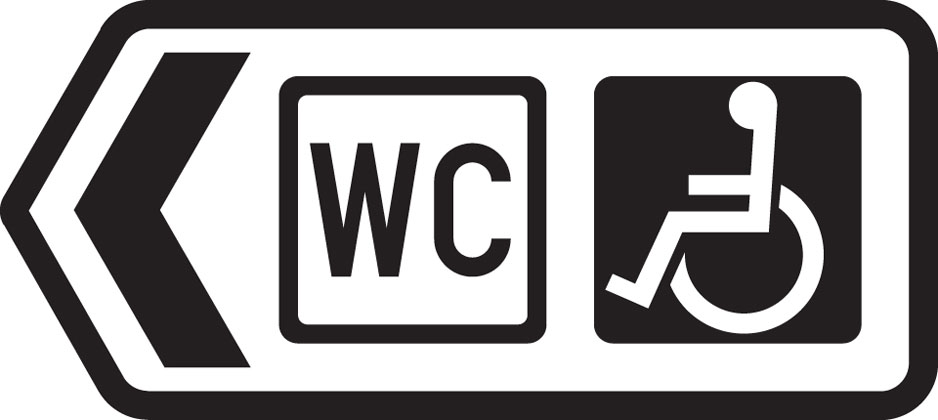
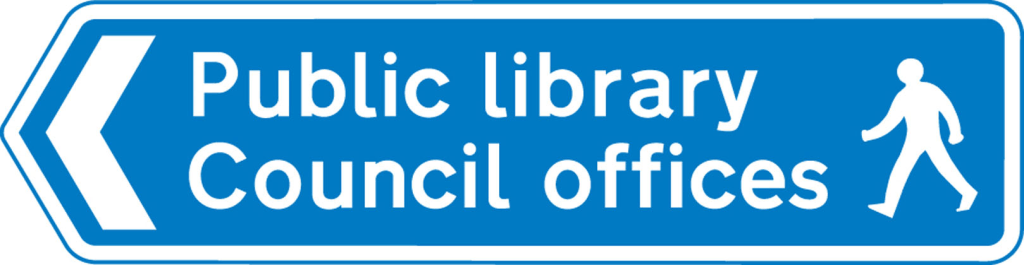
On approaches to junctionsOn approaches to junctionsAt the junctionDirection to toilets with access for the disabled
Other direction signs
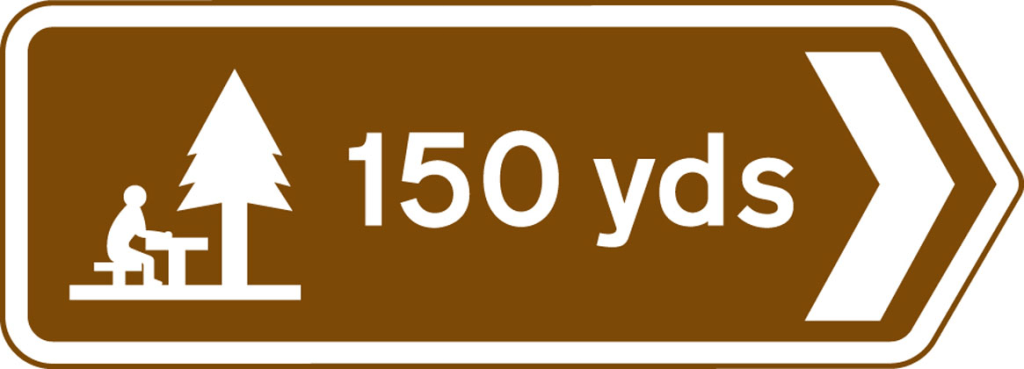
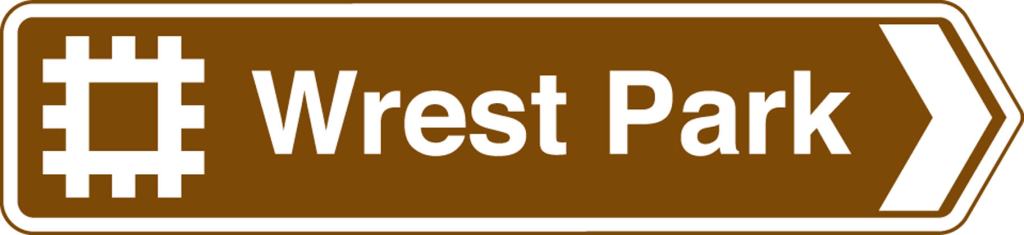
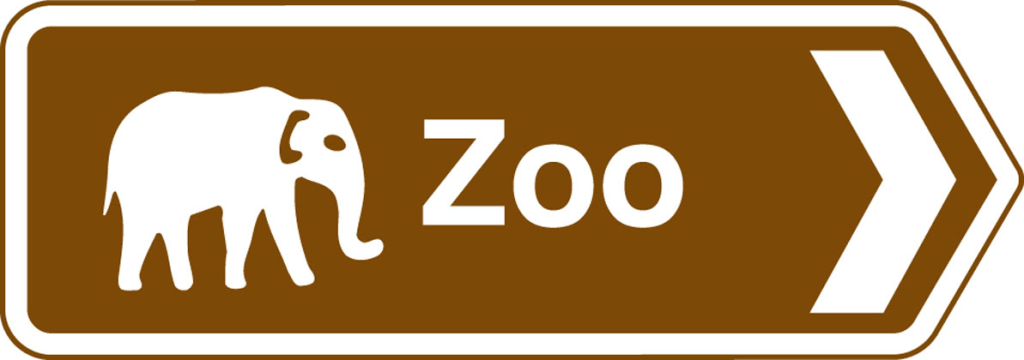
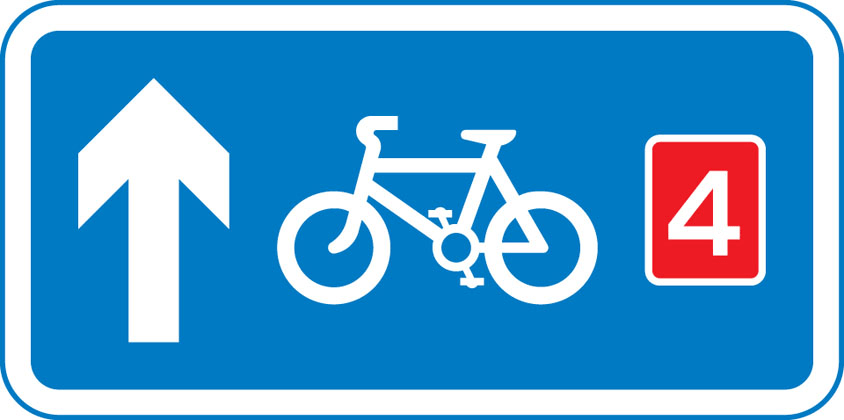
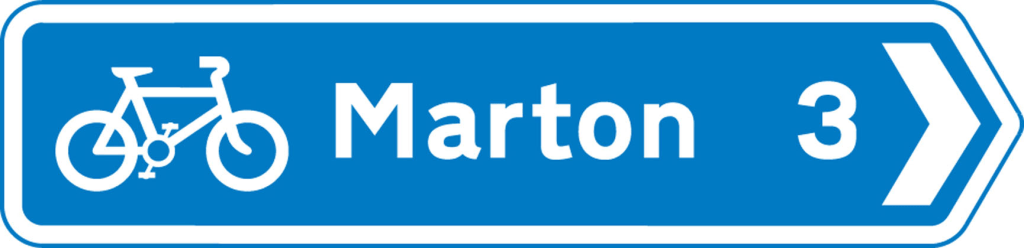
Picnic siteAncient monument in the care of English HeritageDirection to a car parkTourist attractionDirection to camping and caravan siteAdvisory route for lorriesRoute for pedal cycles forming part of a networkRecommended route for pedal cycles to place shownRoute for pedestriansSymbols showing emergency diversion route for motorway and other main road trafficSymbols showing emergency diversion route for motorway and other main road trafficSymbols showing emergency diversion route for motorway and other main road trafficSymbols showing emergency diversion route for motorway and other main road trafficDiversion route
Information signs
All rectangular
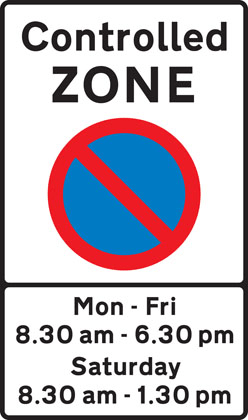
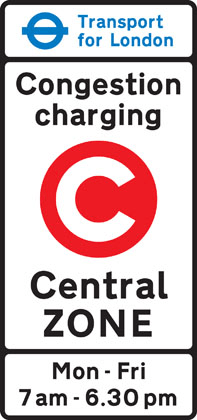
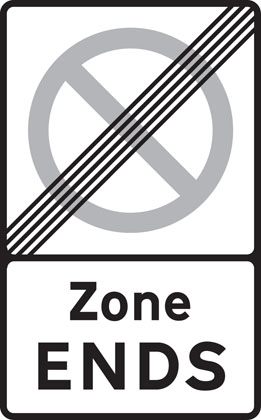
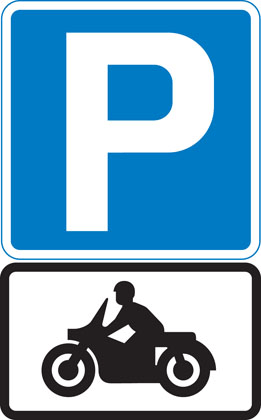
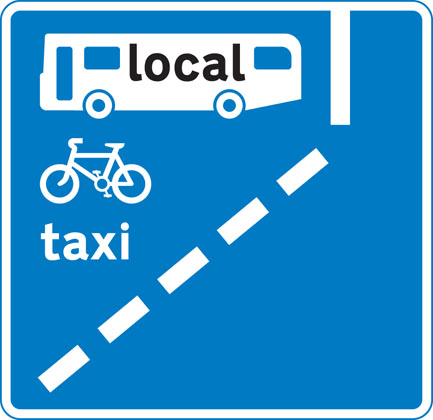
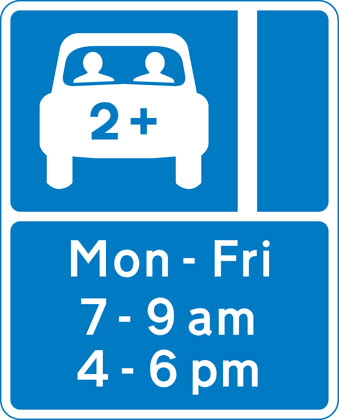
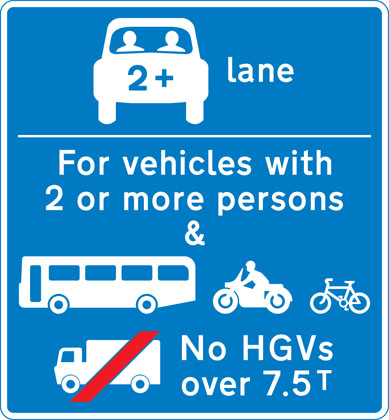
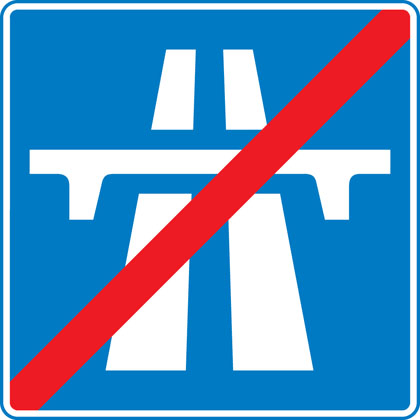
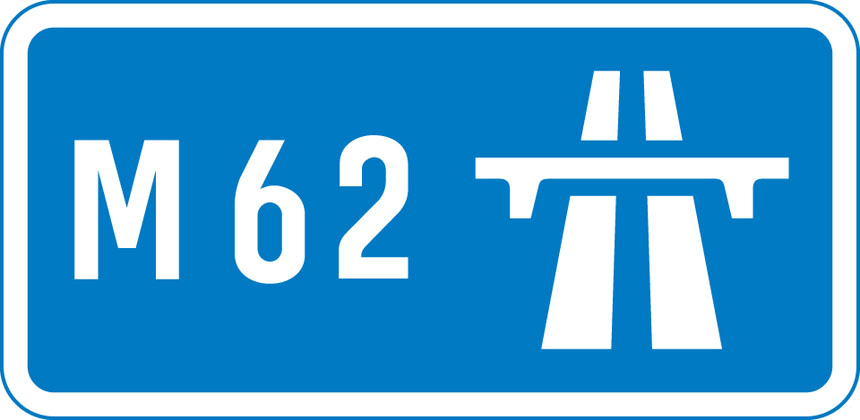
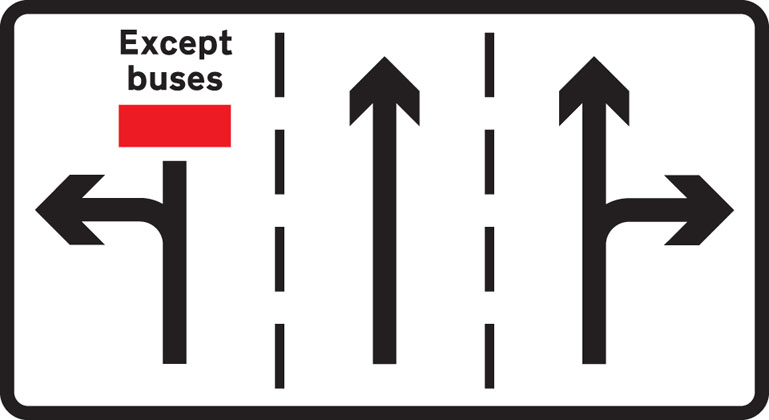
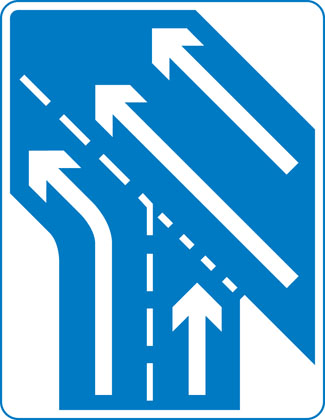
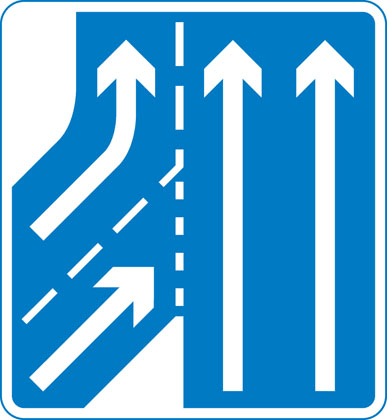
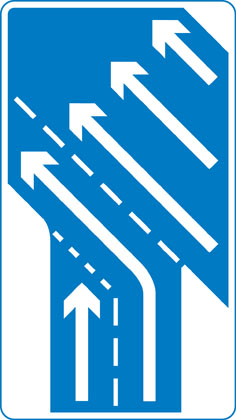
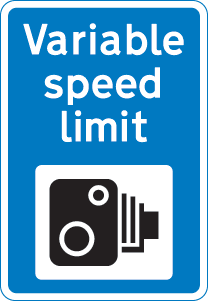
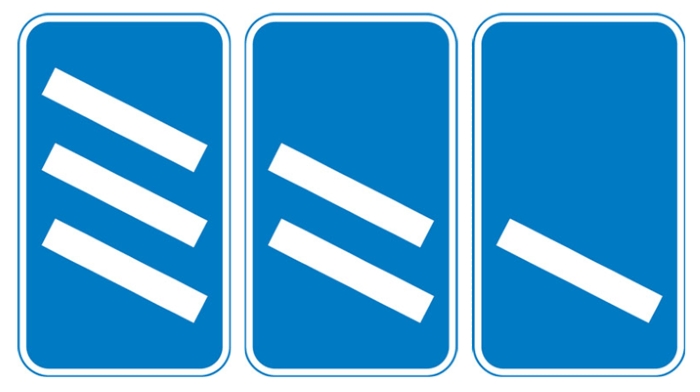
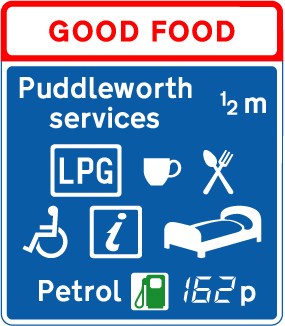
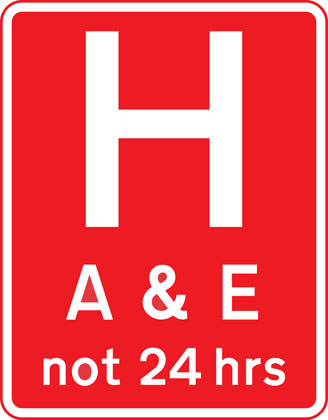
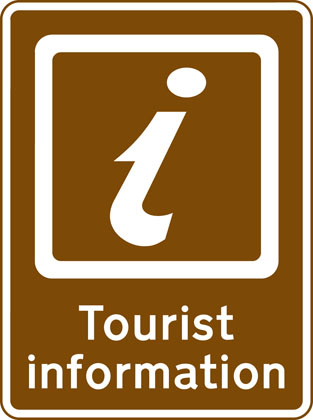
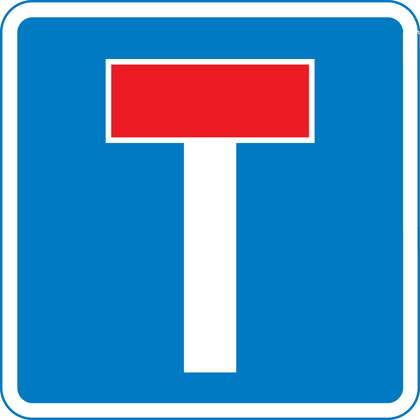
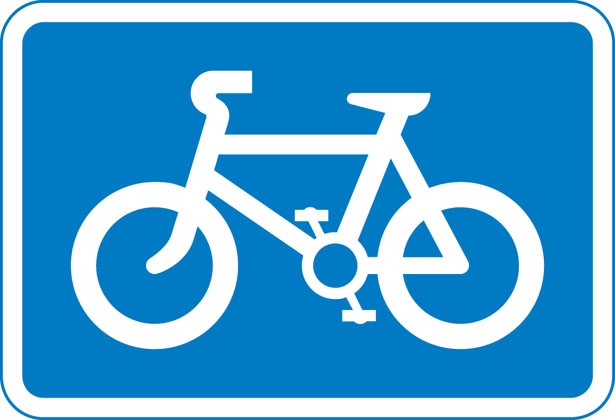
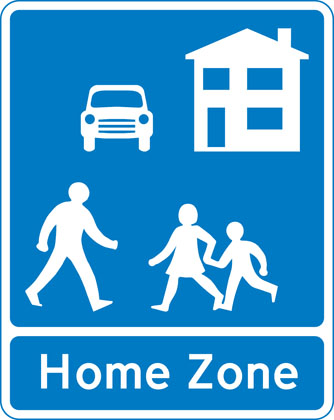
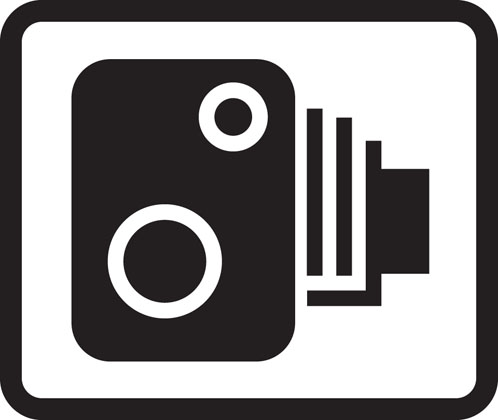
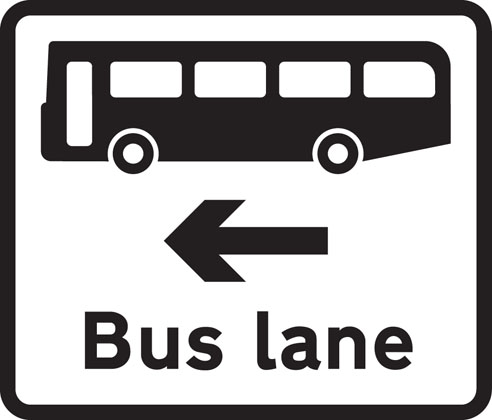
Entrance to controlled parking zoneEntrance to congestion charging zoneEnd of controlled parking zoneAdvance warning of restriction or prohibition aheadParking place for solo motorcyclesWith-flow bus lane ahead which pedal cycles and taxis may also useLane designated for use by high occupancy vehicles (HOV) – see rule 142Vehicles permitted to use an HOV lane aheadEnd of motorwayStart of motorway and point from which motorway regulations applyAppropriate traffic lanes at junction aheadTraffic on the main carriageway coming from right has priority over joining trafficAdditional traffic joining from left ahead. Traffic on main carriageway has priority over joining traffic from right hand lane of slip roadTraffic in right hand lane of slip road joining the main carriageway has priority over left hand laneVariable speed limit with camera enforcement sign.‘Countdown’ markers at exit from motorway (each bar represents 100 yards to the exit). Green-backed markers may be used on primary routes and white-backed markers with black bars on other routes. At approaches to concealed level crossings white-backed markers with red bars may be used. Although these will be erected at equal distances the bars do not represent 100 yard intervals.Motorway service area sign showing the operator’s nameTraffic has priority over oncoming vehiclesHospital ahead with Accident and Emergency facilities Tourist information pointNo through road for vehiclesRecommended route for pedal cyclesHome Zone EntryArea in which cameras are used to enforce traffic regulationsBus lane on road at junction ahead
Road work signs
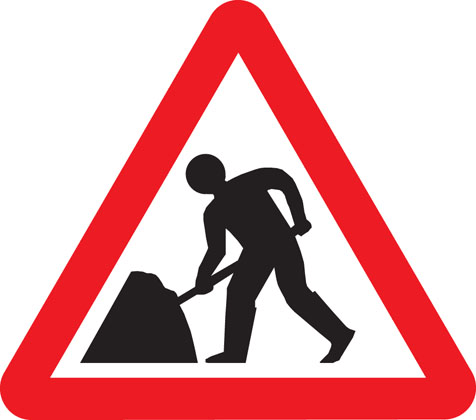
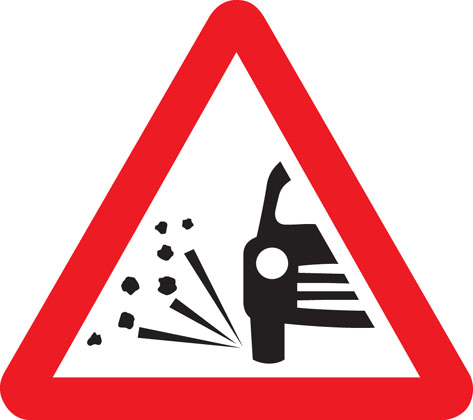
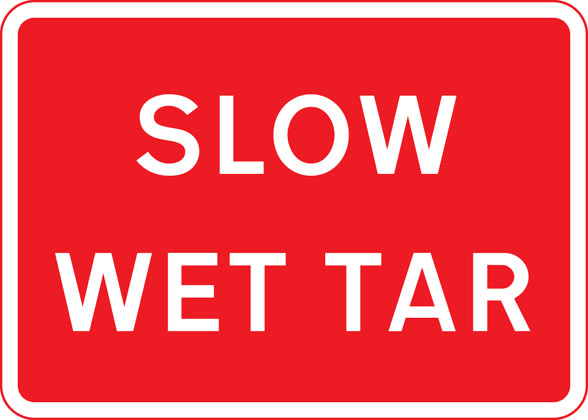
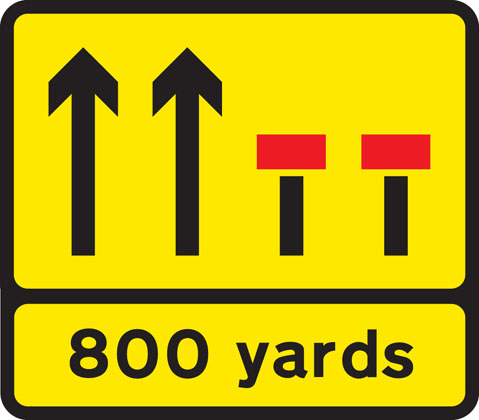
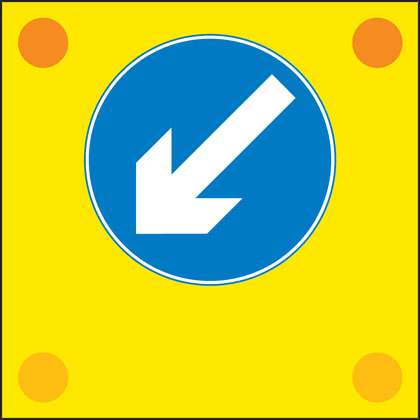
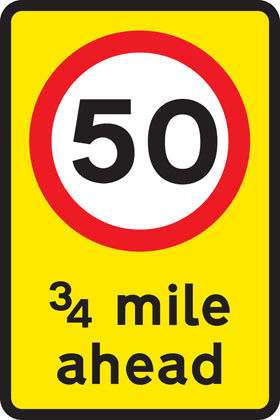
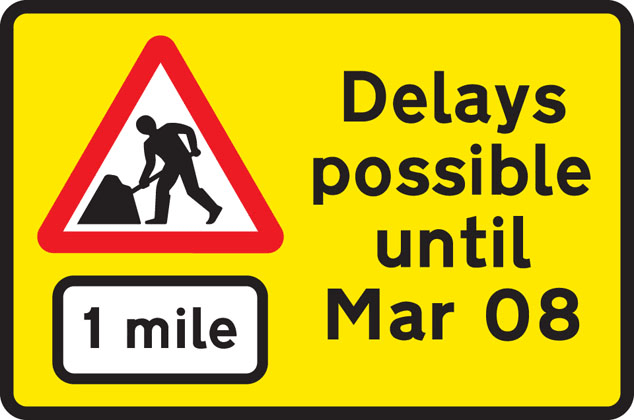
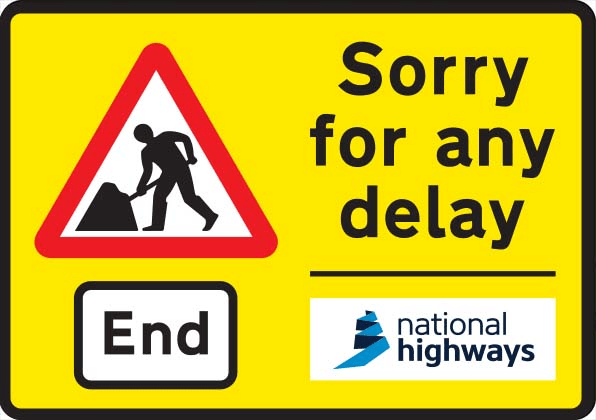
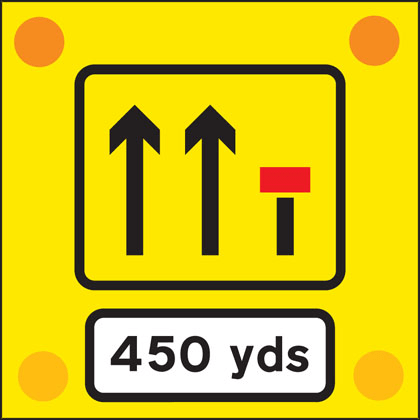
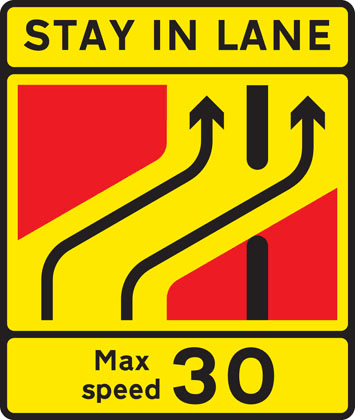
Road worksLoose chippingsTemporary hazard at road worksTemporary lane closure (the number and position of arrows and red bars may be varied according to lanes open and closed)Slow-moving or stationary works vehicle blocking a traffic lane. Pass in the direction shown by the arrow.Mandatory speed limit aheadRoad works 1 mile aheadEnd of road works and any temporary restrictions including speed limitsSigns used on the back of slow-moving or stationary vehicles warning of a lane closed ahead by a works vehicle. There are no cones on the road.Signs used on the back of slow-moving or stationary vehicles warning of a lane closed ahead by a works vehicle. There are no cones on the road.Lane restrictions at road works aheadOne lane crossover at contraflow road works
Road markings
Road markings used, including those across the carriageway, along the carriageway, along the edge of the carriageway, on the kerb or at the edge of the carriageway and other road markings.
Across the carriageway
Stop line at signals or police controlStop line at ‘Stop’ signStop line for pedestrians at a level crossingGive way to traffic on major road (can also be used at mini roundabouts)Give way to traffic from the right at a roundaboutGive way to traffic from the right at a mini-roundabout
Along the carriageway
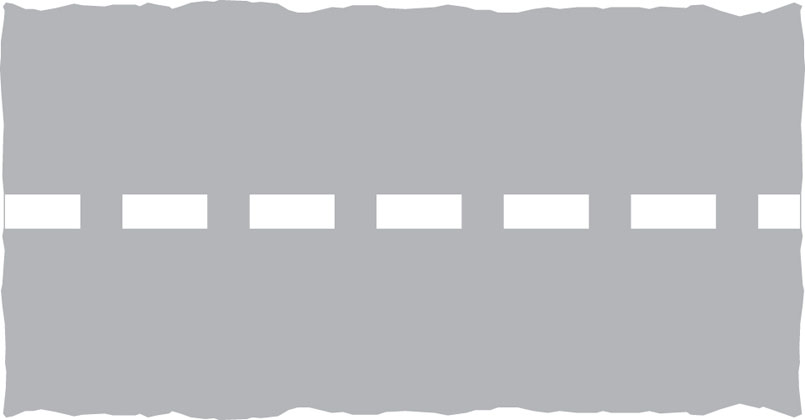
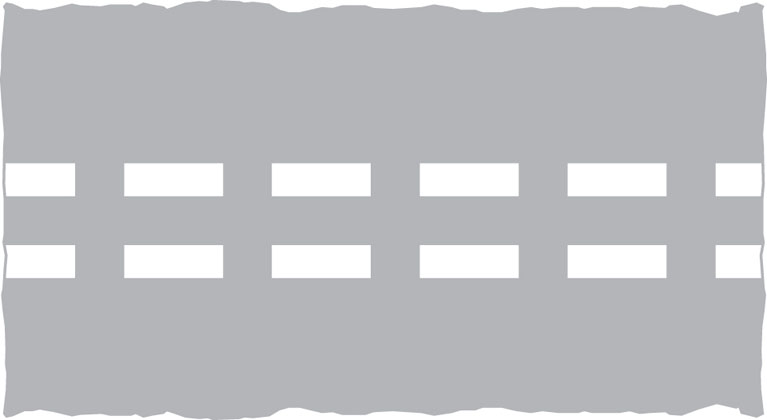
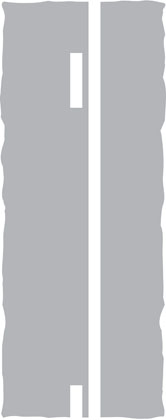
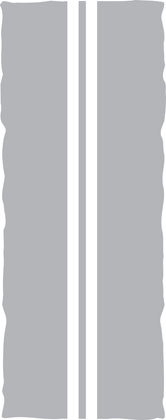
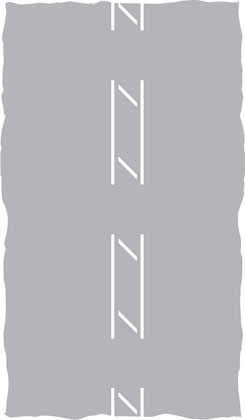
Edge lineCentre line – See Rule 127Hazard warning line – See Rule 127Double white lines – See Rules 128 and 129Double white lines – See Rules 128 and 129Areas of white diagonal stripes – See Rule 130Lane line – See Rule 131
Along the edge of the carriageway
Waiting restrictions
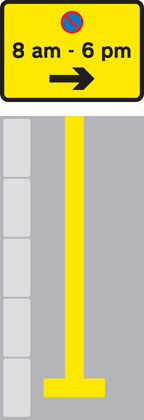
Waiting restrictions indicated by yellow lines apply to the carriageway, pavement and verge. You may stop to load or unload (unless there are also loading restrictions as described below) or while passengers board or alight. Double yellow lines mean no waiting at any time, unless there are signs that specifically indicate seasonal restrictions. The times at which the restrictions apply for other road markings are shown on nearby plates or on entry signs to controlled parking zones. If no days are shown on the signs, the restrictions are in force every day including Sundays and Bank Holidays. White bay markings and upright signs (see below) indicate where parking is allowed.
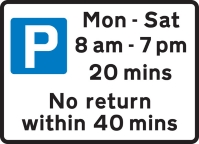
No waiting at any timeNo waiting during times shown on signWaiting is limited to the duration specified during the days and times shown
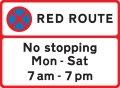
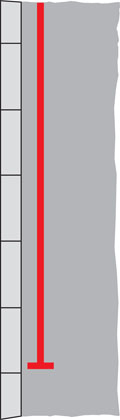
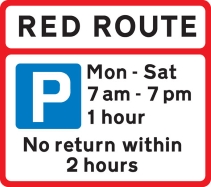
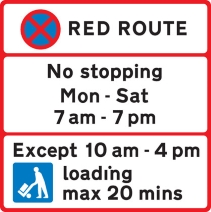
Red Route stopping controls
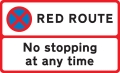
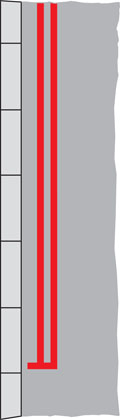
Red lines are used on some roads instead of yellow lines. The double and single red lines used on Red Routes indicate that stopping to park, load/unload or to board and alight from a vehicle (except for a licensed taxi or if you hold a Blue Badge) is prohibited. The red lines apply to the carriageway, pavement and verge. The times that the red line prohibitions apply are shown on nearby signs, but the double red line ALWAYS means no stopping at any time. On Red Routes you may stop to park, load/unload in specially marked boxes and adjacent signs specify the times and purposes and duration allowed. A box MARKED IN RED indicates that it may only be available for the purpose specified for part of the day (eg between busy peak periods). A box MARKED IN WHITE means that it is available throughout the day.
Red and single yellow lines can only give a guide to the restrictions and controls in force and signs, nearby or at a zone entry, must be consulted.
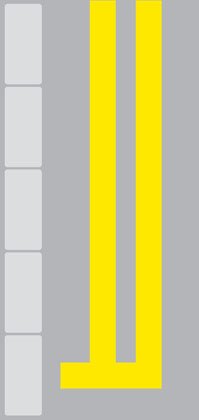
No stopping at any timeNo stopping during times shown on signParking is limited to the duration specified during the days and times shownOnly loading may take place at the times shown for up to a maximum duration of 20 mins
On the kerb or at the edge of the carriageway
Loading restrictions on roads other than Red Routes
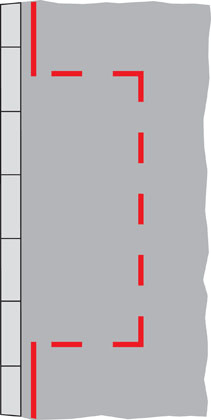
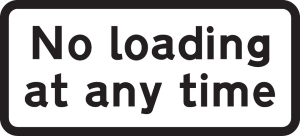
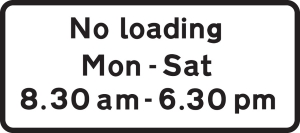
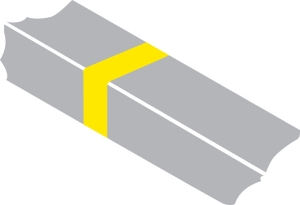
Yellow marks on the kerb or at the edge of the carriageway indicate that loading or unloading is prohibited at the times shown on the nearby black and white plates. You may stop while passengers board or alight. If no days are indicated on the signs the restrictions are in force every day including Sundays and Bank Holidays.
Always check the times shown on the plates.
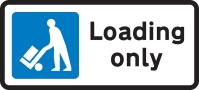
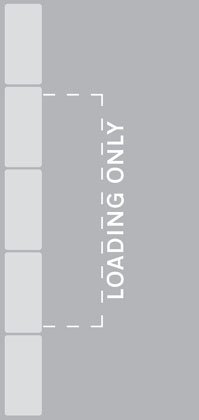
Lengths of road reserved for vehicles loading and unloading are indicated by a white ‘bay’ marking with the words ‘Loading Only’ and a sign with the white on blue ‘trolley’ symbol. This sign also shows whether loading and unloading is restricted to goods vehicles and the times at which the bay can be used. If no times or days are shown it may be used at any time. Vehicles may not park here if they are not loading or unloading.
No loading or unloading at any timeNo loading or unloading at the times shownLoading bay
Other road markings
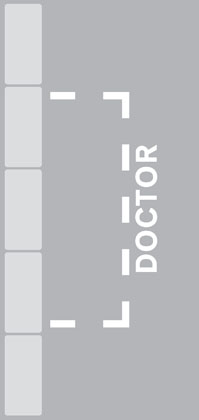
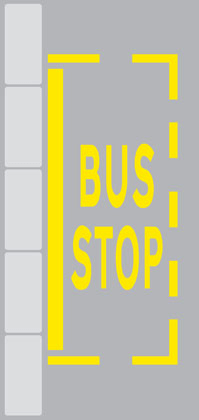
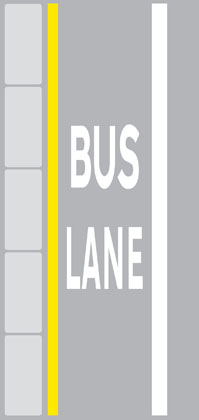
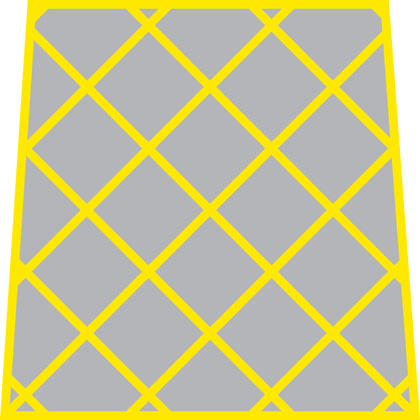
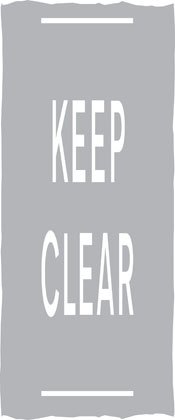
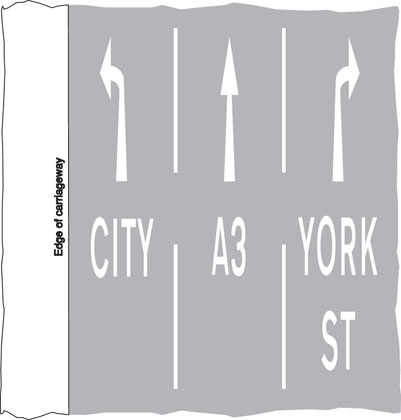
Keep entrance clear of stationary vehicles, even if picking up or setting down childrenWarning of ‘Give Way’ just aheadParking space reserved for vehicles namedDo not stop or park – See Rule 243Bus lanesBox junction – See Rule 174Do not block that part of the carriageway indicatedIndication of traffic lanes
Vehicle markings
Vehicle markings used, including large goods vehicle rear markings, hazard warning plates, projection markers and other markings.
Large goods vehicle rear markings
Motor vehicles over 7500 kilograms maximum gross weight and trailers over 3500 kilograms maximum gross weight
Left – Central – Right
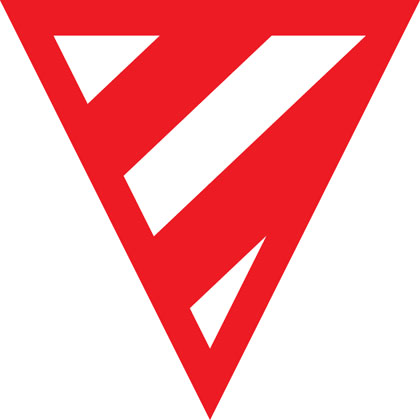
The vertical markings are also required to be fitted to builders’ skips placed in the road, commercial vehicles or combinations longer than 13 metres (optional on combinations between 11 and 13 metres)
Hazard warning plates
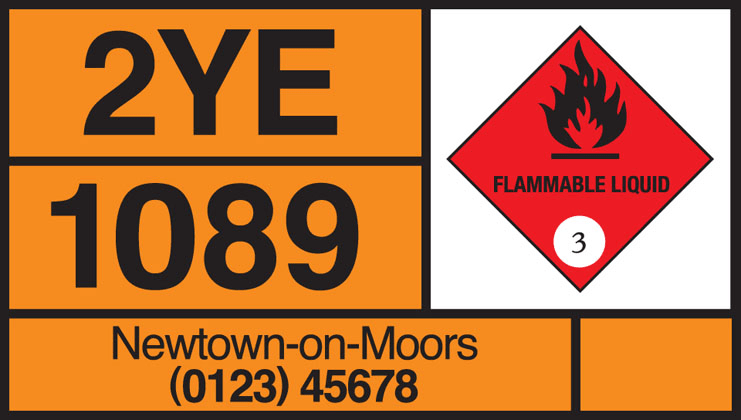
Certain tank vehicles carrying dangerous goods must display hazard information panels
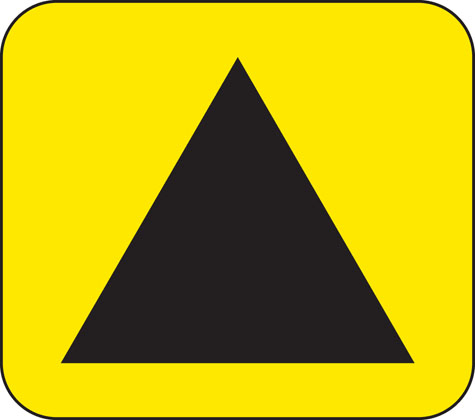
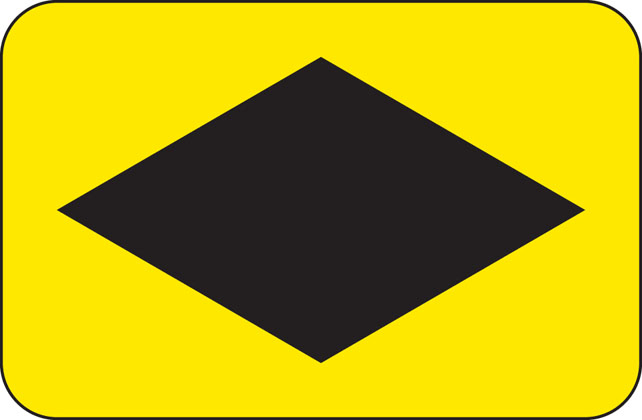
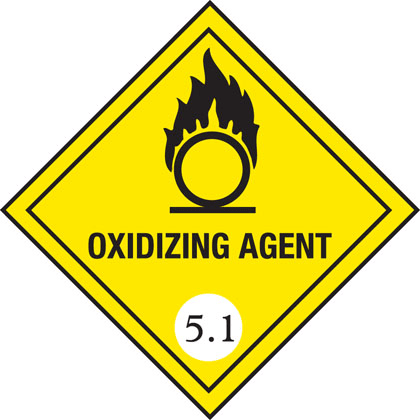
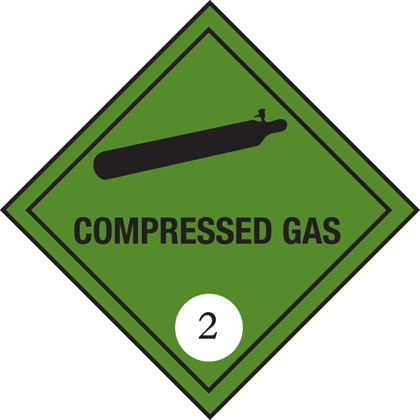
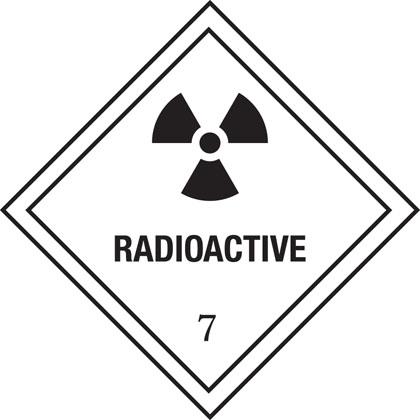
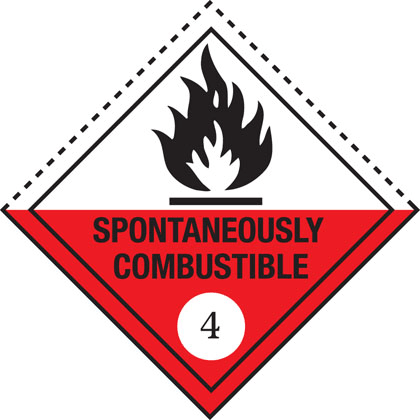
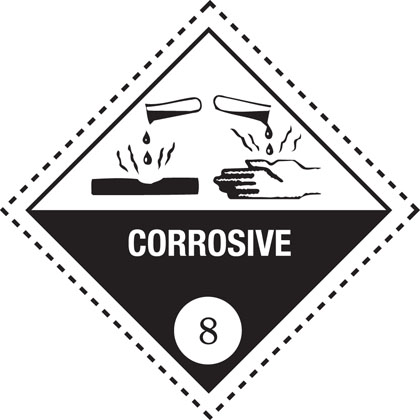
The panel illustrated is for flammable liquid. Diamond symbols indicating other risks include:The above panel will be displayed by vehicles carrying certain dangerous goods in packagesToxic substanceOxidizing substanceNon-flammable compressed gasRadioactive substanceSpontaneously combustible substanceCorrosive substance
Projections markers
Side markerEnd marker
Both required when load or equipment (eg crane jib) overhangs front or rear by more than two metres
Other
School bus (displayed in front or rear window of bus or coach)










































 Apperture Labs