Traffic lights and signals
These include lights controlling junctions and pedestrian crossings.
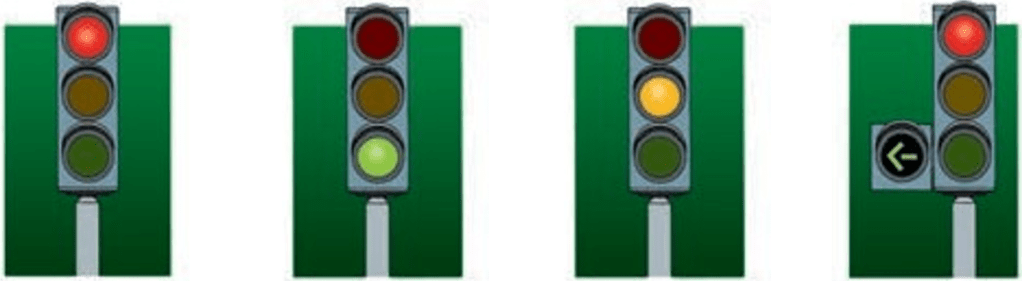
A red light means ‘Stop’. If the light is red as you approach it, you must not go beyond the stop line at that light or, if there is no stop line, you must not go beyond the light.
A green light means you may go on if the way is clear. Take special care if you intend to turn left or right and give way to pedestrians who are crossing. A green light is not a right of way – it is an indication that you can proceed with caution.
Remember: A green light is not a right of way, it is an indication that you may proceed with caution, but only if the way is clear.
An amber light means that you must not go beyond the stop line or, if there is no stop line, you must not go beyond the light. However, you may go on if you are so close to the line or the light when the amber light first appears that stopping would be dangerous.
A green arrow (also known as a filter light) means that you may move on in the direction of the arrow, assuming it is safe and the way is clear, even if a red light is also showing.
If you wish to turn right at a set of traffic lights that has an arrow to the right (or white rectangular box with white arrow), drive into the junction when you see a green light. Take care not to block any oncoming traffic. Then, when it is safe, finish your turn. You should only wait for the filter arrow for turning right when you are in the junction and if it would be dangerous to finish your turn before the filter light appears.
A flashing amber arrow pointing left can appear at a junction with another road. It means that you may move on past the traffic light, but only if you first give way to traffic already coming through the junction on the other road.
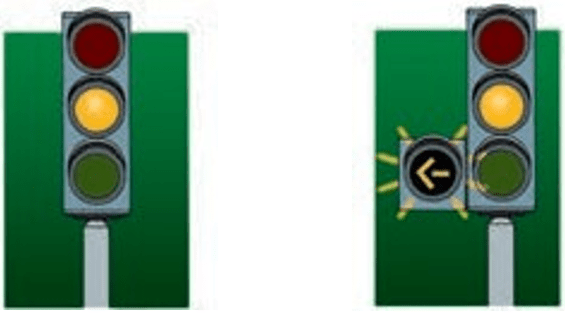
Remember that a flashing amber light at a pelican crossing means you must yield to pedestrians.
Remember: You should always approach traffic lights at a speed that will allow you to stop if the amber light appears.
Note: If the traffic lights at a controlled junction are out of order, you must first stop at the control line and only proceed when it is safe to do so ensuring you yield to all other traffic who have right of way.
Cycle track lights
- A red light showing a figure of a cyclist means that the cyclist must stop at the traffic light.
- A green light showing a figure of a cyclist means the cyclist may move beyond the light as long as this does not put other road users in danger.
- A flashing green light or an amber light showing a figure of a cyclist means the cyclist may not cross the road unless they had started crossing when there was a steady green cyclist light.
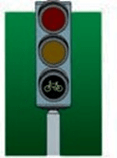
Remember: Cyclists – you must obey the traffic lights and may only proceed past a green traffic light if it is safe to do so.
Signals by motorists and cyclists
A motorist must always signal before they change their course. This means signalling clearly and in good time before:
- Moving off
- Turning right or left
- Changing lanes
- Overtaking
- Slowing down, or
- Stopping.
Signalling
Signals are an indication of intent – they do not confer a right of way. The law requires you to signal properly before moving off, turning right or left, changing lanes, overtaking, slowing down or stopping. You must signal clearly and in good time.
If you are concerned that, for whatever reason, your direction indicators or stop lamps are not giving an adequate signal, use clear, decisive hand signals as well.
An indicator is not a right of way.
Before you start to manoeuvre, you must exercise due care and attention with particular heed to other road users, road conditions and how your driving will impact other road users.
Always take care, especially when you:
- Intend to change lane
- Turn across oncoming traffic
- Drive onto or exit from a roundabout; and
- Drive into or reverse into a parking space.
Hand signals
Make sure you use hand signals to help, rather than confuse, other road users. Make sure you are familiar with the hand signals shown on the next two pages. Be prepared to use the appropriate hand signal where it will help others to understand your intentions.
Learner drivers should be guided by their approved driving instructor on when and where a hand signal might be particularly useful. For example:
- When turning right just after changing position to pass stationary traffic on the left; or
- To indicate to oncoming traffic that you intend to give way at a pedestrian crossing; or
- Where you believe another road user may not be able to see your flashing indicators; or
- Where you believe your indicators are not working (you should have them repaired before continuing your journey).
The signals for cyclists and motorcyclists also apply to motorists and people in charge of horse-drawn vehicles and agricultural machinery not fitted with indicators.
The following are the hand signals to be used:
I am going to move out or turn to my right.
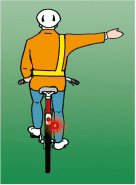
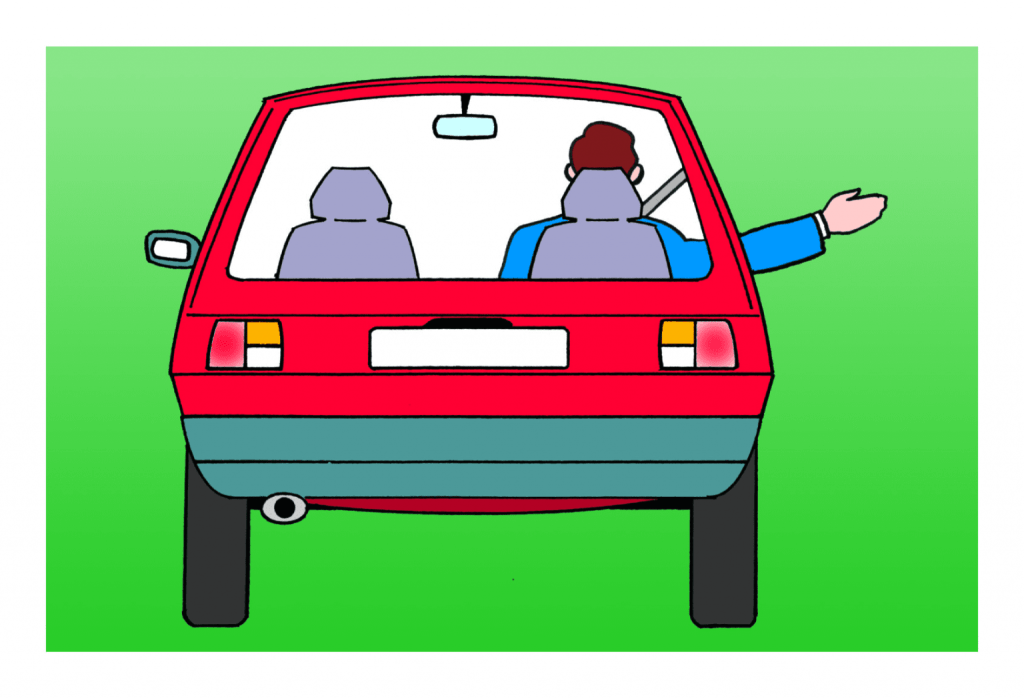
I am going to turn to my left. Note that the car driver moves his arm and hand in an anti-clockwise direction.
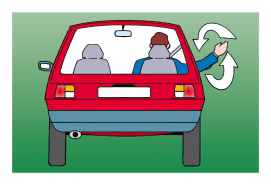
I am going to slow down or stop.
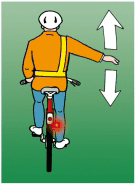
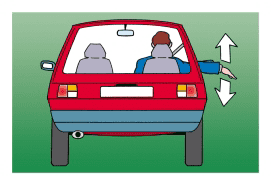
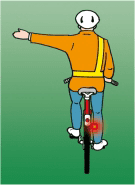
I want to turn right.
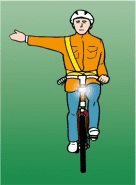
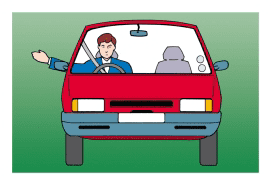
I want to turn left.
Note that the car driver points the right forearm and hand with the fingers extended to the left.
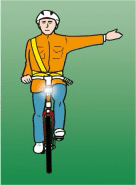
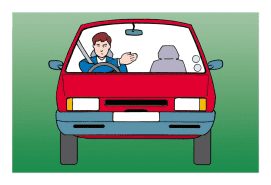
I want to go straight on.
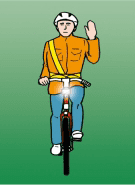
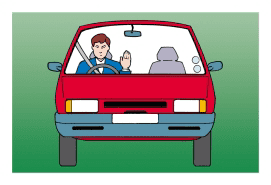
I want to slow or stop.
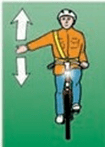
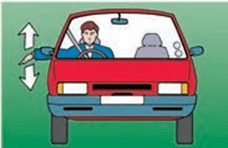
The signals for the cyclist apply also to a motorcyclist and to a person in charge of a horse-drawn vehicle.
Remember: Signals show only what you are intending to do – they never give you right of way.
Speed limits
A vehicle must not be driven at a speed exceeding that which will enable its driver to bring it to a halt within a distance the driver can see to be clear.
This section describes the rules for keeping pace in traffic and the speed limits that apply on different types of road and to different vehicles.
As a driver, you must always be aware of your speed and judge the appropriate speed for your vehicle, taking into account:
- Driving conditions
- Other users of the road
- Current weather conditions
- All possible hazards; and
- Speed limits.
Driving conditions relate to the volume of traffic around you and the quality of the road.
Other users of the road include motorcyclists, cyclists, pedestrians, school children, animals and all others you, as a driver, should expect to see on the road.
Possible hazards include anything you can see that could cause an emergency, such as oncoming traffic if you are turning onto a major road. They also include anything you cannot yet see and anything you can reasonably expect to happen, such as a pedestrian walking onto the road in front of you, a child running onto the road between parked cars, or animals on the roadway. It includes your own physical and mental state while driving (for example whether you are stressed or tired) and the condition of your vehicle.
Driving safely in traffic – the two-second rule
Your vehicle is your responsibility. You must be in control at all times. You must keep your vehicle to a speed that allows you to stop it:
- Safely, in a controlled way
- On the correct side of the road
- Within the distance that you can see to be clear; and
- Without risk or harm to you, your passengers and any other users of the road.
In traffic, the distance between your vehicle and the one in front of you is known as the ‘safe headway’. Keep a safe headway by ensuring you are at least two seconds behind the vehicle in front. This is known as the ‘two-second rule’.
You can use the following steps to check if you are obeying the rule:
- On a dry road, choose a point like a lamp post or road sign.
- When the vehicle in front passes that point, say out loud, ‘Only a fool breaks the two-second rule’.
- Check your position in relation to your chosen point as you finish saying this. If you have already passed the point, you are driving too close to the vehicle in front and need to pull back.
- In wet weather, double the distance between your vehicle and the one in front of you by saying ‘Only a fool breaks the two-second rule’ twice.
- If travelling in more severe conditions such as snow, fog and ice, you may need to repeat ‘only a fool breaks the two-second rule’ 4 or 5 times.
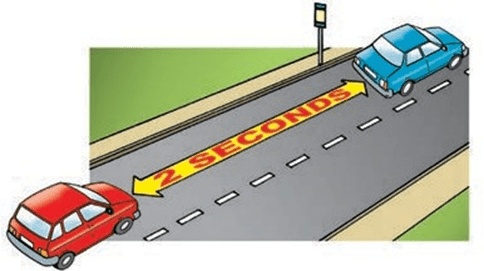
Remember: Never drive closer than indicated by the two-second rule. If you drive too close to the vehicle in front (tailgating) and the other driver brakes suddenly, you may not have enough time to react. If you run into the vehicle, you will be liable for any damage caused.
Cruise control
Avoid using cruise control in heavy rain, hail, snow, fog and icy conditions. Cruise control can potentially reduce the control you have over your vehicle and impact on your reaction time in dealing with a hazard.
Avoid driving too slowly
In normal road and traffic conditions, keep up with the pace of the traffic flow while obeying the speed limit. While you must keep a safe distance away from the vehicle in front, you should not drive so slowly that your vehicle unnecessarily blocks other road users. If you drive too slowly, you risk
frustrating other drivers, which could lead to dangerous overtaking. However, remember: you must not drive at a speed at which you cannot stop the vehicle within the distance you can see to be clear ahead.
Speed limits
Signed speed limits set the maximum speed at which vehicles may legally travel on a section of road between speed limit signs, assuming the vehicles are not restricted in any way.
The signs indicate the maximum speed at which your vehicle may travel on a particular road or stretch of road, not the required speed for the road.
There are two types of speed limit:
- Speed limits that apply to roads; and
- Speed limits that apply to certain types of vehicles.
Speed limits on roads
All public roads have speed limits. In most cases, a ‘default’ speed limit applies. This automatically applies to a particular type of road if there is no speed limit sign to show otherwise.
The following is the default speed limits for different roads under the Road Traffic Act 2004.

(Blue Signs – M numbers)
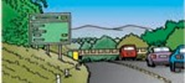

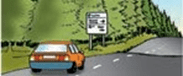

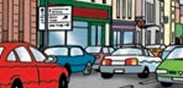
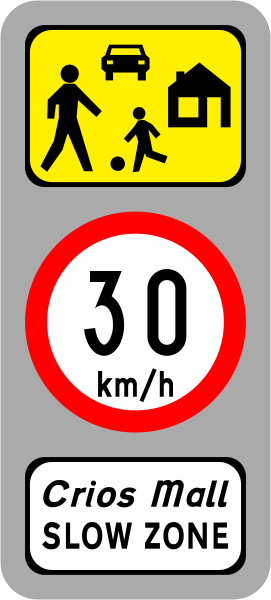
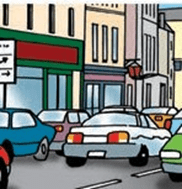
Local authorities can apply special speed limits to roads, for example:
- At particular times, such as when children are entering or leaving schools
- On different sides on a dual carriageway;
- At selected locations such as a tunnel, where the limit may be lowered if one lane must be closed;
- Where there is a series of bends; and
- At roadworks.
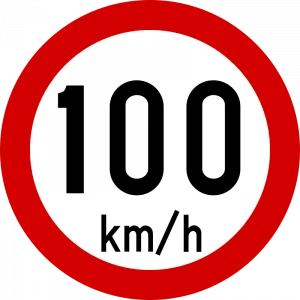
If the local authority sets a special speed limit, you will see one of the signs below. Speed limit signs, like most other regulatory signs, have a red border, white background and black numbers and letters. They show the speed in kilometres per hour (kmh).
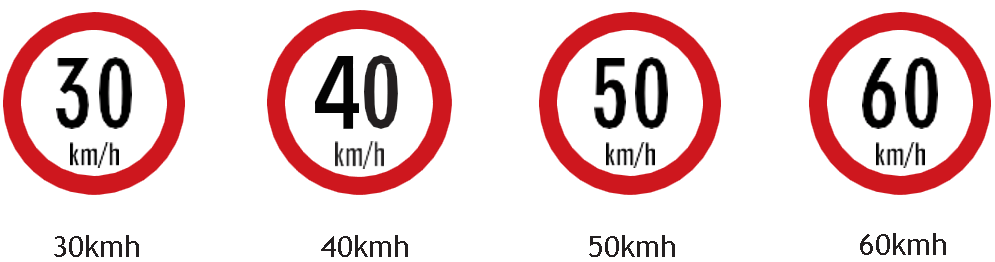
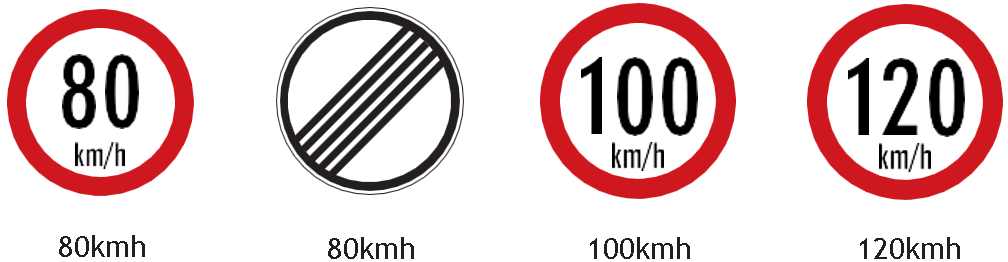
The main speed limit signs on national primary and other roads are sometimes followed by small repeater signs to remind you of the road’s speed limit.
No vehicle other than fire engines, ambulances or Garda vehicles may exceed the road speed limit at any time.
Remember: The alternative design for the 80kmh speed limit sign, outlined above, may be provided;
- On a local road to indicate that a speed limit of 80kmh applies; or
- At locations where the local authority has determined that this special speed limit applies.
Periodic speed limits
Normally, speed limits apply 24 hours a day and all year round. In certain situations, local authorities can apply a special speed limit to certain stretches of road for particular periods of time or particular days. Outside these times or days, the usual speed limit at that location is in force.
An example of a periodic speed limit is one used near school grounds. One way to show this special limit is through a standard upright sign with an information plate underneath that shows the periods and days when the speed limit applies.

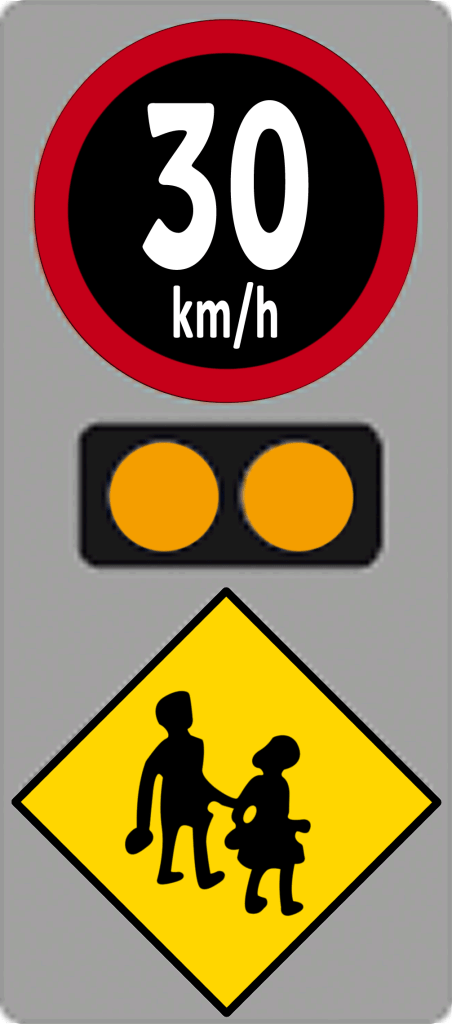
Another way of showing the speed limit is an electronic speed limit sign which when lit up shows the speed limit in white numbers within a red border against a black background. Outside the special speed limit periods, the sign remains blank. Sometimes the electronic sign can be mounted on a grey backing board with two amber lights, which may flash when the sign is lit up.
The sign School Children Crossing Ahead that includes two amber flashing lamps may appear beside periodic speed limit signs to alert you to the presence of school children.
You must not break the periodic speed limits while they are in force.
Checking speed
From time to time and on various stretches of road, Gardaí or other authorised agencies may use certain equipment to check if vehicles are obeying the speed limit. It is against the law to supply, carry or use any device that can detect or interfere with any speed monitoring equipment under Garda or other authorised agencies’ control.
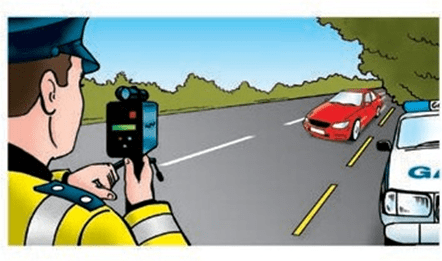
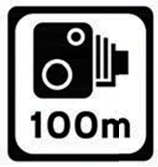
Speed limits for vehicles
Some drivers must obey speed limits for their vehicles as well as speed limits for the roads on which they are travelling.
Below outlines the speed limits that apply to different vehicles.
Type of vehicle to which it applies and Vehicle speed limit
A single or double deck bus or coach designed for carrying standing passengers
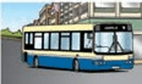
On all roads
A goods vehicle with a maximum authorised mass (MAM) of more than 3,500 kilograms.
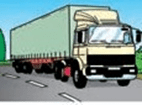
On all roads except motorways
A goods vehicle with a maximum authorised mass (MAM) of more than 3,500 kilograms.
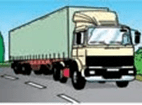
On motorways
Any vehicle towing a trailer, caravan, horsebox or other attachment.
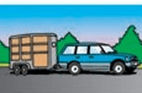
On all roads
A single or double deck bus or coach that is not designed for carrying standing passengers.
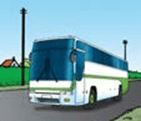
On all roads except motorways or dual carriageways
A single or double deck bus or coach that is not designed for carrying standing passengers.
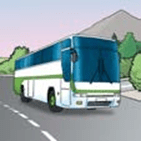
On motorways or dual carriageways where no lower speed limit is in place
If the vehicle and road speeds are different, the driver must obey the lower of the two. For example, if a bus designed to carry standing passengers is
travelling on a road with a speed limit of 80kmh, it cannot travel faster than its vehicle speed limit of 65kmh. But if it is travelling on a road with a speed limit of 50kmh, it must obey this limit regardless of the maximum speed at which it might otherwise be allowed to travel.
Stopping distance for cars
Many drivers have a false belief that if the car in front starts braking, they can react, brake and come to a stop, still leaving the same distance between the two vehicles.
The total minimum stopping distance of your vehicle depends on four things:
- Your perception time,
- Your reaction time,
- Your vehicle reaction time, and
- Your vehicle braking capability.
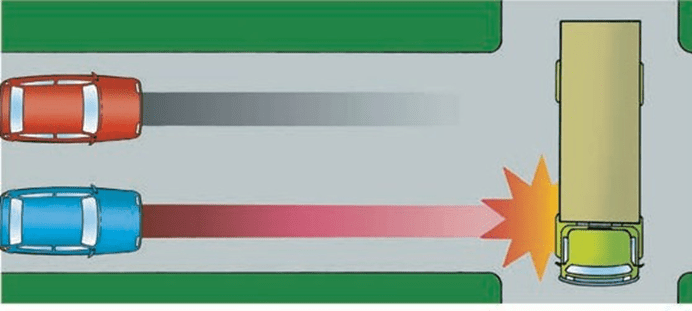
Your perception time is how long it takes you to see a hazard and for your brain to realise it is a hazard requiring you to take immediate action. This can be as long as 0.25 to 0.5 of a second.
Your reaction time is how long you take to move your foot from the accelerator to the brake pedal once your brain understands you are in danger. Your reaction time can vary from 0.25 to 0.75 of a second or more. It can be as long as 1.5 seconds.
These first two components of stopping distance are down to you, and they can be affected by alcohol, drugs, tiredness, fatigue or lack of concentration. A perception and reaction time of 4 seconds at 100kmh means the car travels 110 metres before the brakes are applied (this is more than the length of a football pitch).
Once you apply the brake pedal it will take time for your vehicle to react. This depends on the condition of your vehicle and, in particular, the condition of the braking system.
The final factor that determines your total minimum stopping distance is the vehicle’s braking capability. This depends on many things, for example:
- Brakes;
- Tyre pressure, tread and grip;
- The weight of the vehicle;
- The vehicle’s suspension; and
- Road surface.
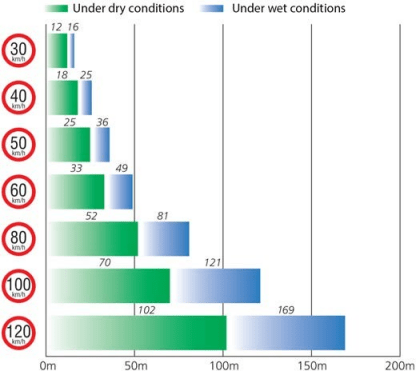
Allow a minimum stopping distance under dry conditions of (see table below):
| Speed (km/h) | Minimum Reaction Distance (m) | Minimum Braking Distance (m) | Total Minimum Stopping Distance (m) |
| 30 | 6 | 6 | 12 |
| 40 | 8 | 10 | 18 |
| 50 | 10 | 15 | 25 |
| 60 | 12 | 21 | 33 |
| 80 | 16 | 36 | 52 |
| 100 | 20 | 50 | 70 |
| 120 | 24 | 78 | 102 |
Allow a minimum stopping distance under wet conditions of (see table below):
| Speed (km/h | Minimum Reaction Distance (m) | Minimum Braking Distance (m) | Total Minimum Stopping Distance (m) |
| 20 | 4 | 5 | 9 |
| 30 | 6 | 10 | 16 |
| 40 | 8 | 17 | 25 |
| 50 | 10 | 26 | 36 |
| 60 | 12 | 37 | 49 |
| 70 | 14 | 50 | 64 |
| 80 | 16 | 65 | 81 |
| 100 | 20 | 101 | 121 |
| 120 | 24 | 145 | 169 |
It is worth noting that from 50kmh to 100kmh, the total braking distance of your car can increase from at least 26 metres to at least 101 metres. When you double the speed of your car, you multiply the total braking distance nearly four times.
Remember a 5kmh difference in your speed could be the difference between life and death for a vulnerable road user like a pedestrian.
- Hit by a car at 60kmh, 9 out of 10 pedestrians will be killed.
- Hit by a car at 50kmh, 5 out of 10 of pedestrians will be killed.
- Hit by a car at 30kmh, 1 out of 10 pedestrians will be killed.
Allow a minimum overall stopping distance of (see table below):
Total Minimum Stopping Distance (m)
Skidding
Any factor which reduces the grip of your tyres on the road is a possible source of skidding. Wet or greasy roads, overloading, worn or improperly inflated tyres, mud, leaves, ice, snow, harsh acceleration, sudden braking, or excessive speed for the conditions can all cause or contribute to a skid.
‘Aquaplaning’ occurs when a car is being driven on a wet road and a film of water builds up between the tyres and the road surface.
When that happens, the car loses contact with the road, and braking and steering are affected.
Remember: Distances outlined above are absolute minimums: the average stopping distance can be significantly longer.
 Apperture Labs