Motorways are roads that help reduce journey times by separating traffic and removing road junctions. They are probably the safest way of moving large volumes of traffic, mainly because they remove the risk of head-on collision. However, compared with other types of road, they carry a greater risk of pile-ups.
This section covers the rules on who can drive on a motorway, the meaning of motorway signs, how to overtake safely and how to join and leave a motorway safely.
Motorway signs and What they mean
There is an entrance to a motorway ahead and the road users listed on the sign must not enter the motorway.

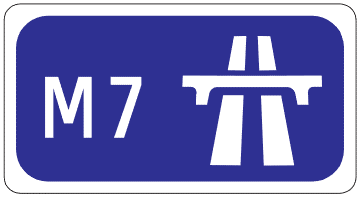
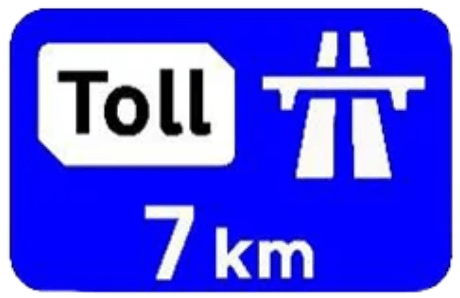
The driver is 300 metres from the next exit off the motorway.
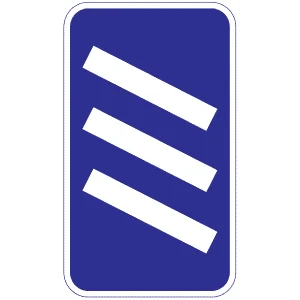
The driver is 200 metres from the next exit.
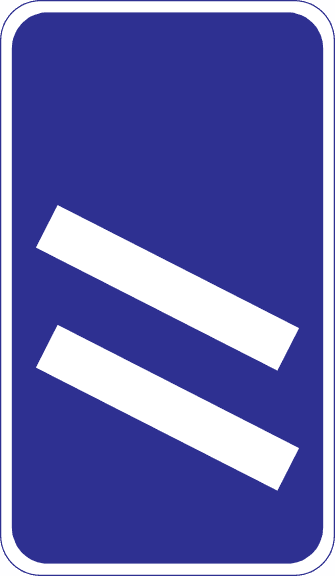
The driver is 100 metres from the next exit.

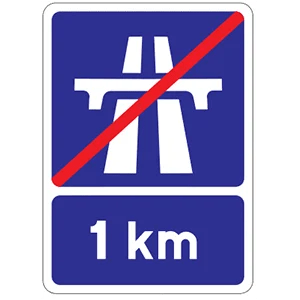
There are 500 metres to the end of the motorway.
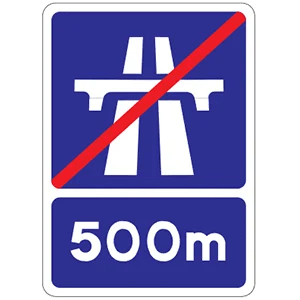
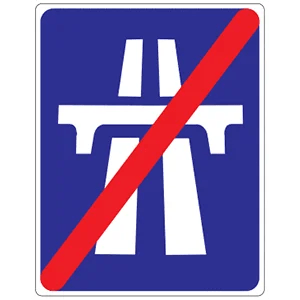
The driver has reached the end of the motorway.
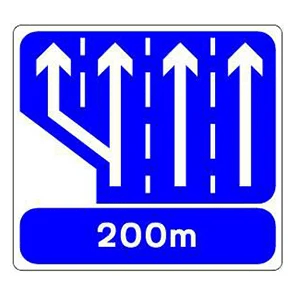
An additional lane is joining the motorway.
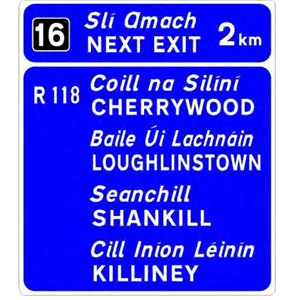
Indicates distance to the next exit and supplementary routes.
Tourist information sign for an alternative route off the motorway.
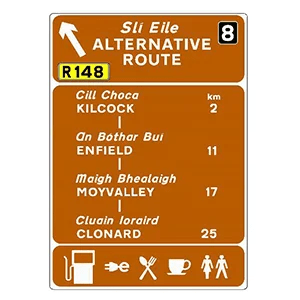
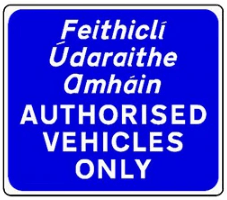
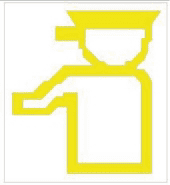
Area reserved for use by specifically authorised vehicles only.
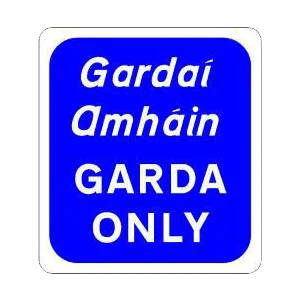
Area reserved for use by Garda vehicles only.
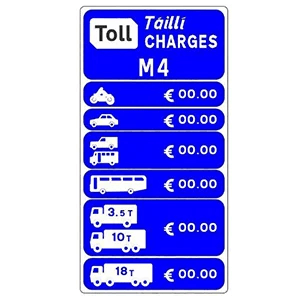
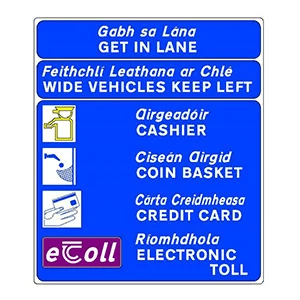
Toll charges for various vehicle types.
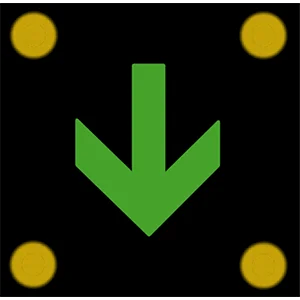
Information on toll plaza lanes.
General rules
The signs below appear as you are about to enter or join a motorway. The sign on the left shows that the following must not enter a motorway:
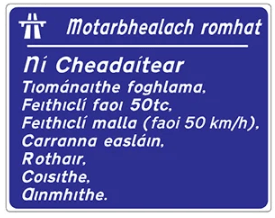
- People who do not hold a full driving licence for the category of vehicle they are driving
- Vehicles incapable of a speed of at least 50kmh
- Vehicles with an engine capacity of 50cc or less
- Invalid carriages or motorised wheelchairs
- Vehicles that do not use inflated tyres,
- Cyclists
- Pedestrians, and
- Animals.
Motorway speed limits
The maximum speed limit on a motorway is 120km per hour unless:
- there are signs stating another speed limit – for example, warning signs to highlight roadworks,
- you are driving a vehicle that is subject to a lower limit such as a bus or truck, or
- A permanent lower speed limit is in force for traffic safety reasons.
Remember, your total stopping distance at 120km per hour in dry conditions is 102 metres (27 car lengths). This is about the length of a soccer pitch.
- The ordinary speed limit for HGVs is 90kmh on motorways (where no lower speed limit is in place).
- The ordinary speed limit for buses (that are not designed for carrying standing passengers) is 100kmh on motorways or dual carriageways (where no lower speed limit is in place).
Joining the motorway
When entering the motorway, be careful and pay attention, and let traffic already on the motorway pass. You must follow the steps below when joining a motorway.
- Use the acceleration lane to build up your speed before merging into traffic on the motorway.
- Signal early to other motorists that you intend to merge.
- As you approach on the slip road, check in your mirrors and your blind spot for a safe gap in traffic in the left-hand lane of the motorway.
- Obey road signs and road markings.
- Do not drive on hatched markings before merging into traffic on the motorway.
- Give way to traffic already on the motorway.
- Adjust your speed as you join the motorway so you match, as near as possible, the general speed of traffic in that lane.
- Auxiliary lanes are found on some motorways. They normally link the ‘on’ ramp of the road you are leaving with the next available ‘off’ ramp.
- Treat each lane change as a separate manoeuvre. Stay in the left-hand lane long enough to adjust to the speed of traffic before attempting to overtake.
On the motorway
- You must only drive ahead. No turning or reversing is permitted.
- You must progress at a speed and in a way that avoids interference with other motorway traffic.
- You must not drive on any part of the motorway that is not a carriageway – for example, a hard shoulder – except in case of emergency.
- You must not stop or park on any part of the motorway unless your vehicle breaks down or you are signalled by a Garda to do so.
- You must not pick up or set down anybody on a motorway.
Remember: If you find yourself driving against the flow of traffic, pull in immediately to the hard shoulder and stop. Contact the Gardaí by dialling 999 or 112. Do not attempt to turn your vehicle. Wait for help in a safe place.
Using lanes properly
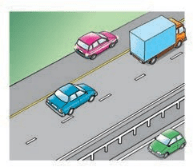
It is very important that you understand the purpose of each lane on a motorway. To help explain how and when to move from one lane to another, each lane is given a number. The picture below shows that Lane 1 is the lane nearest the auxiliary lane or hard shoulder. This is also known as the ‘inside lane’. On a two-lane motorway, the lane nearest the central median is Lane 2 (also called the ‘outside lane’). On a three-lane motorway, this lane is Lane 3.
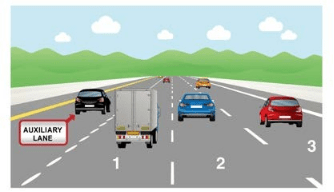
Lane 1
The normal ‘keep left’ rule applies. Stay in this lane unless you are overtaking.
Lane 2
On a two-lane motorway, use this for overtaking only and move back into Lane 1 when you have finished. You may also use this lane to accommodate traffic merging from the left.
On a three-lane motorway, you may stay in this centre lane while there is slower moving traffic in Lane 1.
Lane 3
If you are travelling on a three-lane motorway, you must use this lane only if traffic in lanes 1 and 2 is moving in queues and you need to overtake or
accommodate merging traffic. Once you’ve finished overtaking, move back to your left and allow faster traffic coming from behind to pass by.
You must not use the lane nearest the central median, that is, the outside lane (Lane 2 or Lane 3, depending on the number of lanes), if you are driving:
- A goods vehicle with a maximum authorised mass of more than 3,500 kilograms, such as a lorry or heavy goods vehicle;
- A vehicle towing a trailer, horsebox or caravan; or
- A single or double deck bus or coach that is designed for carrying standing passengers.
It is a fixed-charge offence of up to €120 and 3 penalty points for a vehicle listed above to drive on the outside lane of a motorway (which may be Lane 2 or Lane 3, depending on the number of lanes).
You may use it, however, in exceptional circumstances when you cannot proceed in the inner lane because of an obstruction ahead.
A single or double-deck bus or coach that is not designed for carrying standing passengers may travel in the outside lane of a motorway and a driver of such a vehicle will not be guilty of an offence if they do so.
Auxiliary lane
These are normally identified by a broken white line to the right of the auxiliary lane, with markings that are shorter, closer and wider than the broken white lines normally seen in lane 1, 2 or 3.
When joining the motorway, you may use this lane to adjust your speed before entering (Lane 1), or you may stay in this lane if you intend to exit the motorway at the next exit.
If you do not intend to take the next exit off the motorway, you should join the main section of the motorway (Lane 1) to continue your journey.
If you are already driving on the motorway (Lane 1) and you intend to take the next exit off the motorway, you may then enter the auxiliary lane (Lane A).
If you are already driving on the main section of motorway (Lane 1, 2 or 3), you should not enter (Lane A) if your intention is not to leave the motorway at the next exit (unless instructed to do so by the Gardaí or Emergency Service personnel).
Keeping your distance
The ‘two-second rule’ to help you keep a safe distance behind the vehicle in front. Use this rule on motorways – driving too close reduces your ability to stop safely, and significantly reduces your vision ahead.
When in a queue, your instinct may be to get closer to the vehicle in front to protect your position. Please remember that you must leave enough room in front of you to allow you to stop safely.
Signalling
Once on a motorway, you must make a signal before every move. For example, moving from Lane 3 to Lane 1 involves two separate stages.
- In stage one you signal once to move from Lane 3 to Lane 2.
- In stage two you signal again to move from Lane 2 to Lane 1.
- Due to the higher speeds on a motorway, motorists must always signal their intentions in good time.
An indicator is not a right of way.
Before you start to manoeuvre, you must exercise due care and attention with particular heed to other users of the road, prevailing road conditions and how your driving will impact other road users.
Checking traffic around you
Check your mirrors regularly, as you need to have a constant picture in your mind of what’s going on all around you. Be very aware of your vehicle’s blind spots as well.
As a driver, you must be able to stop within a distance that you can see to be clear and you must drive having due regard to other users of the road. Therefore you should avoid staying in other drivers’ blind spots. Keep your eyes moving – avoid looking only at the vehicle immediately ahead. Instead, scan up the queue. Use your view to drive smoothly and avoid unnecessary braking. If you notice traffic slowing down sharply, use your hazard warning lights to warn traffic behind you.
Before changing lane, remember ‘mirror, signal, mirror, manoeuvre’. Remember that traffic may be coming from behind you at speed. Checking your mirrors at least twice helps you judge the speed of their approach speed and will help you to see vehicles travelling in your blind spots.
Avoid causing another driver to brake or change lane to accommodate you while you are on the motorway (aside from joining it). Learn to read the traffic around you. A vehicle in your mirror on the motorway with its right indicator flashing is trying to tell you that it’s catching up on you and intends to overtake your vehicle.
Overtaking
Overtake only on the right, unless traffic is travelling in slow moving queues and the traffic queue on your right is travelling more slowly than you are. If you intend to move from a slower lane to a faster lane, adjust your speed first.
Before you start to overtake, remember ‘mirror, signal, mirror, manoeuvre’, and look in your blind spots. Check that the way is clear (behind and ahead) and signal well in advance.
Remember that traffic will be travelling a lot faster than on ordinary roads. Be particularly careful at dusk, during darkness, and in poor weather conditions when it is more difficult to judge speed, distance and stopping distance. Signal and return to your original lane as soon as possible.
Gantries
Gantries are structures used to display traffic signs above traffic lanes on motorways and dual-carriageways. They are common and display important information, so make sure you pay attention to them as well as to other signs along the side of the road.
Variable message signs
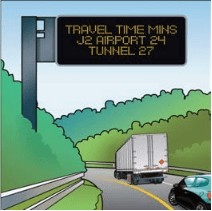
Variable message signs such as the one displayed below are used on motorways to provide messages and information to motorists and to warn of incidents that may affect traffic conditions and journey times.
Motorists should pay attention to these signs at all times.
Leaving the motorway
The signs below show the distance to the next exit on a motorway. Plan well ahead and use these signs to position yourself in good time so you can get into lane early.
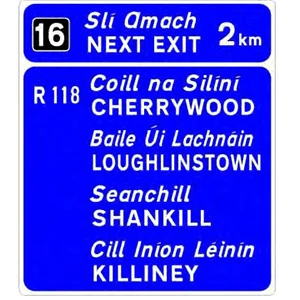
When you leave the motorway, you will first enter a deceleration lane. If possible, keep up your speed until you enter this lane, but then slow down and check for signs showing a lower speed limit. Use your speedometer to make sure you are obeying the reduced limit. Remember that the slip roads and link roads between motorways may include sharp bends.
If you miss your exit, drive on to the next exit. You must not attempt to cross the ghost island or reverse back up the hard shoulder.
When you leave a motorway, or it comes to an end, you will see the signs below.
Rest areas, lay-bys and motorway services
The best advice is to plan your journey to avoid having to stop on motorways if at all possible. However, it is important to take regular breaks to rest at appropriate intervals when travelling long distances. Before you start your journey, you should plan where you will stop to rest and use motorway services. The map below shows rest and service areas. Areas marked P are lay-bys where you can stop safely if necessary. They have no facilities. Do not walk on or close to the hard shoulder or motorway lanes. Take care when re-joining the motorway
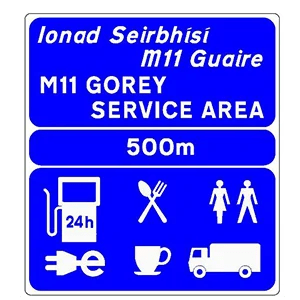
The following signs indicate the motorway services which may be available:




Stopping and parking
You may only stop or park on the motorway when:
- Your car breaks down,
- A Garda signals you to do so,
- There is an emergency (such as a crash),
- There are roadworks, or
- You are at a toll plaza.
Before you begin a long motorway journey, make sure your vehicle:
- Is fit to carry out a long journey at motorway speeds,Hhas the correct tyre pressure,
- Has enough oil and coolant, and
- Has enough fuel to at least take you to the next fuel or charging station.
Also make sure that any loads carried or towed are secure and that you have enough money or a suitable pass if you are using a tolled motorway.
What to do if your vehicle breaks down
- Look out for marked parking areas.
- Move your vehicle to the hard shoulder. Park as near to the left as you can. If you cannot do this, take steps to warn other drivers such as switching on your hazard warning lights.
- Where possible always step over and stay behind the crash barrier, ensuring your passengers do the same.
- Use the roadside phone to contact the Gardaí. This automatically lets them know your exact location. If you cannot use this phone, use your mobile but be aware they will need information about your location.
- Do not place any warning device such as a triangle on the motorway as it is too dangerous.
- Never try to do repairs yourself on the hard shoulder.
- Wear a high visibility vest. Always carry at least two in the vehicle.
- Do not walk on the motorway. Leave your vehicle through the left-hand door and make sure your passengers do the same. Leave animals in the vehicle or, in an emergency, keep them under control on the verge.
- Make sure that passengers keep away from the motorway lanes and hard shoulder, and keep children under control.
- Wait for help on the embankment side of the motorway well behind the crash barrier.
- If, for some reason, you are unable to follow the advice above, you should stay in your vehicle with your safety belt securely fastened and switch on your hazard lights.
- Before you re-join the motorway after a breakdown, build up your speed on the hard shoulder before merging into traffic. Be aware that other vehicles may have stopped on the hard shoulder.
- Many motorways (and dual carriageways) now include important information about location and direction of travel on the surface of the hard shoulder. This information includes Location Reference Indicator (LRI) signs and Location Reference Marking (LRM) signs and is aimed at assisting road users in accurately communicating their location in the event of an incident or breakdown.
An LRI sign is an upright sign on a pole and will include the following information:
- The motorway or dual carriageway road number you are travelling on;
- The direction of travel – this can only be one of N, S, E and W; and
- The distance in kilometres from the start point of the motorway or dual carriageway.

LRM signs are painted in the hard shoulder parallel to the road and supplement the LRI upright signs. The LRM indicates:
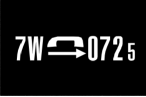
- The route and the direction of travel (the example below indicates that it Is the M7, heading west);
- The distance from the start of the route (the example below indicates a distance of 72.5km from the start of the M7, heading west)
- The direction to the nearest emergency telephone.
Obstructions
If you become aware of something blocking the flow of traffic ahead, use the roadside telephone or a mobile phone to tell the Gardaí. Do not attempt to remove it yourself. Do not use a mobile phone whilst driving.
Emergency closure of sections on the Motorway
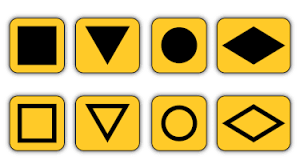
These signs are widely and successfully used on the motorway network throughout Europe and are strategically placed to inform motorists of an emergency or alternative diversion route for motorways.
There are four shapes — square, triangle, circle and diamond — but each can be shown filled or in outline, making eight distinct symbols. Close to motorway junctions, and on roads near to or following the line of a motorway, they are commonly placed on direction signs.
If a motorway is closed — let’s say because of a collision — then the Gardaí will close the road at the previous junction and force traffic to leave the motorway.
These signs instruct motorists to follow a particular symbol in order to re-join the motorway at the next junction.
Diversion routes are carefully chosen to follow roads of a suitable standard and width to carry all motorway traffic, and may make detours to avoid low bridges or other obstructions.
Assigning of Diversion Symbols
As the diversion route will generally be travelled in both directions a different symbol will be assigned to each direction of the diversion route to reduce the possibility of driver confusion at junctions along the route. Typically the solid symbols will be used in preference to the hollow symbols due to visibility and for use on Variable Message Signs (VMS). However this will not always be achievable where multiple diversion routes interface at shared locations.
Driving in fog
Dense fog seriously reduces your visibility and makes driving very dangerous. Our advice is to switch on dipped headlights and fog lamps, reduce your speed and keep a safe distance from the vehicle in front. If the fog closes in, reduce your speed further and take your time getting to your destination.
The added danger posed by dense fog is that a collision involving one vehicle can quickly involve many others, especially if driving too fast and too close to one another. The greatest risk is of a multiple-vehicle pile-up on roads with higher speeds such as motorways and dual carriageways. As you enter fog, check your mirrors and slow down. Use your foot brake lightly so that your lights warn following drivers.
Toll plazas
When approaching a toll, reduce your speed appropriately. Always leave a safe gap between your vehicle and the vehicle in front. All toll roads in Ireland, with the exception of the M50 eFlow barrier-free tolling system, are managed by a conventional barrier-operated toll plaza. For these toll roads, the toll payment options are:
- Manual lanes with a toll booth attendant;
- Automatic coin machine lanes; and
- Payment by electronic toll tag.
Toll lane signs




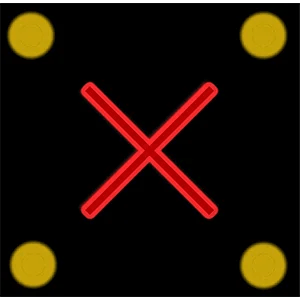
Tunnels
The general rules of the road and the Road Traffic Acts apply, but specific road safety issues apply when you are approaching, driving through or leaving a tunnel.


Approaching the tunnel
- Check you have enough fuel in your vehicle before entering the tunnel.
- Remove sunglasses.
- Switch on dipped headlights.
- If available, tune in to the designated FM radio station as this will let you hear safety instructions during your journey. The station frequency will be displayed on an information sign at the entrance to the tunnel.
- Keep a safe distance from the vehicle in front. Remember, you’re entering a tunnel and tailgating could create an emergency. The recommended minimum safe distance for a car or motorcycle is 50 metres and for all other vehicles 100 metres. Always remember the ‘two second rule’.
- When driving in some tunnels you may see electronic overhead signs, along with road markings (chevrons) which, combined, advise you of the minimum distance you should keep between you and the vehicle ahead of you.
- Be aware there are restrictions on the use of tunnels by Heavy Goods Vehicles (HGVs).
- The maximum height will be signposted. You must check this before you enter the tunnel.
- Wide loads may not be allowed. If you are carrying a wide load, you must contact the tunnel operators well in advance to see if the load is allowed.
- Vehicle size – there may be a ban on the use of the right-hand lane in a tunnel by large goods vehicles or other non-passenger vehicles if the number of axles on the vehicle equals or is more than the figure shown on a regulatory sign provided on the approach road to a tunnel.
For detailed information contact the tunnel operator.
In the tunnel
- Keep in lane and do not overtake.
- You must not drive in the right-hand lane in a motorway tunnel if you are driving a type of vehicle prohibited from using this lane, that is a HGV of more than 3,500 kilograms, a vehicle towing a trailer, horsebox or caravan, or a single or double deck bus or coach that is designed for carrying standing passengers.
- Do not turn or reverse.
- Do not stop, except in case of emergency.
- Obey the speed limits. There are two forms of speed limit signs.
- A standard speed limit sign applies where there is a fixed speed limit. You must obey the speed limit and remember this is the maximum permitted speed, not the required speed.
- Where the speed limit can vary, you will see variable message signs, which are black squares with red circles and numbers in white or yellow throughout the tunnel. The speed limit is shown by the numbers and will vary according to traffic conditions and road safety considerations. You must obey the speed limit and remember this is the maximum permitted speed, not the required speed. ‘Always remember the two-second rule.’
- Keep your distance. The recommended minimum safe distance for a car or motorcycle is 50 metres and for all other vehicles 100 metres.
Stopping
If you are instructed to stop, you should stop and:
- Keep a safe distance between your vehicle and the vehicle in front;
- Switch on your hazard warning lights;
- Switch off your engine;
- Check your radio for instructions from the tunnel operator; check all electronic signs in the tunnel for information; and
- If necessary, leave the tunnel using the nearest available pedestrian exit.
Breakdown or a crash
If there is a breakdown or a crash in the tunnel, you should:
- Switch off your engine;
- Switch on your hazard warning lights;
- Check your radio for instructions;
- Go to an emergency station and use the emergency phone to tell the tunnel operator; and
- Check all electronic signs in the tunnel for information.
Fire in your vehicle
If there is smoke or fire in your vehicle, you should:
- Switch off your engine;
- Leave your vehicle immediately;
- Go to an emergency station and use the emergency phone to tell the tunnel operator; and
- Leave the tunnel by the nearest available exit.
Fire in another vehicle
If there is smoke or fire in another vehicle, you should:
- Drive out of the tunnel if the fire is behind you; or
- if the fire is ahead of you, turn off your engine, leave the vehicle immediately, and leave the tunnel by the nearest emergency exit.
Leaving the tunnel
- Keep a safe speed and position on the roadway.
- Follow the road signs.
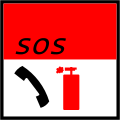
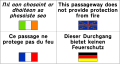
Signage in tunnels
Be aware that, as with all emergencies, care needs to be taken to find the safest evacuation route. Take note of information provided on signage to decide what action you should take.



Variable speed limits
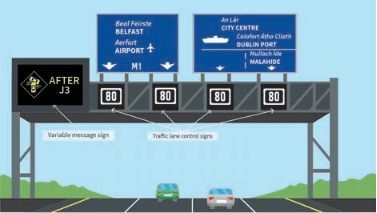
Traffic lane control signs with the capability to display variable speed limits can be found on dual carriageways or motorways. The speeds that may be displayed on the signs are 120, 100, 80, 60, 50, 40, 30 km/h. There are two types of variable speeds that may be displayed:
- Regulatory, or
- Cautionary

If the traffic lane control signs are blank, the default speed limit applies. When the traffic lanes control signs display a reduced speed, the adjacent variable message sign will provide drivers with information on the current road conditions.
Typical pictograms that may be used


 Apperture Labs