Rules for motorcyclists
Motorcycles represent less than 1 in 50 of all licensed vehicles in Ireland, but motorcycle users account for 1 in 8 road deaths. In a crash, motorcycle and moped users have less protection than drivers or passengers in vehicles.
This section is aimed at motorcyclists, including those who use mopeds, and describes how you can keep yourself safe on the road. Trained motorcyclists around the world prove every day that biking can be a fun, safe and satisfying activity if you have appropriate skills, the right attitude to safety and the benefit of education and training.
Licence
You must hold a current driving licence or learner permit for a motorcycle or moped. See section 1 for information on licences and permits and the categories of vehicle they cover.
As a motorcyclist on a learner permit you must display an ‘L’ on a yellow fluorescent tabard to give greater awareness to other road users that you are a learner and that additional care may be required. The ‘L’ must conform in size and colour to the normal ‘L’ plate.
If you have recently obtained your first driving licence (full driving licence) you will be classified as a ‘Novice’ driver and must display N plates on a yellow fluorescent tabard. This tabard must be worn over your clothes and the plates should be clearly visible on the front and rear of your body.
Insurance and tax
You must display a current motor tax disc and have insurance cover before you can take your motorcycle or moped on a public road.
All new first time learner permit holders for motorcycles must undertake Initial Basic Training (IBT) with an approved IBT instructor, before they can ride a motorcycle unsupervised.
What is IBT?
InitiaI Basic Training (IBT) is a training course that teaches basic riding skills to learner motorcyclists. In its basic form, IBT is a 16-hour course broken into 4 modules focusing on theory and practical skills, to be taken in sequence.
When you have completed each IBT Module on your IBT course, your instructor will record the details of your training in your logbook and, once all modules have been completed, issue you with a Certificate of Satisfactory Completion.
You must keep your Certificate with your learner’s permit and carry it with you whenever you are riding on the public road or in a public place, as you may be asked to produce it by a Garda.
You can then apply for your practical driving test.
Carrying passengers
You must not carry a passenger if you hold a learner permit as this is illegal. If you wish to carry a passenger, make sure your full licence and your insurance policy allows you to do so. The rider must make certain the passenger is wearing a properly fitted crash helmet. The rider should make certain the passenger wears appropriate PPE (Personal Protection Equipment, that is, motorcycle jacket, trousers, gloves and boots – all properly fitting). A rider must not carry more than one pillion passenger, who must sit on a proper seat. They must face forward and be capable of resting both both feet on the footrests. Riders must not carry a pillion passenger unless their motorcycle is designed to do so.
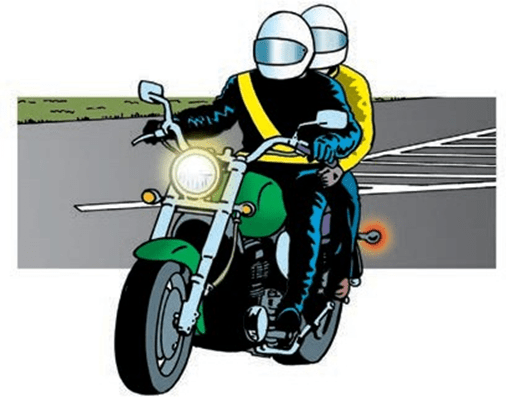
Daylight riding
- Make yourself as visible as possible from the side, as well as the front and rear.
- Wear a white helmet and fluorescent clothing or strips.
- Use dipped headlights. Even in good daylight, they may make you more visible.
Night-time riding
- Wear reflective clothing or strips to improve your chance of being seen in the dark. These reflect light from the headlamps of other vehicles, making you more visible from a long distance.
Lights
You must have on your motorcycle or moped:
- A white or yellow head lamp;
- A red rear lamp;
- A red rear reflector; and
- A number plate light on the back.
To be seen at all times, bear the points below in mind:
- Use your dipped headlights at all times.
- Use headlights at night and during the day when visibility is seriously reduced.
- Slow down, and if necessary stop, if you are dazzled by oncoming headlights.
- Use full headlights when appropriate to do so.
- Use your hazard warning lights when your motorcycle or moped is stopped in a dangerous place.
- Make sure all sidelights and rear number plate lights are lit at night.
Personal protective equipment
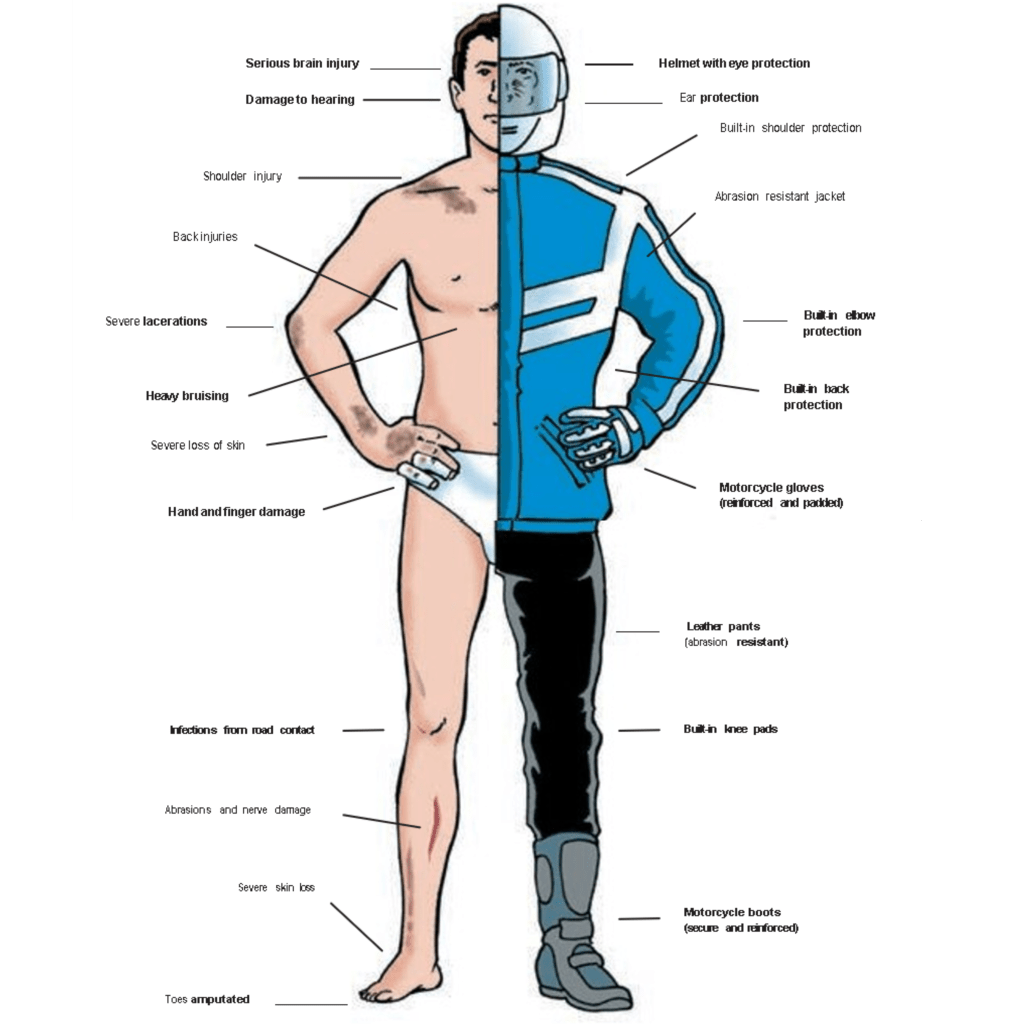
Wear appropriate clothing and a secure helmet every time you get on your bike.
Protective clothes
- Jackets and trousers should give you enough protection from impact, abrasion, cold and weather conditions.
- Use body armour on exposed areas such as the back, knees, elbows, shoulders, hips and shins. This should be adjustable so it fits snugly and does not move in a crash.
- You should wear a good reflective jacket, to make you more visible on the road.
- Wear protective gloves, and footwear that comes above the ankle at least.
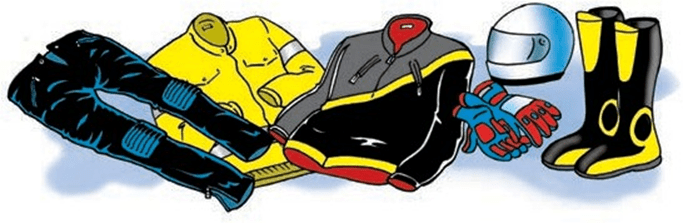
Remember: It is a fixed charge offence of €80 to use a motorcycle without wearing a helmet or to permit a passenger to ride on a motorcycle without wearing a helmet.
Helmets
- Buy from reputable dealers. Try several different sizes and makes. Make sure the dealer knows how to assess fit.
- Never buy or use second-hand helmets.
- Never lend your helmet to someone else.
- If your helmet is damaged, replace it.
- Read the manual for your helmet and follow the care instructions.
- Clean your visor gently with warm soapy water.
- Use a helmet with a clear visor. If you use a dark visor, it will be almost impossible for you to see oil on a wet road.
- Replace the visor if it is scratched.
- Make sure your helmet is securely fastened. An unsecured helmet is illegal and useless in a crash.
- Do your research before you buy. Ensure all equipment meets EU standards.
NOTE: The strap retention system
Different makes and types of helmet come with different ‘strap retention systems’, e.g. D-rings, clip and buckle, quick-release, etc. Whichever type of helmet is chosen, it is essential to ensure that the retention straps fitted to the shell of the helmet have some type of restriction system to prevent the strap pulling through the buckle, e.g. ‘a stitched folded ridge across the end of the strap’. The danger in not having such a restriction system on the straps is that, in the unfortunate event of an accident or collision, the helmet may offer little or no protection as the strap could potentially pull through the buckle, releasing the helmet from the rider’s head, resulting in death or serious injury.
Eye and ear protection
- Use ear protection on long journeys.
- If you wear an open-face helmet (one without a chin bar), make sure you wear eye protection.
- When riding a motorcycle, do not use a personal entertainment system.
Personal protective equipment
Riding a motorcycle
As a motorcyclist you must obey the law governing traffic. You need to develop:
- A high level of attention;
- An awareness of likely hazards;
- Good anticipation; and
- Excellent observational skills.
You also need to make the most of the advantages of height, positioning, flexibility and manoeuvrability a motorcycle provides. The ability to sense danger in a situation develops only with experience, so you should always ride within your abilities.
Always make sure that the road space you intend to enter is completely safe, and be aware that others may be looking at larger objects and not the narrow profile of the motorcycle. Gravel chips, sand, pools of water and rough surfaces can seriously destabilise motorcycles and can be a cause of crashes. Reduce speed before hazards such as these, and continue riding with extreme caution.
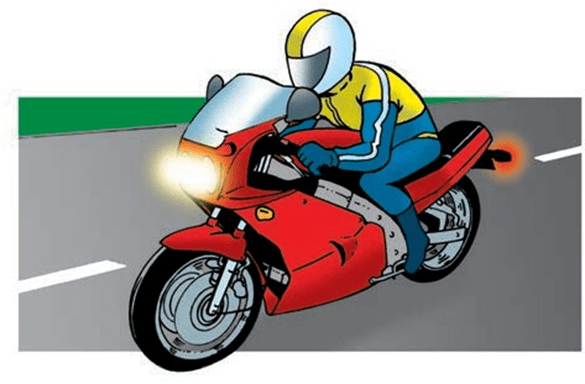
Follow the rules below.
- Avoid riding between traffic lanes.
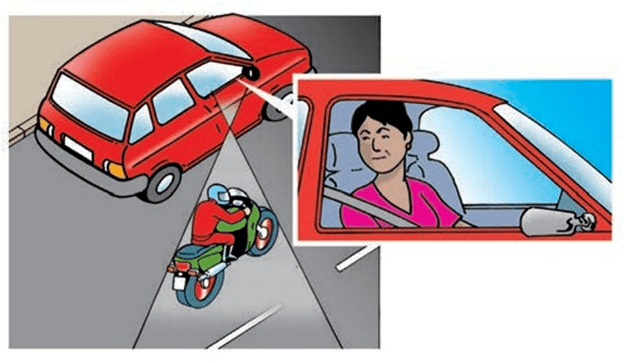
- Keep well clear of other vehicles when passing them. Remember that drivers might not always see you in their ‘blind spots’.
- If your machine is fitted with indicators and a brake light, use them. However, if other road users cannot see these signals, or if you think they might not be working, you should give clear hand signals as well. See section 7 on hand signals.
- Use rear-view mirrors if your motorcycle or moped is fitted with them. Remember, though, not to rely on your mirrors when moving off, changing lane, turning right and overtaking. You should also look over your shoulders and check any ‘blind spots’.
Your motorcycle tyres must have a tread depth of at least 1 mm, but you should replace them before they become this worn.
Tactics for surviving as a motorcyclist
- Watch your surroundings.
- Watching your surroundings means watching:
- Into the far, middle and near distance; and
- Behind you, using your mirrors and checking over your shoulders, before changing position or turning.
- Watching your surroundings means watching:
- Keep your distance.
- Use the ‘two second rule’. In wet or icy conditions, always leave a bigger gap.
- Be seen.
- Make sure your position is correct. Use dipped headlights and wear high visibility clothing (such as a neon vest and ‘Sam Browne’ reflective belt).
- Do not surprise others.
- Never do anything on the road that could cause another road user to slow down, brake or swerve or that could startle pedestrians.
- Think like other road users.
- Anticipate how other road users might react.
- Read the road.
- In other words, ride to current road, weather and traffic conditions.
- Adopt the right speed for the conditions.
- Never let others dictate your pace.
- Never ride your bike after consuming alcohol or drugs.
- Trust your machine by maintaining it properly.
- Follow the acronym POWDERS and check petrol, oil, water, damage, electrics, rubber (tyres) and security.
Rules for cyclists
This section covers the rules for keeping your bicycle roadworthy, wearing proper equipment and cycling safely and considerately. You must also be familiar with the rules on cycle tracks and hand signals.
Keeping your bicycle roadworthy
- Your brakes, tyres, chain, lights, reflector and bell must all be in good working order.
- Your bicycle should be the right size to allow you to touch the ground with both feet.
- When carrying goods, you should use a proper carrier or basket and take care that nothing is hanging loose.
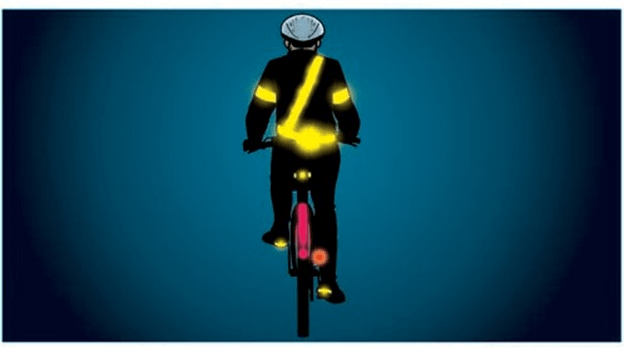
- At night you must carry a lamp showing a white or yellow light to the front and a lamp showing a red light to the back. These are the minimum lighting requirements laid down by law. However, to be even more visible to motorists at night, you should:
- Add strips of reflective material to the bike (white to the front and red to the back);
- Wear a reflective armband; and
- Wear a ‘Sam Browne’ reflective belt or reflective vest.
Remember: Check your gear, be seen, wear a helmet and listen – never listen to music or use radios or mobile phones when cycling.
Bicycle checklist
- Handlebars should be square with the frame and level with the saddle. Movement should be neither too stiff nor too loose.
- When on the saddle, both feet should just touch the ground.
- Your wheels should be straight and in line. Replace wheels if they are buckled or out of alignment.
- Tighten loose spokes and replace any that are damaged.
- Make sure your tyres are properly inflated, with a good tread.
- Make sure mudguards are secure and well clear of the wheels.
- Check your gears and get them adjusted when necessary.
- Check your brake cables and adjust them when necessary. Replace them when frayed.
- Make sure the closed ends of brake shoes face the front.
- Make sure brake blocks are close to the rim of the wheel. Replace worn blocks.
- Check pedals and replace them when worn or broken.
- Make sure your lamps are white or yellow to the front, and red at the back. Use a red reflector. Replace batteries when necessary and clean lenses.
- Make sure your bell is within easy reach of your thumb.
- Oil all moving parts.
- Wear a cycle helmet at all times.
A bicycle should have the following braking system:
- If it has one fixed wheel or is designed for a child under 7 years of age, it must have at least one brake.
- If it is designed for an older child or an adult, or if neither wheel is fixed, it must have two brakes – one brake acting on the front wheel and another for the back wheel.
Protective clothing and equipment
As a cyclist, you are a vulnerable road user and your bicycle will not protect you if there is a crash. The law does not require you to wear a helmet. However, in the interest of road safety, and in your personal interest, you should wear a helmet when cycling.
When buying a helmet:
- Look for a mark to show that it has been made to a recognised national standard.
- Check that it does not restrict your field of vision or your hearing.
When you own a helmet you should:
- Replace it when it is damaged or dropped.
- Adjust the straps on your helmet to fit you correctly. Always check the manufacturer’s instructions.
Bicycle trailers
Carrying children on bicycles exposes them to the dangers of the road.
Bicycle trailers are generally low to the ground. Due to their low profile, HGV and car drivers may not be aware of them immediately behind the bike. To help counteract this, a flag pole should be attached to the rear of the trailer with the flag being approximately level in height with the rider’s helmet. For overall safety, the trailer should display two red lights (one each side of the trailer), especially when travelling in poor lighting conditions. Towing a trailer will have an adverse effect on the handling of a bicycle. The way you corner may have to be adapted, and stopping times may increase as a result of the increased weight of the trailer. In busy urban areas you will have to take account of the extra width, especially in cycle tracks where you might take up the full width of the lane.

If you intend to use a child seat for carrying a child on your bicycle, make sure that it is fit for purpose and securely fitted by a competent person. Make sure your child is wearing a suitable cycle helmet and check that the seat’s restraining straps are in good condition. Be aware of the risk of your child’s feet getting caught in the wheel spokes. The seat should have secure foot straps. Ensure clothing like scarfs and shoe laces cannot get caught in the wheels.
Cycling safely
- Positioning: You may need to move out from the normal secondary position on the road (left side of the lane) to a more primary riding position (centre of the lane) in order to:
- Get the best view of the road and junctions ahead.
- Increase visibility for approaching traffic, especially where a driver’s view may be blocked.
- Turn left or right, enter a roundabout, change lanes or approach a bend.
Before changing position on the road, you should ‘look, signal in good time and look again’ to ensure that it is safe to proceed. If you are not confident in taking up the ‘primary’ position, it may be safer to get off the bike and cross the roadway on foot where it is safer.
- Make sure you keep to the left. Always look behind and give the proper signal before moving off, changing lanes or making a turn.
- You must obey the rules of the road, particularly those that relate to traffic lights, pedestrian crossings, pelican crossings and zebra crossings.
- Keep both hands on the handlebars except when signalling or changing gears.
- Keep both feet on the pedals.
- Do not take up a position on the ‘inside’ of a large vehicle out of view of the driver. Instead, stay behind if the large vehicle has stopped at a junction with the intention of turning left.
- Keep clear of the kerb – riding clear will make you more visible and help reduce unsafe overtaking.
- When turning left, keep close to the left-hand side of the road, watch out for pedestrians and give the proper signal in good time.
- Beware of blind spots – all vehicles have blind zones and a driver may not be able to see you!
- If you cannot see the driver, the driver cannot see you, so stay back and stay safe.
- When turning right, get into the centre or just left of centre of the right-turning lane. This helps to prevent a vehicle overtaking you whilst you are changing direction. Look behind and give the proper signal before you move out and ensure traffic in that lane is not going straight ahead. On steep hills or busy roads, pull into the left-hand side of the road and wait until there is a break in traffic in both directions to let you make the turn safely.
- When cycling alongside traffic stopped in line, be aware of gaps in the traffic to allow other vehicles to turn across the stationary lane. The view of the car that is turning may be blocked due to the traffic build-up.
- In poor weather conditions, or if you are not confident about taking up the position for turning right as outlined above, it may be safer to get off your bike and cross the roadway on foot. Where available, you should use a pedestrian or controlled crossing.
- Wear reflective clothing at all times.
Remember: Cyclists put themselves and other road users at risk when they do not stop as required at traffic lights.
In the company of one or more cyclists, you must have due regard to other users of the road, and you must take full account of prevailing road conditions. Sometimes it may be safe to cycle two abreast, but you must not cycle in a manner likely to create an obstruction for other road users.
Cycle tracks
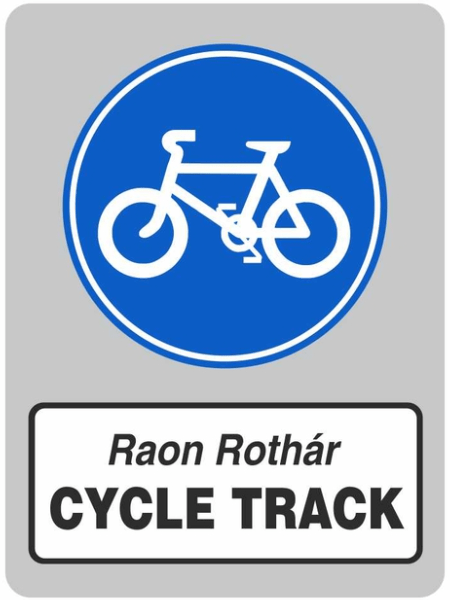
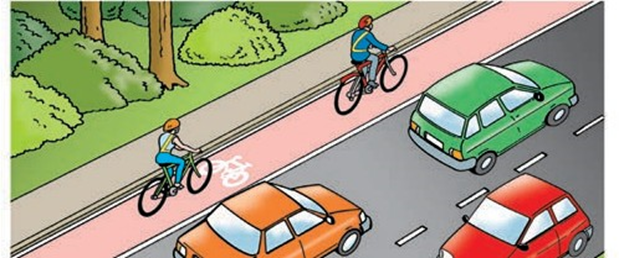
A cycle track or lane is a reserved part of a roadway for bicycles and wheelchairs, but not motorcycles.
Some cycle tracks are bordered by a continuous white line on the right-hand side. These are only for bicycles and motorised wheelchairs, so no other drivers may use them or park in them.
Other cycle tracks have a broken white line on the right-hand side. Other drivers may make temporary use of this type of track if there is no cyclist on it.
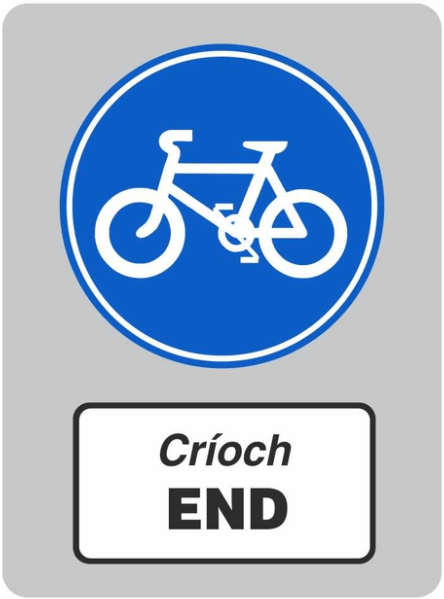
Cycle tracks are reserved 24 hours a day, unless an upright information sign at the start of or the side of the track shows another period of time.
A cycle track can also be a reserved part of a footpath or other area off the road.
If a cycle track is two-way, meaning bicycles travelling in opposite directions at the same time can use it, cyclists should stay as near as possible to the left- hand side of their track. You must obey cycle track lights.

Remember: Cyclists should wherever possible use any cycle track provided.
Rules on cycle tracks for other road users
Driving
No vehicle (other than a motorised wheelchair) may cross into or over a mandatory cycle track unless the driver is entering or leaving a place or a side road. A mandatory cycle track is a cycle track that is bounded by a continuous white line.
Parking
No driver may park a vehicle in a mandatory cycle track.
A driver may park in a non-mandatory cycle track for up to 30 minutes, but only if they are loading or unloading their vehicle and there is no alternative parking available. Remember the basic duty of care and do not obstruct a cycle track.
If a driver parks their vehicle in a cycle track that operates for only some of the day (shown on an information plate under the cycle track sign), they must move the vehicle by the time the next operating period starts.
If there is no information plate, it means the cycle track operates all the time and no parking is allowed.
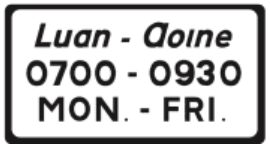
The table below sets out some ‘Dos’ and ‘Don’ts’ in relation to particular road traffic rules on cycling.
| Dos ✓ | Don’ts ✗ |
| Do cycle in single file when overtaking. | Don’t ever ride or attempt to ride a bicycle while under the influence of alcohol or drugs. |
| Do allow extra space when overtaking parked vehicles as the doors may open suddenly. | Don’t ever ride on or across a footpath, other than where a cycle track is provided on the footpath. |
| Do cycle in single file if cycling beside another person would endanger, inconvenience or block other traffic or pedestrians. | Don’t ever hold on to a moving vehicle. |
| Do cycle in single file in heavy traffic | Don’t ever cycle side-by-side with more than one cyclist. |
| Do give your name and address, if requested, to a Garda. | Don’t ever cycle against the flow of traffic on one-way streets. |
| Do obey signals given by a Garda or school warden. | Don’t ever cycle through red traffic lights or pedestrian lights. |
| Do obey all rules applying to road traffic signs and road markings, including signs and signals at traffic lights, pedestrian crossings, pelican crossings, level crossings and zebra crossings. | Don’t ever cycle on a motorway. |
| Do know the meaning of hand signals for cyclists and use them when cycling. | Don’t ever cycle in a contra-flow bus lane, unless signs authorise it. |
| Do be aware of the extra reaction time and stopping distance that may be required when riding an electric bike. | Don’t ever cycle without appropriate lighting during hours of darkness. |
Cycling offences included in the fixed charge system
| Description of Offence | Fixed Charge |
| Cyclist driving a pedal cycle without reasonable consideration | €40 |
| No front lamp or rear lamp lit during lighting-up hours on a pedal cycle | €40 |
| Cyclist proceeding into a pedestrianised street or area | €40 |
| Cyclist proceeding past traffic lights when the red lamp is illuminated | €40 |
| Cyclist failing to stop for a School Warden sign | €40 |
| Cyclist proceeding beyond a stop line, barrier or half barrier at a railway level crossing, swing bridge or lifting bridge, when the red lamps are flashing | €40 |
The table below lists the actions that you should take or avoid taking in the interests of your safety and that of other road users.
| Dos ✓ | Don’ts ✗ |
| Do keep well back when cycling behind a motor vehicle in slow-moving traffic. | Don’t ever hold on to or lean against stationary vehicles. |
| Do take extra care on wet or icy roads or when it is windy. | Don’t ever weave in and out of moving traffic. |
| Do use your bell as a warning device only. | Don’t ever carry a passenger unless your bicycle has been built or specially adapted to carry one. |
| Do take extra care and look well ahead for uneven road surfaces, drains and other obstructions so that you do not have to swerve suddenly in front of another vehicle. | Don’t ever use a personal entertainment system when cycling. |
| Do use a bus lane, and be extra vigilant when a bus is stopped and about to move off from the stop. | Don’t ever use a mobile phone while cycling. |
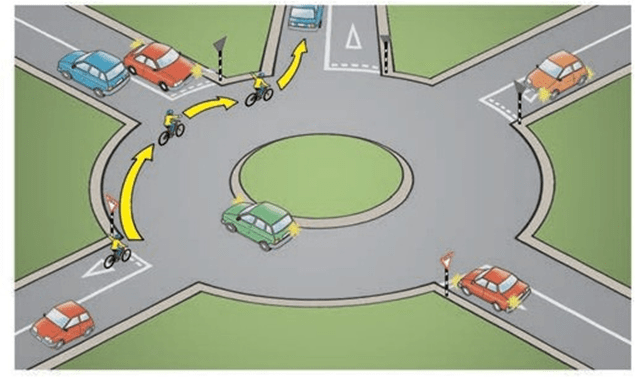
Cyclists on roundabouts
- Be particularly careful when approaching a roundabout.
- Be aware that drivers may not see you easily.
- Watch out for vehicles crossing your path as they leave or enter the roundabout.
- Take extra care when cycling across exits.
- Give plenty of room to long vehicles on the roundabout, as they need more space. Do not ride in the spaces they need to use to get around the roundabout. Be aware of the driver’s blind spots. If you can’t see the driver, they can’t see you. It may be safer to wait until they have cleared the roundabout before you go on it.
Rules for pedestrians
Pedestrian deaths account for 1 in 5 deaths on our roads. This section covers the rules on walking along and crossing roads.
The most important rule for all pedestrians is to behave responsibly, exercise care and not endanger or inconvenience other users of the road.
Walking beside or along a road
- If there is a footpath, you must use it.
- If there is no footpath, you must walk as near as possible to the right- hand side of the road (facing oncoming traffic).
- Do not walk more than two abreast. If the road is narrow or carries heavy traffic, you should walk in single file.
- You should always wear bright and hi-viz clothing during the day and reflective clothing at night when walking outside built-up areas.
- You should always carry a torch when walking at night time.
- You should always be aware of other road users.
Crossing the road
Follow the DOs and DON’Ts below to make sure you cross the road safely.
| Dos ✓ | Don’ts ✗ |
| Do look for a safe place to cross. | Don’t cross at a corner or bend in the road. |
| Do stop and wait near the edge of the path. If there is no path, stand close to the edge of the road. | Don’t cross near the brow of a hill. |
| Do look right and left and listen for traffic. | Don’t cross near or at parked vehicles. |
| Do let any traffic coming in either direction pass, then look right and left again. | Don’t cross where there are guard rails along the footpath. |
| Do walk briskly straight across the road when it is clear. | Don’t hold onto or climb onto moving vehicles |
| Do continue to watch and listen for traffic while crossing. | Don’t run across the road. |
Taking care near buses or trams
Take extra care if crossing a road where there is a bus lane (especially a contra- flow bus lane), cycle lane or tram track. You should also be careful when getting on or off buses and when crossing the road at or near bus stops.
Remember: Never cross in front of a stopped bus.
Safe crossing places
Use the following places to cross the road safely.
Zebra crossing
This is marked by yellow flashing beacons. The actual crossing area is marked by black and white ‘zebra’ stripes.
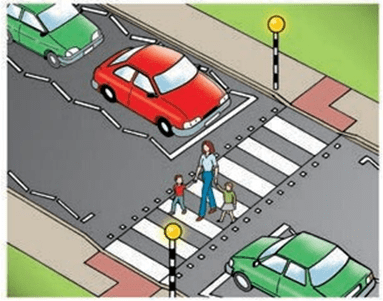
Drivers must stop to let you cross. As they approach the crossing, they should slow down and be prepared to stop. They must stop behind the stop line if there is one and must not enter any part of the crossing.
Drivers must not overtake or park within areas covered by zig-zag markings on either side of the crossing. Section 10, on parking, has more information.
- You do not have the right-of-way over other traffic until you actually step onto the crossing. Never step onto the crossing if this would cause a driver to brake or swerve suddenly.
- You must not cross within the area marked by zig-zag white lines if these are provided on either side of a zebra crossing. If they are not provided, you must not cross within 15 metres of the crossing.
- If there is a central island, treat each side as a separate crossing.
- Always watch carefully for approaching traffic. Place one foot on the crossing to indicate that you wish to cross. Wait until traffic has stopped before you start crossing.
Pedestrian lights
Pedestrian lights consist of a set of traffic lights for drivers and a set of light signals for pedestrians. Usually there is a push button for pedestrians. When you press it, the traffic lights will turn to red after a short while.
- Do not cross while the ‘wait’ or ‘red man’ light is showing.
- Cross with care when the ‘cross now’ or ‘green man’ is showing.
- If there is a central island at the pedestrian lights, the ‘green man’ or ‘cross now’ sign will let you cross only as far as that. You must then press the push button at another set of lights to cross the rest of the way.
- For vision-impaired pedestrians, an audible bleep signal or a vibrating panel on the push button may be in place to indicate when it is safe to cross.
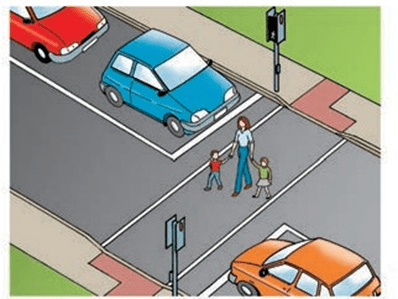
Pelican crossing
At this crossing, an amber light will flash for a short period after the red light for drivers goes out. Similarly, the ‘green man’ light for pedestrians will flash for a short time before changing to the ‘red man’ light. A flashing amber light at a pelican crossing gives priority to pedestrians on the crossing.
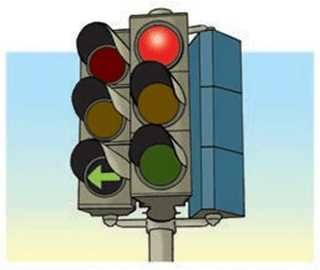
Traffic lights
If you are crossing at traffic lights, but there are no signals for pedestrians, check the lights in both directions. When the traffic on the road you wish to cross is governed by a red light, cross carefully. Look out for traffic that might be turning onto the road you wish to cross and remember that some traffic lights allow traffic to proceed in some lanes when other lanes are stopped. Be especially careful at junctions with filter lanes.
Uncontrolled crossing places
Generally uncontrolled crossing places (courtesy crossings) are designated shared areas of road. They are coloured, slightly raised or patterned cobbled sections of road, and drivers should be aware of the potential dangers of pedestrians approaching or crossing on them.
It is also important to point out that pedestrians do not have an automatic right of way when using these crossings. Pedestrians need to be alert and aware that traffic may suddenly approach from either direction.
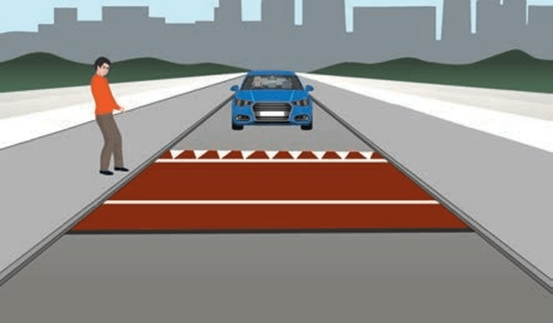
Pedestrians
Pedestrians should only enter uncontrolled crossing places (courtesy crossing) ensuring that all traffic is aware of their presence if crossing the road.
Motorists
Motorists entering uncontrolled crossing places (courtesy crossing) should react by driving very slowly, aware of the potential dangers of pedestrians using the area.
A traffic island can be provided to help pedestrians. These are safer places to cross because the crossing is divided into two parts.
Don’t cross the road in the area in front of a truck. This is a truck driver’s blind spot.
Remember: If you can’t see the driver, they can’t see you.
Respecting other road users
This section is aimed at motor vehicle drivers and builds on the information in good driving practice.
Your vehicle does not have greater right of way than any other road user, so, for safety reasons, you should drive defensively. This means expecting the unexpected and making way for other road users when necessary. Some of the actions you might need to take in normal conditions include:
- Making way for an ambulance, fire engine or Garda vehicle;
- Watching and stopping for children emerging from between cars; and
- Waiting until a vehicle has started its left-hand turn before you emerge from a side road.
To make sure all road users are safe, be aware of your responsibilities towards:
- Pedestrians, children, older people, people with disabilities and wheelchair users;
- Cyclists and motorcyclists; and
- Any animal traffic on the road.
This helps drivers to become safer and more socially responsible, not only to themselves, but to their families and other road users.
Pedestrians
As a driver, you must not put a pedestrian at risk. In particular, you must give way to pedestrians:
- On or at a zebra crossing (even if they are only waiting to cross);
- On or at a pelican crossing, when the amber light is flashing;
- Crossing the road, if you are moving off from a stationary position (for example at a traffic light or a parking space); and
- At a junction, if they have started crossing the road.
Watch out for pedestrians who might attempt to cross the road suddenly from between parked vehicles. Make extra allowances for older people, people with disabilities and children. Watch for pedestrians walking to and from buses.
Remember: It is an offence to drive a vehicle partly or fully along or across a footpath, unless you are crossing a footpath to enter or leave a building or other place beside it.
Children
Children have less experience than other people in using the road, so you should make extra allowances for their behaviour.
Take care when you are:
- Driving beside footpaths where there are young children;
- Coming out from side entrances or driveways;
- Driving in car parks; and
- Reversing, in particular where there are young children. You cannot see a small child behind your vehicle through your mirrors or back window. If in doubt, get out and check.
Schools
Do not park at a school entrance. Thoughtless parking can confuse parents and their children or block the entrance or exit of a school. It can also force children onto the road to get around your vehicle.
It is an offence if your vehicle blocks a footpath or a cycle track.
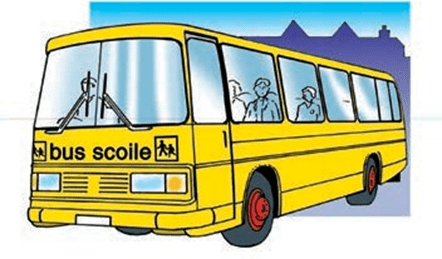
You should also take care near school buses, especially if overtaking a bus that children are boarding or leaving. School buses are clearly marked with stickers.
Do not leave any room for doubt. If you see school children, particularly young children, you may use your horn to let them know you are there.
Be careful near children who are cycling. Take extra care near a school, where cyclists may emerge in groups. Remember, it is hard to predict a young cyclist’s balance and behaviour.
School wardens
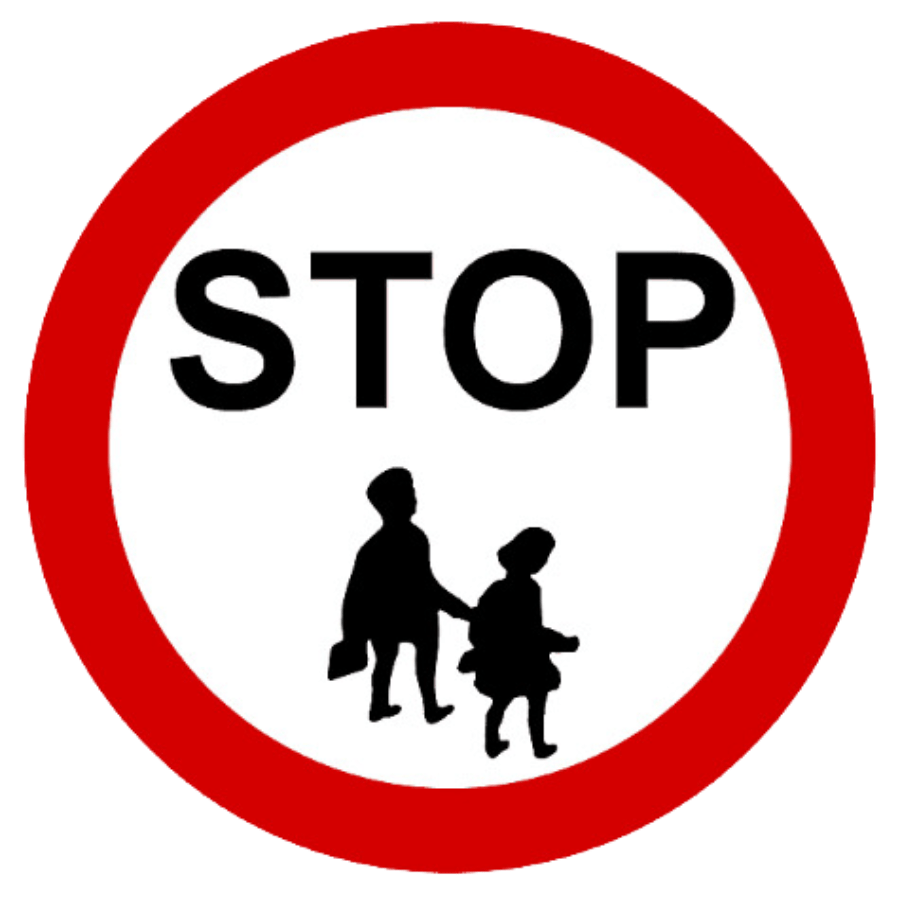
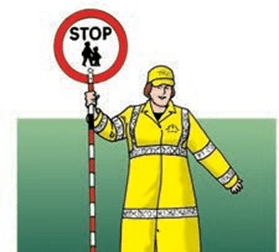
Adult school wardens provide safe road crossing places for children outside or near schools. They wear a hat and an overcoat, which include reflective material. Wardens carry a special sign and are allowed by law to stop traffic.
When a warden raises the ‘Stop’ sign (shown below on the left), you must stop and remain stopped until:
- The school children have crossed the road;
- The sign is lowered; and
- The school warden has safely returned to the footpath.
Junior school wardens
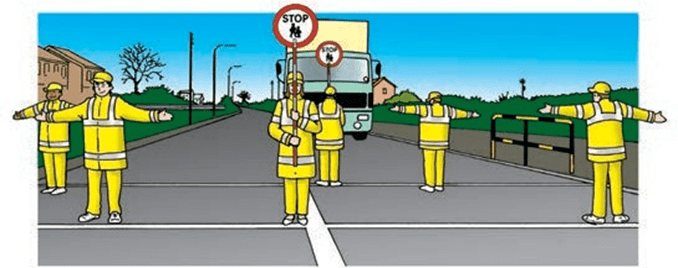
Junior school wardens are the senior pupils of primary schools who operate in teams of six to give the same service given by an adult school warden. When they want traffic to stop, they give a signal to traffic on both sides of the road. When the traffic is stopped, the wardens take up their position and guide the younger children across the road. All vehicles must remain stopped until all the junior wardens have returned to the footpath.
Never park in a place that blocks a warden’s view. School wardens must be able to see the road clearly to do their work properly and safely.
Cyclists and motorcyclists
Never put a cyclist or motorcyclist at risk and know your duty to be aware of them. They are especially vulnerable if there is a crash. In particular, watch for cyclists and motorcyclists:
- At junctions;
- Where cycle tracks merge with roads;
- When you change lanes;
- When opening your door to get out of a vehicle;
- When stopping and turning, especially when making a left turn; and
- When reversing.
The best way to take care near cyclists and motorcyclists is to use your mirrors and recheck blind spots.
Overtaking
Never cut in front of cyclists or motorcyclists when overtaking them. Give them plenty of space, especially:
- In wet or windy weather;
- When road conditions are icy;
- When they are starting off. Cyclists tend to wobble until they build up their speed; and
- When the road surface is poor. Cyclists and motorcyclists may need to avoid potholes.
Turning left
On left turns, watch out for cyclists and motorcycles close to the kerb in front of you or coming up on your left (especially if there is a cycle track on the left). Do not overtake a cyclist as you approach a junction if you are turning left. The cyclist might be continuing straight ahead.
Turning right
When turning right through a gap in oncoming traffic (for example at a yellow box junction), watch out for cyclists who might be moving up on the inside or might be travelling in a cycle or bus lane running in the opposite direction at the far side of the road. Also, use your mirrors to check for any motorcyclists who may be overtaking you as you approach the turn.
Cycle tracks and parking
Do not park or drive on cycle tracks. Before you open the door of a parked vehicle, use your mirrors to check for cyclists and motorcyclists coming up on your right and give them enough room to pass.
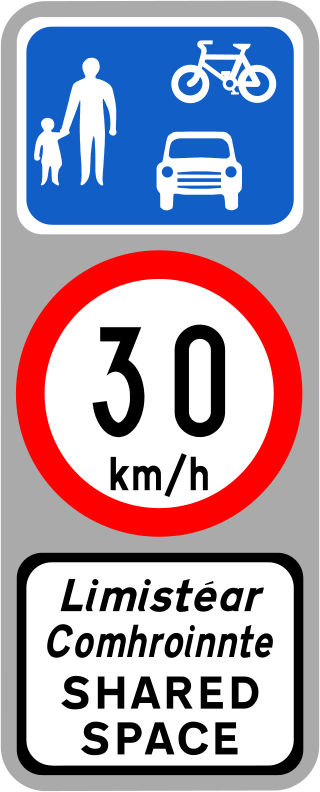
Shared Spaces
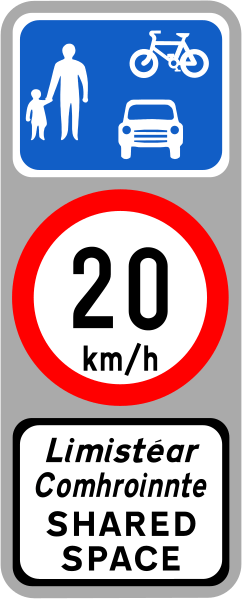
Shared spaces are low-speed driving areas in which pedestrians, cyclists and vehicles all share the road. Drivers should be aware that shared spaces are substantially different to normal built-up areas and that they should drive very slowly in them.
Animal traffic
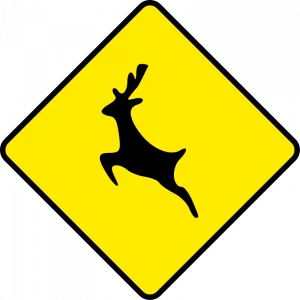
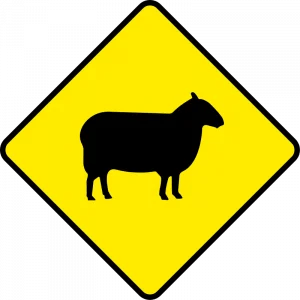
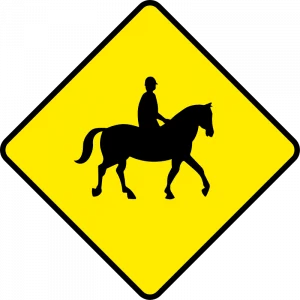
Always slow down and be prepared to stop when approaching or overtaking animals. If a person in charge of animals gives a signal to slow down or stop, you must obey it. Avoid using your horn if animals are in front of you, as it might frighten them.
If you are travelling on a road where animals are common, you will see a warning sign like the ones below.

Other road users
Emergency services vehicles
In the course of their duty, Garda, fire brigade vehicles or ambulances and other emergency vehicles can be exempt from some of the road traffic law as long as this does not put other road users in danger. As a user of the road, if you hear or see a Garda or emergency vehicle approaching under emergency conditions using a siren or flashing lights, you should exercise caution, and give way if it is safe to do so. Never ‘tailgate’ an emergency service vehicle.
People using agricultural machinery
Tractors
Tractors are governed by normal road traffic laws on driver licensing, insurance, motor tax and vehicle lighting.
All tractors used in a public place must be fitted with safety frames. The purpose of the frame is to protect the driver from being crushed underneath if the tractor overturns. The frame must comply with approved standards.
It is up to the owner or driver to fit a safety cab.
Tractor drivers must carefully transport loose material such as silage, slurry, sand or gravel, so that the material does not spill onto a public road and cause a crash. Loads of lime or other dusty materials, offal or other offensive material must be fully covered with a tarpaulin.
Farmers using agricultural tractors and trailers to haul agricultural produce must not:
- Use exceptionally high frames on trailers which could endanger the stability, steering and braking of an agricultural tractor and trailer combination; or
- Exceed the maximum legally permissible combination weight or the design gross vehicle weight.
Please note:
Further rules relating to various aspects of agricultural vehicles, such as lighting requirements, weight and dimension requirements, speed disc requirements, among others, are now in place.

Tractors on the road
A tractor used in a public place must obey the laws governing road traffic.
If you are driving a tractor, you should keep left to let faster traffic pass. Your driving mirror must provide an adequate view of the road behind you.
Do not carry a passenger unless the tractor is equipped to carry one.
People in charge of animals
Horse-drawn vehicles
The normal rules apply, including the general rule to keep left. The hand signals to be given by the driver are the same as those given by a cyclist. A horse-drawn vehicle must be equipped with two red rear reflectors and, at night, must also carry on the right-hand side of the vehicle a lamp showing a white light to the front and a red light to the back.
You must not drive a horse-drawn vehicle while under the influence of alcohol or drugs.
Riding or leading horses
If you are riding or leading a horse, you must remain on the left-hand side of the road and obey all Rules of the Road.
You should wear a high-visibility vest and an approved riding helmet.
When leading a horse, you should walk so as to ensure that you are between the horse and the traffic, so as to prevent the horse from interfering with the traffic.
When riding one horse and leading a second horse, you must remain on the left- hand side of the road. You should ensure the led horse is on the left-hand side of the ridden horse, to ensure that you are positioned between the horse and the traffic. This is in order to control the led horse, in the interest of the safety of other users of the road.
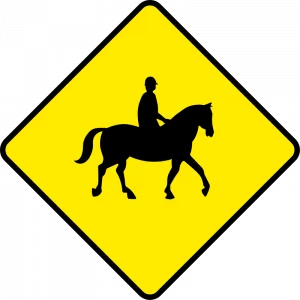
Drivers should take special care when:
- Approaching riding schools or places where horses are likely to appear,
- Overtaking horses, especially loose horses or horse-drawn vehicles, and
- Approaching a horse and rider. If appropriate a driver must stop a vehicle and allow them to pass.
Driving animals on the road
If you are in charge of animals on a roadway, you must take reasonable steps to make sure the animals do not block other traffic or pedestrians.
If you are in charge of animals on the road at night, you should carry a lamp showing a white light to the front and a red light to the back. You should also wear a reflective armband.
 Apperture Labs