Diabetic Ketoacidosis (DKA)
Symptoms: Excessive urination, extreme thirst, dehydration, deep labored breathing (Kussmaul respirations), drowsiness, potential coma
- Elevated anion gap, often leading to electrolyte imbalances, especially potassium (requires cardiac monitoring)
Treatment:
- Fluid resuscitation with normal saline; introduce dextrose when blood glucose falls below 250
- IV insulin administration until anion gap normalizes
- Potassium supplementation if levels drop below 4.5 (monitor closely, as insulin shifts potassium into cells)
- Bicarbonate therapy if pH falls below 7.0
Hyperosmolar Hyperglycemic State (HHS)
Triggered by various factors (burns, stroke, infections, certain medications), commonly seen in type 2 diabetes
- No significant acidosis (absence of ketones)
- Altered mental status
- Severe hyperglycemia >600 mg/dL
- Bicarbonate levels >20
Treatment:
- Aggressive fluid replacement (deficit of 9-12 liters)
- Correction of electrolyte disturbances
- Gradual glucose reduction
- Address underlying cause
Antidiuretic Hormone (ADH) Disorders
Diabetes Insipidus (DI)
Inadequate ADH (“ADds Hydration Hormone”) results in excessive water loss
- Causes:
- Reduced production: Pituitary tumor, head trauma, cerebral aneurysm, medications (phenytoin, lithium)
- Decreased sensitivity: Polycystic kidney disease, chronic kidney infections (pyelonephritis)
- Inability to concentrate urine leads to excessive urination and dehydration
Treatment: Fluid replacement and ADH supplementation (desmopressin acetate)
Syndrome of Inappropriate ADH (SIADH)
Excessive ADH secretion leads to fluid retention and dilutional hyponatremia.
Common Causes: Certain cancers, infections, strokes.
Treatment: Diuretics (e.g., furosemide), controlled sodium correction with hypertonic saline.
Thyroid Disorders
Thyroid Storm
Life-threatening and progresses rapidly—fatal within hours if untreated.
Triggers: Stress, diabetic ketoacidosis (DKA), trauma, myocardial infarction (MI).
Symptoms (“Hot”):
- Severe hyperglycemia
- Rapid heart rate
- Anxiety and tremors
- High fever
Treatment:
- Reduce fever
- Block thyroid hormone synthesis (propylthiouracil – PTU)
- Address underlying trigger
- Supportive care
Myxedema Coma
Severe hypothyroidism, often in patients with pulmonary or cardiovascular disease.
Symptoms (“Cold”):
- Elevated TSH
- Low blood sugar
- Slow breathing (hypoventilation)
- Slow heart rate (bradycardia)
- Low blood pressure
- Hypothermia with shivering
Treatment:
- Gentle fluid replacement
- Passive rewarming
- IV thyroid hormone therapy
Cortisol
Adrenal Crisis
Acute deficiency of cortisol, typically in individuals with chronic adrenal insufficiency (e.g., Addison’s disease).
Triggers: Abrupt corticosteroid withdrawal, head trauma.
Treatment:
- IV hydrocortisone
- Electrolyte stabilization
The 5 S’s of Adrenal Crisis:
- Sudden severe pain
- Syncope (fainting)
- Shock
- Critically low blood pressure
- Severe nausea, vomiting, and diarrhea
Pheochromocytoma
Adrenal medulla tumor causing excessive catecholamine release.
Key Sign: Severe, persistent hypertension.
Treatment: Alpha-blockers (e.g., nitroprusside), surgical tumor removal.
Cushing’s Syndrome
Excess cortisol production—think of it as having a “cortisol cushion.” Also linked to excess androgens.
Causes:
- Adrenal or pituitary adenoma
- Long-term steroid use
- HPA Axis Dysfunction:
- Hypothalamus releases corticotropin-releasing hormone (CRH)
- CRH stimulates the pituitary to release ACTH
- ACTH triggers the adrenal glands to produce cortisol
Cortisol Basics:
- Lipid-soluble hormone
- Majority bound to cortisol-binding globulin (CBG), with only ~5% active
Signs & Symptoms – “STRESSED”
- Skin fragile
- Truncal obesity
- Rounded face
- Elevated blood pressure
- Striae on abdomen and limbs
- Sugar levels high
- Excessive body hair growth
- Dorsocervical fat pad (“buffalo hump”)
- Depression
Pediatric Manifestations:
- Delayed puberty
- Gynecomastia
Effects of High Cortisol:
- Hypertension (due to increased catecholamine sensitivity)
- Tissue Breakdown: Muscle, bone, and skin degradation
- Hyperglycemia & Central Obesity:
- Cortisol increases glucose → Triggers insulin release → Stimulates fat storage
- Reproductive Dysfunction:
- Inhibits gonadotropin-releasing hormone (GnRH) → Impacts ovarian/testicular function
- Immunosuppression: Increased infection risk
Diagnosis:
- 24-hour urine cortisol test
- Evening cortisol blood test
- Dexamethasone suppression test
- ACTH plasma levels
Treatment:
- Gradual tapering of exogenous steroid use
- Surgical removal of adrenal or pituitary tumors
Addison’s Disease
Deficiency of cortisol—think “need to ADD cortisol.”
Symptoms – “STEROID”
- Sodium & sugar depletion (low Na+, hypoglycemia)
- Tiredness & muscle weakness
- Electrolyte imbalances (↑ K+, ↓ Na+)
- Reproductive changes (irregular periods, low libido)
- Orthostatic hypotension
- Increased skin pigmentation (bronzing)
- Diarrhea & depression
Treatment:
- Corticosteroid replacement therapy (e.g., hydrocortisone, prednisone)
Adrenal Gland Failure
(Also known as Primary Adrenal Insufficiency)
A condition where the adrenal glands are unable to produce sufficient glucocorticoids, mineralocorticoids, and androgens.
Causes:
- Adrenal Dysgenesis – Congenital adrenal hypoplasia or improper development
- Defective Steroidogenesis – Issues with cholesterol or steroid biosynthesis
- Adrenal Gland Destruction – Often due to disease (e.g., tuberculosis)
Treatment:
- Glucocorticoid Replacement: Hydrocortisone (TID)
- Mineralocorticoid Replacement: Fludrocortisone (daily)
Caution:
Undertreatment Signs:
- Fatigue, muscle weakness, appetite loss
- Darkened skin pigmentation
- Low blood pressure
- Low sodium, high potassium
- Hypoglycemia
Overtreatment Signs:
- Weight gain
- Hypertension
- High blood sugar
- Growth suppression
- Fragile skin, bruising, poor wound healing
- Stretch marks and osteoporosis
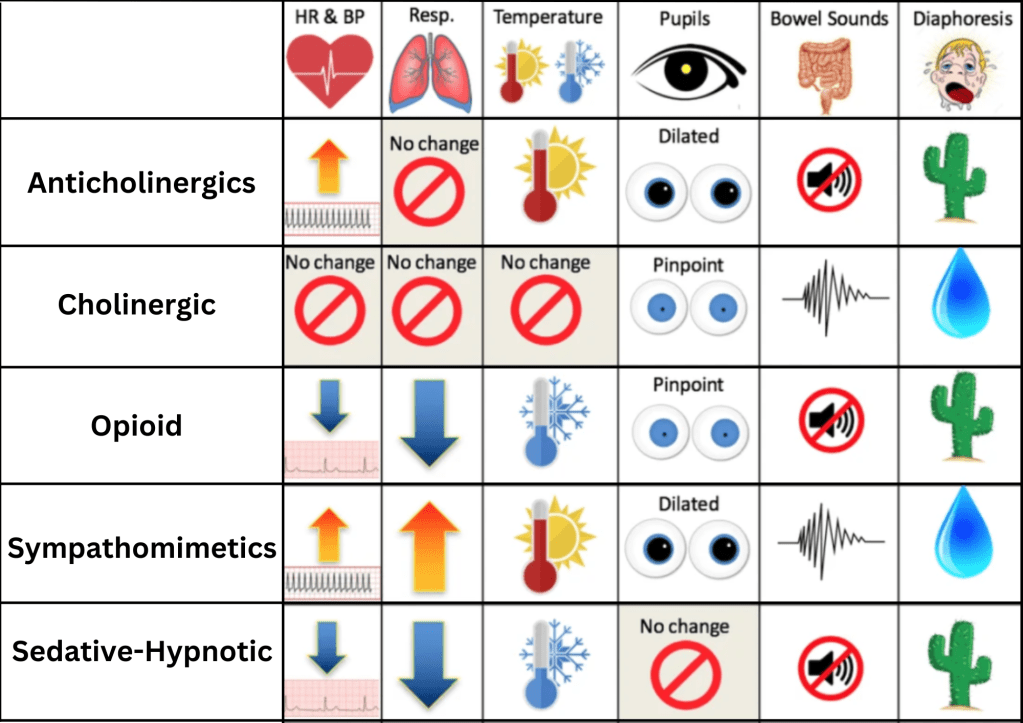
Environmental Factors, Substance Misuse, Poisoning, and Overdose
Common Toxic Agents and Antidotes
| Toxic Agent | Corresponding Antidote |
|---|---|
| Acetaminophen | N-acetylcysteine (Mucomyst/Acetadote) |
| Heavy Metal Poisoning | Dimercaprol (BAL in oil) |
| Calcium Channel Blocker Overodose | Calcium (chloride or gluconate) |
| Iron Toxicity | Deferoxamine |
| Benzodiazepine Overdose | Flumazenil (Romazicon) |
| Methanol/Ethylene Glycol Poisoning | Ethanol/Fomepizole (Antizol) |
| Opioid Overdose | Naloxone (Narcan) |
| Beta Blocker Toxicity | Glucagon |
| Warfarin Reversal | Vitamin K |
| Heparin Overdose | Protamine Sulfate |
| Carbon Monoxide Poisoning | High-flow Oxygen |
Pearls
- Rabies Transmission: Bats are the leading vector. Any bite, direct contact, or suspected exposure warrants prophylaxis.
- Hypothermia & ECG: Look for J-waves (Osborn waves) as a diagnostic marker.
- Brown Recluse Spider Bites: Can lead to disseminated intravascular coagulation (DIC).
- Lyme Disease Complications:
- Neurological: Headaches, cranial neuropathies (esp. CN VII), radiculoneuritis, lymphocytic meningitis.
- Cardiac: Lyme carditis.
- Musculoskeletal: Lyme arthritis.
Acetaminophen Toxicity
Liver Damage Mechanisms:
- Clotting factor depletion → Increased bleeding risk/DIC.
- Impaired glycogen storage → Hypoglycemia.
- Ammonia accumulation → Hepatic encephalopathy.
Treatment:
- Antidote: Acetylcysteine.
- Labs: Measure serum acetaminophen levels within 4 hours post-ingestion.
Amphetamine Overdose
Symptoms:
- Restlessness, tremors, seizures.
- Tachycardia, hypertension.
Mydriasis:
Pupil dilation.
Formication:
Hallucination of bugs crawling on skin.
Benzodiazepine Overdose
Effects (CNS Depression):
- Low blood pressure.
- Cardiac dysrhythmias.
- Respiratory suppression.
Treatment:
- Antidote: Flumazenil (Romazicon) – use cautiously due to seizure risk.
- Supportive Care: Activated charcoal, sodium bicarbonate.
- Airway Protection: Intubation if needed.
Bite Management
- Antibiotics: Required for cat bites; optional for dog bites.
- Rabies Risk (Bats, Foxes, Raccoons):
- Immediate protection: Rabies immunoglobulin.
- Long-term immunity: Vaccine series.
Carbon Monoxide Poisoning
- Affinity for Hemoglobin: Strongly binds to hemoglobin, preventing oxygen transport, but does not readily diffuse across lung tissue.
- Characteristic Sign: Cherry-red skin discoloration.
- Symptoms: Dizziness, chest pain (CP), cardiotoxic effects with ST-segment changes.
- Diagnostic Test: Carboxyhemoglobin levels.
- Elimination Half-Life: 4.5 hours; complete clearance within 24–36 hours.
- Treatment: Administer 100% oxygen, preferably through hyperbaric oxygen therapy for faster clearance.
- Prevention & Education:
- Recognize exposure sources.
- Identify early symptoms (e.g., headaches).
- Install and maintain carbon monoxide detectors.
Cocaine Toxicity
- CNS Overstimulation: Excessive catecholamine release, inhibits dopamine reuptake.
- Symptoms:
- Dilated pupils (mydriasis)
- Seizures, chest pain (CP), arrhythmias (nitroglycerin is safe)
- Caution: Avoid β-blockers—hypertension and tachycardia are driven by CNS activation, not primary cardiac dysfunction.
- Treatment: Benzodiazepines for CNS suppression.
Cyanide Poisoning
- Source: Inhalation from fire smoke exposure (off-gassing).
- Mechanism:
- Cellular asphyxiation—blocks mitochondrial function → halts ATP production → cardiac failure → shock, acidosis, and cardiac/respiratory arrest.
- Symptoms: Severe respiratory distress, headache, palpitations, dizziness, flushed (rose-colored) skin.
- Diagnosis: Venous blood gas analysis.
- Treatment:Cyanide Antidote Kit
- Amyl nitrate (can be inhaled inside a non-rebreather mask)
- IV sodium nitrite (10 mL, 3%)
- IV sodium thiosulfate (40 mL, 25%)
Digoxin Toxicity
- Effects: Inhibits sodium-potassium pump, leading to hyperkalemia.
- Classic Sign: Yellow-tinged vision (“halos”).
- Treatment: Digibind (digoxin-specific antibody), reserved for life-threatening cases.
Ethanol (ETOH) Toxicity
- Complication: Severe hypoglycemia.
- Delirium Tremens (DTs):
- Early signs: 6–8 hours after last drink.
- Severe manifestations: 12–72 hours post-ingestion.
- Priority: Safety measures to prevent injury.
- Wernicke-Korsakoff Syndrome:
- Cause: Thiamine (Vitamin B1) deficiency—brain cannot metabolize glucose without it.
- Critical Intervention: Administer thiamine before glucose.
Frostbite
- Rewarming Protocol:
- Use warm water (37°–39°C).
- Avoid hot water and rubbing.
- Thaw until skin becomes purple and soft (15–30 minutes).
- Severe Cases: May require tPA or heparin to prevent/reduce vascular thrombosis.
Hallucinogen Toxicity
- Primary Concern: Airway management due to altered mental status.
Heat Stroke
- Diagnosis: Core body temperature via rectal measurement.
- Treatment:Rapid cooling (until shivering begins)
- Preferred Methods:
- Ice water immersion
- Ice packs applied to neck, axillae, and groin
- Spraying cool water and using fans to promote evaporative cooling
- Preferred Methods:
Iron Toxicity
- Effect: Causes significant gastrointestinal damage, leading to pain and bleeding.
Stages of Poisoning:
- Acute GI Distress: Severe vomiting, abdominal pain, and bloody diarrhea.
- Transient Improvement: Symptoms temporarily subside, creating a false sense of recovery.
- Systemic Deterioration: Cardiovascular collapse, shock, and massive gastrointestinal hemorrhage.
Treatment:
- Deferoxamine (iron chelator)
- Activated charcoal (limited effectiveness for iron)
- Gastric lavage (controversial efficacy)
Lithium Toxicity
- Cause: Often due to dehydration, as lithium is processed through the kidneys.
- Symptoms:
- Ataxia (loss of coordination)
- Nystagmus (involuntary eye movements)
- Seizures
- Treatment: Aggressive hydration to promote lithium excretion.
Radiation Exposure
Types of Radiation:
Alpha Particles:
- Cannot be blocked by paper, wood, or concrete.
- Effects: Long-term health risks depend on exposure level; causes superficial skin injury.
Beta Particles:
- Blocked by paper, but not by wood, brick, or concrete.
- Effects: Can cause local burns and internal harm if inhaled or ingested.
Gamma Radiation:
- Penetrates paper and wood, but not concrete.
- Effects: Leads to localized injury and can cause radiation sickness.
Neutrons:
- Penetrates paper, wood, and concrete due to being electrically neutral.
- Effects: Causes deep tissue and bone damage.
Initial Stabilization Steps:
- Assume contamination in the absence of specific radiological testing.
- Prioritize ABCs (airway, breathing, circulation).
- Decontamination: Remove clothing and wash skin—this can eliminate 90% of external contaminants and prevent further internal absorption.
Outcomes by Syndrome Type:
- CNS Syndrome: Altered mental status and seizures—fatal within 5 days.
- Hematopoietic Syndrome: Blood cell depletion—recovery may take weeks to 2 years.
- GI Syndrome: Gastrointestinal effects—typically full recovery.
- Cutaneous Burns: Skin injuries—usually heals completely.
Salicylate (Aspirin) Toxicity
- Effect: Damages the GI lining, increasing the risk of bleeding.
- Key Sign: Tinnitus (ringing in the ears).
Symptoms:
- Seizures
- Mental confusion
- Elevated body temperature (hyperthermia)
- Pulmonary edema
- Kidney failure
Treatment:
- Hyperventilation to correct metabolic acidosis.
- Sodium bicarbonate to alkalinize urine and promote excretion.
- Activated charcoal to reduce further absorption.
Snake Bites
Types of Snakes:
- Vipers: Cause swelling and blood clotting issues.
- Coral Snakes: Deliver a neurotoxin that affects the nervous system.
First Aid Measures:
- Keep the affected limb immobilized at or below heart level.
- Mark the swelling’s edges to track progression.
- Avoid ice—it can worsen tissue damage.
- Administer antivenin within 4 hours for best results.
Antivenin Information:
- Universal antivenins are available for common venomous pit viper bites.
- For non-U.S. snakebites, contact poison control immediately for guidance.
Tricyclic Antidepressant (TCA) Toxicity
Key Symptoms – “Three C’s”:
- Cardiac: Dangerous arrhythmias (SVT, VT, QRS widening)
- Convulsions: Seizures, tremors
- Coma: Altered level of consciousness (LOC)
Highly toxic – even small overdoses can be fatal.
Mechanism of Toxicity:
- Anticholinergic effects → Blocks parasympathetic (ACH) signals
- α-Adrenergic effects → Disrupts sympathetic (fight-or-flight) function
Other Symptoms:
- Rapid heart rate (tachycardia)
- Low blood pressure (hypotension)
- Neurological impairment (confusion, unconsciousness)
Treatment Approach:
- Supportive care (maintain airway, breathing, circulation)
- Continuous cardiac monitoring due to high arrhythmia risk
- Hospital observation for delayed complications
 Apperture Labs