Running off the Pavement
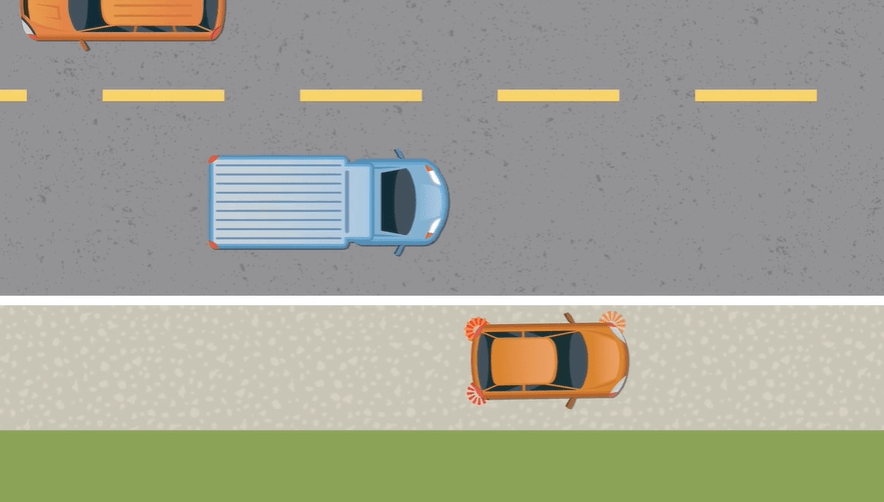
If your vehicle goes onto the shoulder of the road:
- Stay on the shoulder and steer in a straight line.
- Take your foot off the accelerator
- Apply the brakes very gently.
- After slowing down, and if traffic permits, ease back onto the pavement, being careful not to overshoot the centre line.
Blowouts
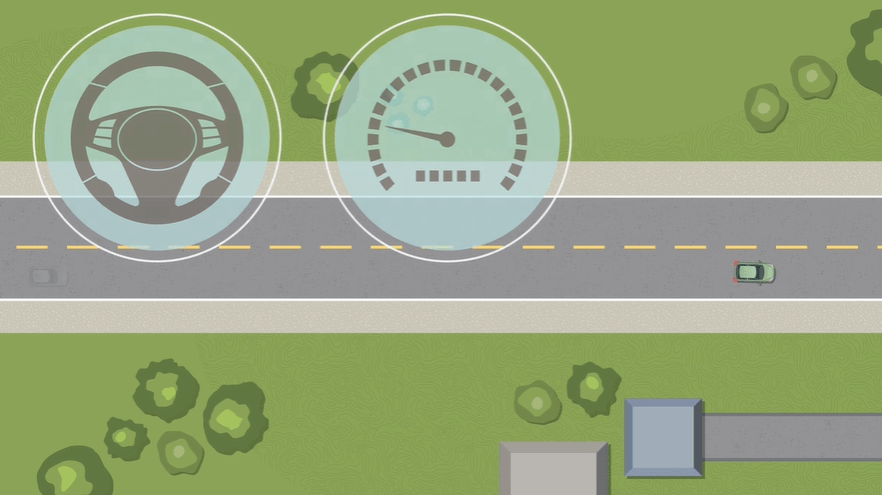
A front-tire blowout tends to cause the vehicle to swerve to the side of the blowout, making steering very difficult. In the case of a rear-tire blowout, the rear end of the vehicle sways from side to side.
Should a blowout occur:
- Hold the steering wheel firmly and take your foot off the accelerator, allowing your vehicle to slow down gradually.
- Brake only when the speed is sufficiently reduced to maintain control.
- Don’t turn onto the shoulder of the road until you have your vehicle under control. If the blowout causes your vehicle to swerve onto the shoulder, don’t try to get back onto the pavement. Let the vehicle coast to a stop.
- Drive your vehicle off the roadway to a safe spot to change a tire.
Note: If you regularly inspect your tires for under inflation, cuts or bulges, you may be able to avoid a blowout. When driving, you may be warned by a thumping sound caused by a bulge in the tire or your vehicle may be pulling sideways because the tire is losing air rapidly. Power steering gives you more power to resist the side pull from a front tire blowout.
Losing a Wheel
The rules are basically the same as for a blowout.
Skid Control
Driving too fast often results in skidding, regardless of weather conditions. In fact, more people are killed or injured in dry-surface skids than in wet-surface skids.
To get control of your vehicle while skidding, you should simultaneously:
- Take your foot off the accelerator or the brake.
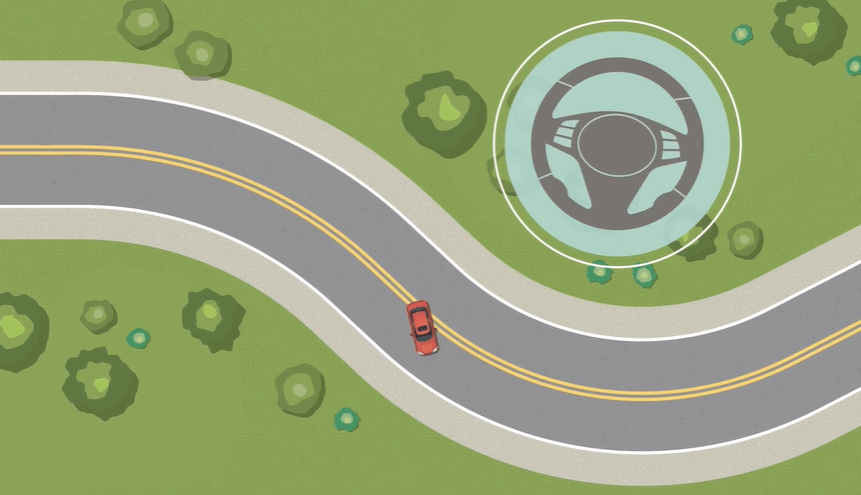
- Look and steer in the direction you would like to go.
As the vehicle straightens out (assuming the brakes haven’t locked), the front wheels should also be straightened out to prevent a skid in the opposite direction.
To keep from skidding, slow down as you approach danger spots and don’t accelerate, brake or change direction quickly.
Emergency Braking
If you must stop in the shortest distance for an emergency, depress the brake pedal to its maximum. However, with this method you will lose your steering control.
Without anti-lock brakes
If your vehicle doesn’t have anti-lock brakes, slamming on the brakes will lock your wheels. If all four wheels are locked, the vehicle will likely slide in the direction it was already going. Remember, without an anti-lock braking system, when your brakes are locked, you have very little steering control (if any at all), so do this only in an emergency.
An alternative method is to apply steady brake pressure without locking up the wheels. This is called threshold braking and requires practice and skill in order to perform properly. The advantage here is you maintain steering control as you come to a stop and you may be able to steer around an object rather than having a collision.
With anti-lock brakes
Anti-lock braking systems will provide some degree of steering control when the brakes are fully applied. The amount of control will depend on the specific system, so check your owner’s manual for the best advice to follow.
Flooded Engine
Your engine floods when you have too much gas and not enough air in your car’s combustion chamber, making it impossible for the gas to ignite. Check your owner’s manual for directions.
Wet Brakes
Your brakes may fail when you go through a large puddle of water. To be sure that they’re working:
- Always test the brakes lightly after driving through deep water. They may pull to one side or may not work at all.
- You can “dry” the brakes by driving slowly and applying them lightly.
Disabled Vehicle
Following are some safety tips to help minimize safety hazards if your vehicle stalls or is involved in a collision:
- If possible, move the vehicle clear of traffic and park all four wheels off the travelled portion of the highway.
- Use the starter and low gear to pull your vehicle to the shoulder if you have a standard shift
- If your vehicle is stalled on a highway or if your speed is well below the speed limit, use the four-way flashers when your vehicle is coming to a stop.
- If you have reflectorized signs and/or flares, place them 60 metres in front and behind the vehicle, so that the danger may be seen by approaching drivers.
- If you cannot move your vehicle off the road, raise the hood to warn other motorists.
Direct Collision Course
If a vehicle suddenly approaches from the opposite direction in your lane:
- Brake hard. If speed can be reduced before the collision, the impact will be less severe.
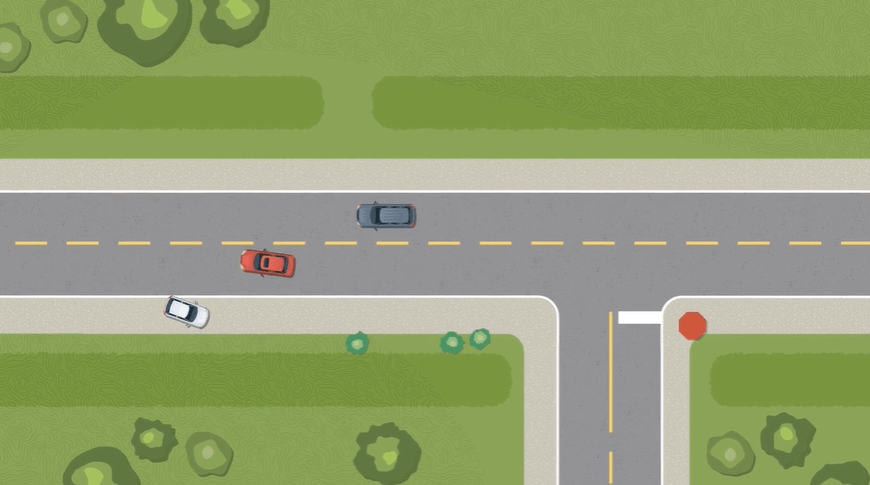
- Move as quickly and safely as you can onto the shoulder on the right-hand side of the road, and sound the horn. The other driver may suddenly realize their actions and steer back onto their side of the road. If the shoulder is not paved, avoid excessive braking as this could cause you to lose control. Never swerve to the left to avoid a collision as you may then be in the path of oncoming traffic.
- Head for something that is capable of energy absorption to reduce the force on impact — for example, a bush, shrub or snowbank. Better to hit an object with a glancing blow rather than head-on. Sideswiping a guardrail, for instance, and bouncing off (some of the impact being absorbed), with the driver regaining control, has avoided more serious collisions.
By being alert at all times behind the wheel, you may gain that fraction of a second you would not otherwise have to determine your escape route.
Vehicle on Fire
Since this usually results from an electrical short circuit, turn off the ignition immediately. It’s wise to keep a hand fire extinguisher in the passenger compartment of your vehicle. If it’s a small fire, use the fire extinguisher or smother flames with earth, sand or large articles of clothing. If it’s a large fire, move away from the vehicle and call the nearest fire department.
Vehicle Plunging into Water
If a vehicle ends up in water with the windows closed and intact (not broken), it will float for between 30 seconds and a few minutes. Vehicle occupants have only about one minute to exit before escape becomes impossible. As the vehicle sinks, water pressure is higher on the outside than the inside, therefore water pressure prevents doors from being opened. Once the water rises above the windows, the windows cannot be opened because the water presses the window against the door frame.
If you ever find yourself in this situation, follow these important steps:
- Don’t panic
- Take seatbelts off. Children or others who need help must be released from their seatbelts (starting from the oldest to the youngest, since the older children can help themselves while you attend to the younger ones).
- Open or break windows. If they’re power windows, roll them down immediately because water will cause a short circuit in the electrical system. If the electric windows don’t work, break them by hitting or kicking the window on the edge nearest the front of the car.
- Get out immediately, sending children out before you.
Vehicle in Contact with Electrical Wires
If you step out from a vehicle in contact with live electrical wires, you could be seriously injured or killed when your feet touch the ground — even if you’re wearing rubber boots. Should your vehicle ever be in contact with electrical wires:
- Stay inside and try to drive away from the wires.
- If you cannot free your vehicle from the wires, turn on your hazard lights, move off the road as far as you can and remain inside. Warn potential rescuers to stay away from the vehicle and the wires and ask them to contact the police.
- If your vehicle is on fire and you must leave it, only do so by jumping out so as not to come in contact with both the vehicle and the ground at the same time. Also make sure to jump free of any wires.
Suggested Emergency Equipment
- Standard Emergency Equipment — shovel, tow rope or chain, booster cables, flashlight, first-aid kit, basic tool kit, flares and fire extinguisher.
- Winter Emergency Equipment — all of #1 plus hatchet, chains or metal mats, windshield scraper, snow brush, gas line anti-freeze, winter clothing, winter boots, winter hat, mitts and blankets
- Winter Survival Kit — all of #1 and #2 plus waterproof matches, compact stove with fuel, candles, sheet of plastic or canvas, light rope, blaze orange flag, carbon dioxide indicator, aluminum foil, tissues, 1.5 kg metal cans with plastic lids, dry foods and soups and plastic utensils
Always ensure your vehicle’s fuel tank is full when driving in winter conditions. If you become stranded, your chances of survival are better when you stay with your vehicle. Upon Arriving at the Scene of a Collision
Upon Arriving at the Scene of a Collision
- Park your vehicle off the roadway to prevent a collision with another vehicle.
- In case of serious injury, call 911 or the nearest police station and ambulance.
- Turn off the ignition of vehicles involved in the collision to prevent a fire.
- If a person is pinned in a vehicle, but unhurt, crawl into the vehicle and try to release them. If an individual is hurt, however, don’t attempt to move them unless the vehicle is on fire. Should the person have to be moved, ensure that the head and spine are firmly supported.
- If you have flares or reflective signs, place them 60 metres in front and behind the collision scene as a warning to approaching drivers. Otherwise, use your four-way flashers. Occupants of your vehicle or bystanders should be positioned at both approaches to the collision, standing off the roadway, to warn vehicles
- Extinguish the flares when they’re no longer needed.
Even if you haven’t been trained in first aid, you may give the following assistance:
- If a person is unconscious, be sure their air passage is clear of foreign material. False teeth, chewing gum, vomit or mucus can block the air passage. If possible, gently turn their head to the side. If the victim is not breathing and you are familiar with mouth-to-mouth or artificial respiration, begin the procedure immediately.
- Stop bleeding by applying direct pressure with a clean piece of material over the wound. If there’s a serious head injury, pressure should not be applied.
- Reassure the injured and stay with them until an ambulance or other vehicle is available to take them to the hospital.
- Give all information on the assistance you have provided to the ambulance attendant and to the police, who in turn can inform the hospital.
If You’re Involved in a Collision
A collision can be between two or more vehicles, between a vehicle and a person, object or animal, or an event in which a person is injured or killed by a vehicle in motion.
If you are involved in a collision:
- Stop your vehicle immediately
- Check to see if anyone is injured. If someone is, you must:
- Get help. In Winnipeg, Brandon and most rural areas, dial 911. In other areas, contact your local police or the RCMP by dialing 0 and asking for the police.
- If anyone is seriously injured (meaning someone was hospitalized) or if a fatality occurs, you must report the collision to the police within seven days, if you don’t make a report to an officer at the scene.
- You must also report to police within seven days if the collision involves unlicensed drivers, unregistered or unidentified vehicles, failure to obtain particulars from the other party, or if you suspect the use of drugs or alcohol on the part of the other driver was a contributing factor in the collision.
You don’t have to report to the police if only property damage is sustained in a collision, no matter what the value of the damage.
- In the case of a collision without serious injury or damage, you should move the vehicles from a major thoroughfare as soon as possible in order to prevent further collisions.
- In all cases, as the driver, you must:
- Give your name and address to anyone whose vehicle or property is damaged.
- Indicate whether you have a valid driver’s licence or out-of-province driving permit and provide your licence or permit number and expiry date
- Indicate whether the vehicle being driven is validly registered and provide the licence number and expiry date.
- Give your vehicle insurance policy number and, if an out-of-province vehicle, the name of insurer.
- If you are not the vehicle owner, give the name and address of the registered owner and the number of that person’s vehicle insurance policy and name of insurer, if applicable, and if known.
- If you collide with and damage an unattended vehicle or other property, you must take reasonable steps to find and notify the owner of the unattended vehicle or property. If you are unable to exchange names and addresses or identify yourself personally with the driver of the other vehicle or the owner of the property at the collision scene, you must leave your name and address on the vehicle or property
- If you collide with a domestic (owned) animal, causing it injury or death, you (or a passenger if you are not able to do so) must report the collision to police if the animal is not removed from the road. If the animal has been removed from the road and the collision is not reported to police, you are required to report the collision to the animal owner, if known, and if not, to the clerk of the municipality in which the collision occurred.
Collision Report
Claim Reporting
For fast, convenient service, Manitoba motorists can report their Autopac claims over the telephone. When you call, please have available your driver’s licence, vehicle registration and any information you have about the collision.
- Hours
- Monday to Friday: 7:30 a.m. to 7 p.m.
- Saturday: 8:30 a.m. to 4 p.m.
- Closed Sunday
You must receive an estimate of damage before your vehicle can be repaired. All claims can be estimated at one of our Service or Claim Centres, and qualifying claims can receive an estimate at a participating repair shop. Your estimate options will be discussed with you when you report your claim.
An estimator will identify the damage to your vehicle and determine what repairs it needs. Your adjusting team will then investigate your claim, make sure you had proper Autopac coverage and assess who was at fault if it was a collision. They can also help you understand how we process claims and can explain your repair and appeal options to you.
 Apperture Labs