Crosswalks
Pedestrians have the right-of-way at both marked and unmarked crosswalks.
Unmarked crosswalks — These are extensions of sidewalks across a road at an intersection. No markings or signs are required. However, precaution should be taken at all times.
Marked crosswalks — These include crosswalks at intersections controlled by traffic lights, school crosswalks and pedestrian crosswalks.
As a driver
You must stop and yield the right-of-way to pedestrians who are crossing the roadway, unless they’re on the opposite side of a divided highway separated by a median. A double solid line is not a physical separation.
- It’s illegal to pass traffic ahead of you that is slowing down or stopped for pedestrians.
- Proceed only when the pedestrians have safely crossed the street or have safely reached the median of a divided roadway.
- No parking or stopping is allowed within three metres of a crosswalk.
- All pedestrians have the right to use school crosswalks.
Crosswalk Signs
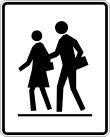
School Crosswalk Sign

Pedestrian Crosswalk Sign
As a pedestrian

The Walking Figure
This indication permits you to leave the curb and enter the roadway. For reasons of efficiency, this indication is only displayed for a relatively short period of time.
The Orange Hand
This indication immediately follows the Walking Figure indication. The Orange Hand provides sufficient time for those pedestrians already in the roadway (pedestrian clearance interval) to complete their crossing. At certain intersections the orange hand may flash during the interval provided for pedestrians to complete their crossing and clear the roadway. Pedestrians facing the Orange Hand indication must not begin to cross the roadway, as there may not be sufficient time to do so safely.
When pedestrians are in a crosswalk facing either the Walking Figure or the Orange Hand indication, they have the right-of-way over all vehicles. However, if the vehicle operator does not yield the right-of-way, the pedestrian will come off second best in any resulting collision. Regardless of the pedestrian signal displayed, the safest practice is for the pedestrian to be sure that all approaching vehicles are stopped before proceeding into or across the roadway. In particular, even if cross-street traffic is stopped, pedestrians should check for turning vehicles.
The length of the pedestrian clearance interval is based upon average walking speed. Consequently, pedestrians must cross the roadway as quickly as possible.

Pedestrian push buttons
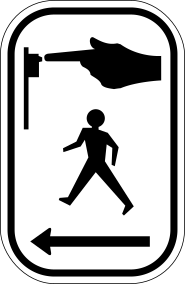
At many intersections controlled by traffic signal lights, pedestrian activity is intermittent. For reasons of intersection operating efficiency, the Walking Figure indication will not be displayed automatically during each signal cycle. To ensure that the Walking Figure indication is displayed and to provide sufficient clearance time to cross the entire roadway, the pedestrian must activate the correct push button. Signs with arrows pointing in the direction of the crosswalk are provided to indicate which push button is associated with each crosswalk.
Pedestrian Safety Tips
The pedestrian signals give you certain rights while you are in an intersection. However, they will not protect you from careless motorists. It’s therefore important to be cautious when crossing busy intersections and to follow these safety tips:
- Don’t leave the curb unless you are sure that approaching vehicles on the cross street have stopped or will stop.
- Cross the street as quickly as possible.
- Always watch for turning vehicles.
- Don’t leave the curb when the Walking Figure is not displayed.
- Always activate the pedestrian push button if there’s one present.
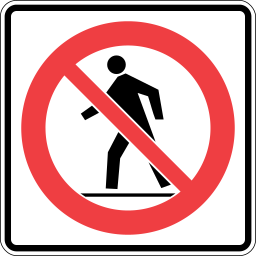
- Don’t cross at places where a Pedestrian Prohibited sign is posted.
Pedestrian Corridors
These feature large, illuminated overhead signs, with alternating flashing amber lights on top. Large rectangular bars are painted on the crossing.
As a driver
- It’s illegal to pass traffic ahead of you that is slowing down or has stopped for pedestrians.
- Make sure the pedestrians have safely crossed the street or have safely reached the median of a divided roadway before proceeding.
- No parking or stopping is allowed within 15 metres of a pedestrian corridor.
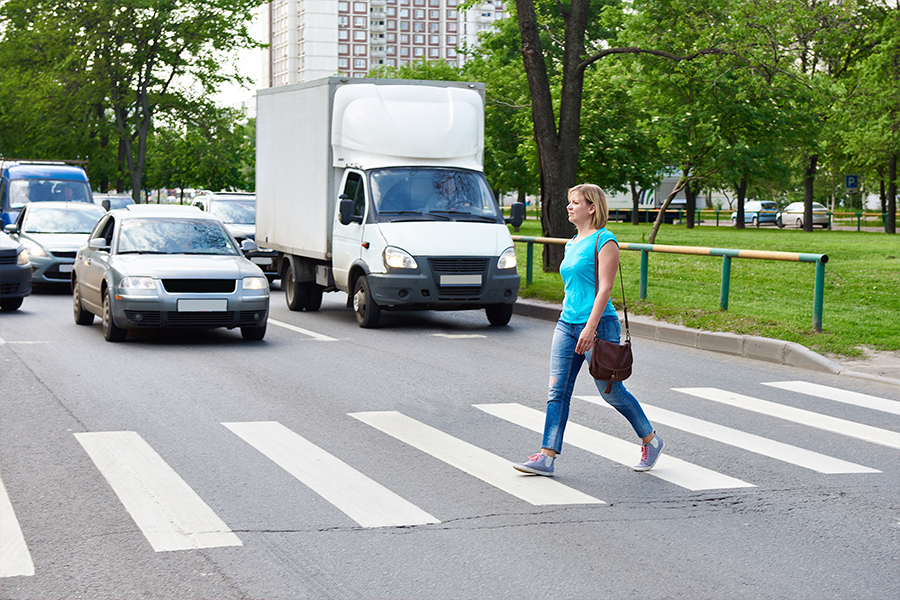
It’s illegal to pass traffic that has slowed down or stopped for a pedestrian.
As a pedestrian
- You should signal your intention to cross a pedestrian corridor by pushing the control button to activate the warning lights (if available) and also by extending your arm forward. Don’t begin to cross unless traffic has stopped or is a safe distance away.
People Who are Blind
Whenever you see a person who is blind near a roadway, drive carefully and be prepared to stop. Often, a blind or partially blind person will raise their cane when uncertain of crossing the street safely. That is your signal to stop and give them the right-of-way. Learn to recognize a guide dog by its special harness which allows the person to hold on firmly. Don’t startle the animal by racing your engine or honking your horn.
If you drive a hybrid vehicle there may be no sound from your engine to let a blind person know that you are nearby. Exercise extreme caution in this situation
School and Playground Areas
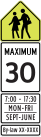
You must drive slowly and be prepared to stop suddenly when a child is on or near a road, or close to a school or playground. It’s illegal to pass another moving vehicle in a school area, within 15 minutes of either the opening or closing of classes or at any time when children are on the school grounds or near the road.
Watch for reduced-speed school zones, where lower speed limits may be in effect during school hours, or at all times, according to the posted signs. The maximum speed may be as low as 30 km/hwhere the regularly-posted speed is less than 80km/h, and as low as 50 km/h where the regularly-posted speed is 80 km/h or above. If you are caught going faster than the posted speed limit you could face a significant fine and move down the Driver Safety Rating scale.
Watch for school safety patrols because they indicate that children are nearby. The patrols are easily recognized by their high visibility vests and flags. They play an extremely important role in directing children across streets.
Watch for members of the school safety patrol. Children are near the roadway

Motorist and Cyclists
Through cooperation and respect, drivers and cyclists can share the road safely. When encountering cyclists on our roadways you should be aware of the three R’s that apply to drivers and cyclists:
- Same Roads: Motor vehicles and bicycles share the same roads.
- Same Rights: When on the road, cyclists have the same rights and duties as a driver, and must obey all signs and traffic control devices.
- Same Rules: Other than the difference in a cyclist’s position on the road, cyclists are expected to follow the same rules of the road as drivers.
Your responsibilities as a driver:
- Take extra caution as some cyclists may not know or follow all the traffic safety rules.
- Reduce your speed when encountering cyclists.
- Leave a safe following distance should the cyclist need to stop suddenly.
- Recognize the hazards that cyclists may face (e.g. debris on the road) and give them plenty of space. Cycling advocacy groups suggest providing at least one metre of clearance when travelling alongside or passing cyclists. Depending on the position of the cyclist in the lane, this may mean changing lanes in order to pass safely.
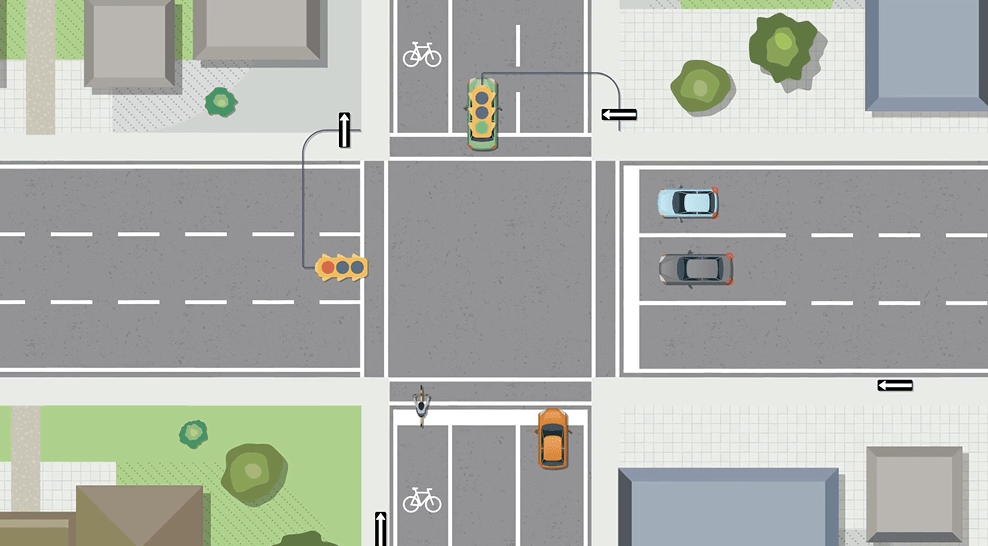
- When turning left, watch for and yield to oncoming cyclists, just as you would to oncoming drivers.
- When turning right, yield to any cyclist travelling on your right. Don’t try to pass a cyclist if you are planning to turn right at the next intersection or driveway.
- Children on bicycles are often unpredictable. Expect the unexpected and slow down.
- Look for cyclists before opening your car doors.
- At night, always dim your lights when approaching an oncoming cyclist.
- Drivers should always be cautious and respectful and provide adequate space to prevent potential collisions with cyclists.

Cyclists are expected to:
- Ride respectfully — the same traffic laws that apply to drivers also apply to cyclists.
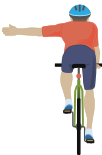
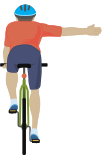
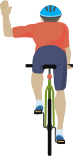
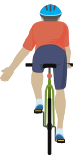
- Use hand signals and eye contact to communicate their actions to motorists.
- Obey traffic control signals and signs.
- Ride in a straight line and refrain from weaving between parked cars.
- Dismount on sidewalks.
- Ride single file when riding with other cyclists.
- Ride as closely as practicable to the right hand boundary of the road.
- Wear a certified helmet.
- Increase their visibility by wearing brightly coloured clothing.
- Use a white front light and a red rear light in low light conditions.
- Not cycle in places where a Cycling Prohibitedsign is posted.

Understanding a Cyclist’s Position on the Road
The Highway Traffic Act indicates that cyclists should position themselves “as close as is practicable” to the right side of the roadway. This means that cyclists are required to exercise good judgment when determining their positioning on the roadway. Drivers need to be aware that a cyclist’s position on the road may be affected by traffic volume, road conditions, weather hazards and municipal lane restrictions.
Drivers can help reduce the number of bicycle and motor vehicle crashes, injuries and fatalities by understanding a cyclist’s positioning on the road. There are certain situations when a cyclist may choose to be further away from the right side of the road or ride closer to the middle of the lane.
Drivers should be aware of these situations, which may include:
- Adverse road conditions such as potholes, puddles or construction
- When passing parked vehicles and additional space is required to stay clear of the door zone
- When making a left turn (The cyclist should be positioned closer to the centre of the turning lane and following the path of a vehicle as they make the turn.)
- When the right lane is intended for right turns only and the cyclist intends to go straight (Cyclists in these situations will carry on in a straight line through the intersection.)
- When there’s slower moving or stopped traffic in the right hand lane (Cyclists are allowed to pass on the left as long as it’s safe to do so, however after completing the pass, the cyclist would then return to the right edge of the lane.)
- When cycling on one-way streets with more than three lanes of traffic
Passing a Cyclist
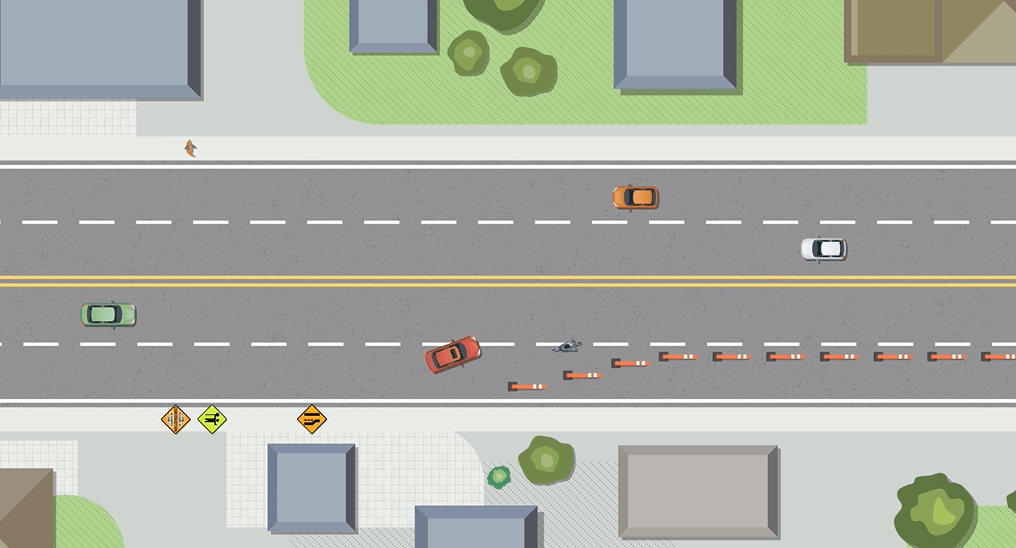
Drivers should pass a cyclist only when it’s safe to do so. Cycling advocacy groups suggest providing at least one metre of clearance. This may require drivers to change lanes in order to pass safely. Extra caution must be exercised and additional space may be required when passing cyclists in highway travel situations.
There are some situations where it’s not safe to pass a cyclist including:
- In construction zones where traffic is reduced to one narrow lane
- In lanes with narrow widths that don’t permit passing at a safe distance
- In a yield lane
Caution and additional space may be required when passing cyclists at high rates of speed.
The Highway Traffic Act does not specify how close cyclists should ride near the right edge of the roadway or the clearance drivers must give a cyclist when travelling alongside or passing them. By using common sense and following the rules of the road, cyclists and drivers can make streets safer for everyone.
Cyclist Signals
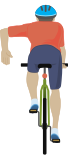
Watch for these hand signals that indicate the cyclist’s intentions. Remember: Many children fail to signal, so always be extra cautious when approaching young cyclists. Their lives are in your hands.
Remember: Many children fail to signal, so always be extra cautious when approaching young cyclists. Their lives are in your hands.
 Apperture Labs