Alcohol
Driving while impaired
Impaired drivers usually fail to recognize they’re impaired. Alcohol or drug impairment delays reaction times, distorts vision and impairs judgment. Combining drugs and alcohol increases the impairment and is very dangerous. Never mix drugs and alcohol — even in small quantities.
Alcohol is a depressant, not a stimulant. It reduces alertness and slows normal reflexes. If you’ve had too much to drink, black coffee, food, a cold shower or fresh air won’t sober you up — only time will eliminate alcohol from your body. Impaired drivers are among the most dangerous, unpredictable individuals on our roads and account for about one-third of all traffic fatalities in Manitoba. That explains why, in this province, the penalties for impaired driving are severe. If your ability to drive is impaired, a charge of impaired driving can be laid regardless of what level of alcohol is found in your blood. Accordingly, the safest rule to follow is: if you drink — don’t drive.
Drugs
Prescription drugs
Tranquilizers, antidepressants, sleeping pills and similar drugs can affect your driving ability even if taken in the prescribed dosage. Accordingly, if you continue to drive while impaired by any medication, you can be charged with driving while impaired. This will result in the same consequences as if you were impaired by alcohol. Discuss the possible effects of any medication with your doctor or pharmacist.
Illegal drugs
Illicit drugs may cause hallucinations, hostility and aggressiveness in addition to dulling normal thought processes and slowing down eye-hand coordination.
Cannabis
Think you’re a better driver when you’re high? Think again. Use of cannabis affects reaction time and concentration and the ability to make safe decisions on the road. Research from a number of sources shows that drivers under the influence of cannabis are at a crash risk that is several times higher compared to sober drivers. This risk increases even more when cannabis and alcohol are combined, enhancing the impairing effects of both.
While cannabis is now legal to use in Canada, it is illegal to drive if you’re impaired by THC. It’s also illegal to:
- Consume cannabis in or on a vehicle while on a public roadway, whether the vehicle is in motion or not.
- Transport cannabis in or on a vehicle, unless stored in a secure compartment such as your vehicle’s trunk.
Drivers convicted of these offences will move down on the DSR scale.
What Can You Do To Prevent Other People from Driving While Impaired?
When you host a party, you can take steps to discourage guests from driving home if they’ve had too much to drink. Here are some suggestions:
- Set up “house rules” that make driving home after drinking not acceptable. Tell your guests about these rules before they arrive. Then they can make alternative plans for going home if they plan to drink.
- Offer guests fruit juices, mineral water and soft drinks as alternatives to alcoholic beverages.
- Don’t serve “one for the road.” It’s a good idea to close the bar at least one hour before the party ends. Encourage guests to stay for a while by serving food and tea, coffee or other non-alcoholic beverages
- Encourage guests to take a vehicle for hire, or arrange for a designated driver.
- Be prepared to have some guests stay overnight if necessary. A little inconvenience and embarrassment (theirs, not yours) are far better than risking impaired driving.
You don’t have to stop with just yourself or family and friends. Those who belong to groups or clubs can challenge other members to share a leading role in preventing impaired driving. Many groups and organizations sponsor parties and other social events where alcohol is served. All members can participate in making sure no one drives after drinking. People can take turns not drinking so they may drive others home.
Impaired Driving is A Crime in All Motor Vehicles
Impaired driving threatens everyone’s safety. Manitoba’s tough laws on driving while impaired apply to all motor vehicles* as well as to situations where a person operates a vessel, an aircraft or railway equipment while under the influence of alcohol or drugs.
*Motor vehicles include infrastructure equipment, agricultural equipment and off-road vehicles.
An off-road vehicle is any motorized vehicle designed and adapted for cross-country travel on land, water, ice, snow, marsh or other natural terrain. Some examples are:
- Snowmobiles
- All-terrain vehicles
- Dirt bikes
Infrastructure equipment and agricultural equipment include:
- Front-end loaders
- Cranes
- Forklifts
- Graders
- Tractors
- Combines
To operate infrastructure equipment or agricultural equipment, a person must hold a valid minimum Class 5 Intermediate Stage driver’s licence. This requirement applies on all provincial trunk highways, provincial roads and highways within the boundaries of a city, town or village.
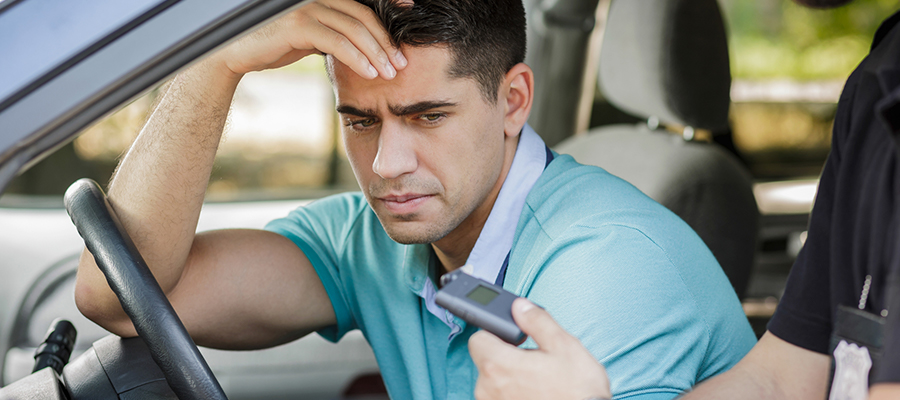
What are the Consequences?
Manitoba continues to have among the toughest penalties for driving under the influence of alcohol or drugs in Canada. Impaired driving is a serious threat to public safety with significant sanctions and consequences.
Drug impairment
Drivers suspected by police of being under the influence of any drug can receive an immediate 24-hour roadside license suspension.
Drug and alcohol restriction
Novice drivers cannot have drugs or alcohol in their system. Anyone who violates this restriction will:
- Receive an immediate 24-hour roadside suspension
- Be subject to an additional suspension from our Driver Improvement and Control Program
- Be required to pay a driver’s licence reinstatement charge
Novice drivers who receive a 24-hour suspension for being under the influence of a drug may also be subject to an additional suspension from our Driver Improvement and Control Program and are required to pay a reinstatement charge.
Tiered Administrative Licence Suspension
Immediate Roadside Prohibition
The Highway Traffic Act has been amended to adopt an immediate roadside prohibitions approach to deal with persons driving under the influence of alcohol. This new approach and tough new sanctions take effect right at roadside, based upon the results of an approved screening device (ASD).
Anyone who operates a motor vehicle with a blood alcohol concentration between .05 and .079, registers a “warn” on an ASD, or fails a drug screening test, physical coordination test or drug recognition evaluation is subject to an immediate Tiered Administrative Licence Suspension.
Tiered Administrative Licence Suspensions are progressively longer suspensions ranging from 72 hours to 60 days depending on how many previous suspensions have been issued to the driver within a 10-year period:
- 72-hour driver’s licence suspension for a first occurrence
- seven-day driver’s licence suspension for a first occurrence with a person under the age of 16 in the vehicle
- 15-day driver’s licence suspension for a second occurrence
- 30-day driver’s licence suspension for a third occurrence
- 60-day driver’s licence suspension for a fourth and subsequent occurrences
Drivers who receive a Tiered Administrative Licence Suspension move five levels down the Driver Safety Rating scale. Drivers who receive this suspension may also be subject to a Driver Improvement and Control intervention. This could range from a warning letter to a further driver’s licence suspension. They would also be required to pay a driver’s licence reinstatement charge.
Drivers receiving two or more suspensions within a 10-year period are also required to complete an Impaired Driver Assessment at the Addictions Foundation of Manitoba at their own expense.
If you fail or refuse an ASD, you may face enhanced roadside sanctions, including an administrative penalty, vehicle impoundment, mandatory Ignition Interlock participation for one year, and movement of 10 levels down the Driver Safety Rating scale.
Three-month Administrative Licence Suspension
You will receive an immediate three-month Administrative Licence Suspension if:
- Your blood alcohol concentration is equal to or over .08
- Your blood drug concentration is over 5 nanograms (ng) of THC
- You register a fail on an ASD
- Your combined blood alcohol concentration is over .05 and blood drug concentration is over 2.5 ng of THC
- You refuse to provide a breath, saliva or blood sample to police
- You refuse to perform a physical coordination test or drug recognition evaluation, or refuse to follow a police officer’s instructions regarding either test
- You have any concentration of illegal drugs in your system
Drivers who receive this suspension move five levels down the Driver Safety Rating scale and are required to pay a driver’s licence reinstatement charge. Additional consequences include:
- Potential charges under the Criminal Code
- Vehicle impoundment
- A mandatory Impaired Driver Assessment at the driver’s expense
- Participation in Manitoba’s Ignition Interlock Program
Criminal Code offences
If you fail or refuse an ASD, you may face enhanced roadside sanctions, including an administrative penalty, vehicle impoundment, mandatory Ignition Interlock participation for one year, and movement of 10 levels down the Driver Safety Rating scale.
Criminal Code offences include:
- Driving, or having care and control of any vehicle while impaired by drugs or alcohol;
- Impaired driving causing bodily harm or death;
- Driving with a blood alcohol concentration equal to or over .08;
- Driving with a blood drug concentration over 5 ng of THC;
- Driving with a combined blood alcohol concentration over .05 and blood drug concentration over 2.5 ng of THC; driving with any concentration of illegal drugs in your system, refusing to provide a breath, saliva or blood sample to the police;
- Refusing to perform a physical coordination test or drug recognition evaluation, or refusing to follow a police officer’s instructions regarding either test.
If a driver is convicted* of an impaired driving-related Criminal Code offence, you will face sanctions such as:
- Moving an additional five, 10 or 15 levels down the Driver Safety Rating scale
- A significant court-imposed fine
- Possible imprisonment
- A court-imposed driving prohibition
- Mandatory driver’s licence suspension under The Highway Traffic Act
- Participation in Manitoba’s Ignition Interlock Program
- Possible vehicle forfeiture
A discharge under the Criminal Code for certain driving related offences may be treated as a conviction under The Highway Traffic Act
Licence Suspension for other Criminal Code Convictions
Driving a vehicle in Manitoba is a privilege. People convicted of certain offences under the Criminal Code will lose that privilege. Some examples of these offences are dangerous driving, criminal negligence, flight from police, auto arson, auto vandalism, taking a vehicle without the owner’s consent, auto theft, possession of property obtained by crime, and possession, selling or purchasing master keys.
A conviction of any of these offences results in an automatic driver’s licence suspension or eligibility to obtain a licence. It also disqualifies you from operating an off-road vehicle. Anyone convicted of any such offence faces a driver’s licence suspension ranging from one year to life. Offenders under 16 years of age will have their suspension start on their 16th birthday.
Note: A discharge under the Criminal Code for certain driving related offenses may be treated as a conviction under The Highway Traffic Act.
Driving While Suspended — The Consequences
Vehicles and off-road vehicles (ORVs) will be immediately impounded for a minimum of 30 days for driving while the person is suspended or prohibited from driving, or if the person is disqualified from operating an ORV.
The vehicle will be impounded even if it’s owned or registered by someone other than the operator at the time of the offence. It’s the owner’s responsibility to ensure that the user is not suspended, prohibited or disqualified. Vehicle owners will be responsible for the costs of towing and storage, plus an impoundment fee, which must be paid before a vehicle is released.
Additional consequences of driving while suspended can include:
- Imprisonment for up to five years and/or fines of up to $2,000
- A non-appealable licence prohibition under the Criminal Code, which means that a work licence cannot be obtained
- A lifetime driver’s licence suspension under The Highway Traffic Act
- Additional driver’s licence premiums once the driver’s licence is reinstated
Drowsiness or Fatigue
Being drowsy or “half asleep” can be compared to a drugged condition which can result in a fatal collision. It usually occurs from steady driving or from having started out tired. Be well rested before you begin your trip. If you start to feel sleepy, stop your vehicle and rest. If you must park by the side of the road, pull well over and put on your four-way flashers to prevent being struck. If possible, stop at a rest area, motel or hotel.
Distractions
The most important thing to think about while driving is… driving. Distracted driving means any activity that diverts your attention from the road. Being distracted, even for just a few seconds, is all it takes to cause a fatal crash. Each year, on average, on Manitoba roads 28 people are killed in collisions linked to distracted driving.*
*Source: Traffic Accident Report Database, 2013-2017
One of the most dangerous of distractions is using a hand-operated electronic device, such as a cellphone, smartphone or tablet, for any reason while driving.
In Manitoba, it’s against the law and being caught using a hand-operated electronic device behind the wheel will result in a three-day licence suspension for a first offence and a seven-day suspension for each subsequent offence. Upon conviction, it will also result in a $672 fine and moving five levels down the Driver Safety Rating scale.
Distractions can be anything that takes your eyes off the road, hands off the wheel or mind off the job of driving. Texting while driving, for example, is extremely dangerous because it does all three. Distractions can happen both inside and outside your vehicle. Some of the most common are using smartphones or tablets, adjusting audio systems, using GPS, interacting with passengers, eating, drinking, smoking and viewing commercial signs.
Driver Improvement and Control Program
The Driver Improvement and Control (DI&C) Program aims to make Manitoba’s roads safer for all. It encourages Manitobans to make safe driving behaviour a habit for a lifetime.
The DI&C Program strives to:
- Rrevent unsafe driving from becoming a habit
- Break unsafe driving habits that are already established
Early intervention is key.
The program can intervene in different ways. How it intervenes depends on the driver and his or her unsafe driving behaviour.
Interventions apply to all drivers
Interventions are based on driver experience and the severity and frequency of the driver’s involvement.
The DI&C Program interventions may include:
- Sending you an advisory letter about your driving
- Sending you a warning letter about your driving
- Requiring you to complete a driver course
- Undertaking a full driving record review with possible driver licence sanctions
The possible outcomes from a full driving record review include:
- A driver’s licence suspension
- Required completion of a driver course or driver examination
- Further restrictions on your driver’s licence
Drivers who don’t complete a required course or exam will have their driver’s licence cancelled and their driver’s licence charges refunded.
How it works
The DI&C Program defines two categories of drivers: novice and experienced.
A novice driver is a driver who has not held a Full Stage driver’s licence for more than one year. This includes drivers who hold Learner or Intermediate Stage licences or are in the first year of a Full Stage licence under the Graduated Driver Licensing (GDL) Program. It also includes learner drivers not under GDL who have never held a Full Stage licence.
An experienced driver is a driver who has held a Full Stage driver’s licence for at least one year.
Different interventions may apply for novice or experienced drivers, depending on how serious the unsafe driving was and how often it occurred. For novice drivers, the interventions begin earlier than for experienced drivers.
For both novice and experienced drivers, the following driving behaviours may lead to interventions under the DII&C Program:
- At-fault collisions
- Traffic convictions
- Serious driving offence charges
- Twenty-four-hour roadside suspensions
- Tiered Administrative Licence Suspensions
None of the interventions under the DI&C Program are based on your age or gender — only on your driving behaviour.
 Apperture Labs