Biological hierarchy

- Organism: Composed of multiple organ systems working in harmony.
- Organ system: Formed by various organs collaborating to perform specific functions.
- Organs: Comprised of diverse tissues functioning together to achieve a single purpose.
- Tissues: Collections of similar cells performing a common role.
- Four primary tissue types: epithelial, connective, nervous, and muscular.
- Cells: The basic unit of life and the foundation of all tissues.
- Chemicals: Essential for constructing cells. Key macromolecules crucial for life include carbohydrates, proteins, lipids, and nucleic acids.
Carbohydrates (sugars and starches)
- Monosaccharides (simple sugars): Composed of chains typically containing 3, 4, 5, or 6 carbon atoms. Examples include glucose and fructose.
- Disaccharides: Formed by combining two monosaccharides through a synthesis process. Example: sucrose.
- Oligosaccharides: Consist of a small number of linked monosaccharides, found on cell membranes where they play a role in cell recognition.
- Polysaccharides: Made up of many linked monosaccharides. Example: glycogen, which is stored in the liver and muscles in animals.
Lipids
- Serve as key macromolecules for structure, energy storage, and hormones.
- Composed of carbon and hydrogen atoms arranged in “fatty-acid chains.”
- Four main types (all water-insoluble):
- Fats and oils: Consist of a glycerol backbone with three fatty acids; provide energy storage, cushioning, and insulation.
- Waxes: Comprise long fatty acid chains linked to alcohols; hydrophobic and help organisms remain dry.
- Phospholipids: Two fatty acid chains attached to a phosphate group; form the semipermeable membrane around cells.
- Steroids: Contain a four-ring structure; act as chemical messengers, such as cholesterol, sex hormones, and adrenal cortex hormones.
Proteins
- Made of long chains of amino acid monomers connected by covalent “peptide bonds.”
- Varied shapes and functions include:
- Fibrous proteins (e.g., keratin, collagen): Hydrophobic, water-insoluble, form structures like hair and nails.
- Globular proteins (e.g., hemoglobin, antibodies, enzymes): Hydrophilic, water-soluble, involved in transport and defense.
- Cell membrane proteins: Facilitate transport or signal transmission.
- Enzymes (e.g., pepsin): Speed up biochemical reactions without being consumed.
Nucleic Acids (DNA and RNA)
- Polymers consisting of linked nucleotides.
- Contain carbon, hydrogen, oxygen, nitrogen, and phosphorus.
- Composed of three parts: a nitrogenous base, a sugar molecule, and a phosphate group.
The Cell and It’s Components
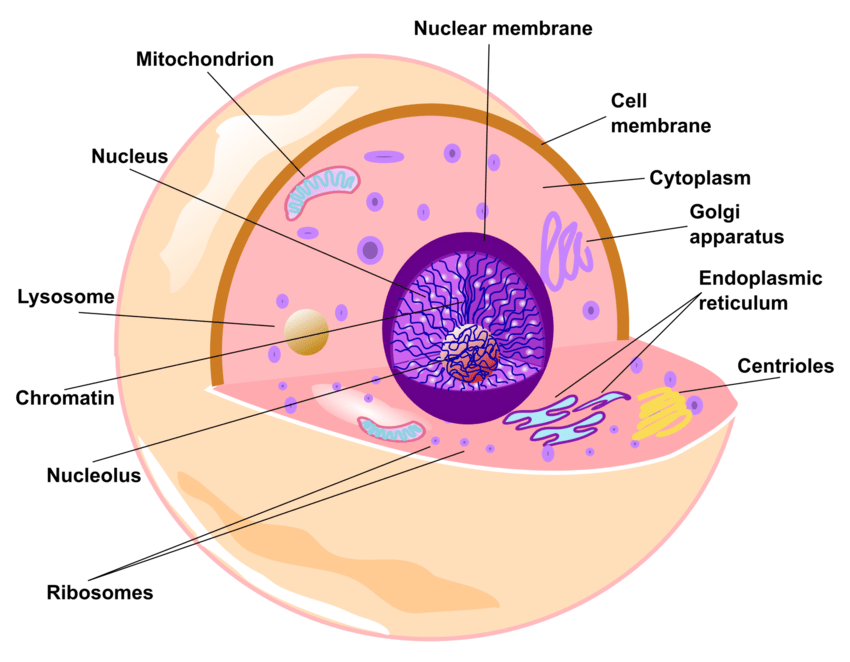
- Cell membrane: Also called the plasma membrane; a selectively permeable barrier that regulates and maintains the cell’s internal environment.
- Cytoplasm: The gel-like fluid within the cell, providing structural support and suspension for organelles and molecules.
- Golgi apparatus: Responsible for modifying, packaging, and distributing protein and lipid molecules.
- Lysosome: Acts as the cell’s waste disposal system, breaking down and recycling old cellular components while defending against invading viruses and bacteria.
- Mitochondrion: Often called the “powerhouse of the cell,” it produces chemical energy in the form of ATP molecules.
- Nucleus: Houses DNA and governs the cell’s activities.
- Nucleolus: Facilitates the assembly of RNA and proteins to form ribosomes.
- Ribosome: Responsible for protein synthesis.
- Rough Endoplasmic Reticulum (Rough ER): Involved in protein synthesis and processing; studded with ribosomes.
- Smooth Endoplasmic Reticulum (Smooth ER): Specializes in lipid synthesis, detoxifies harmful substances, and lacks ribosomes.
- Vacuole: Stores various substances, including water, carbohydrates, and toxins.
Mitosis
A single cell divides to create two daughter cells that are genetically identical.
Purpose: Facilitates tissue growth and repair.
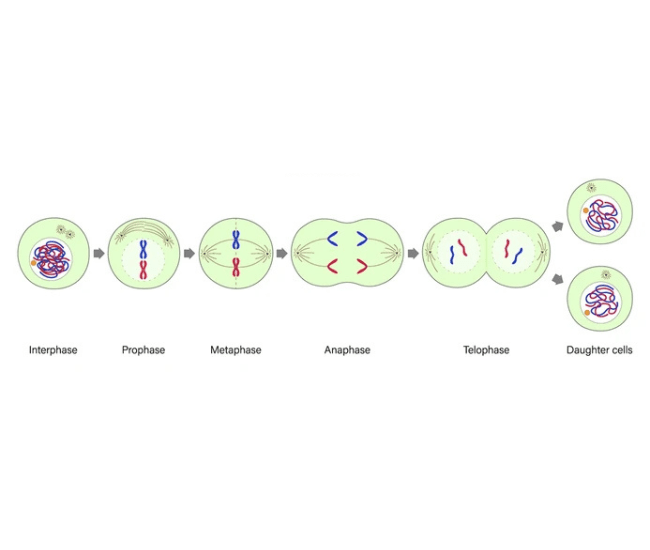
- Interphase: The cell’s DNA is duplicated.
- Prophase: Chromosomes condense, becoming visible as distinct structures.
- Metaphase: Chromosomes align at the cell’s equator.
- Anaphase: Chromosomes are pulled to opposite poles as cell division commences.
- Telophase: Two nuclei form within the dividing cell.
- Outcome: Cytokinesis completes the process, producing two distinct daughter cells.
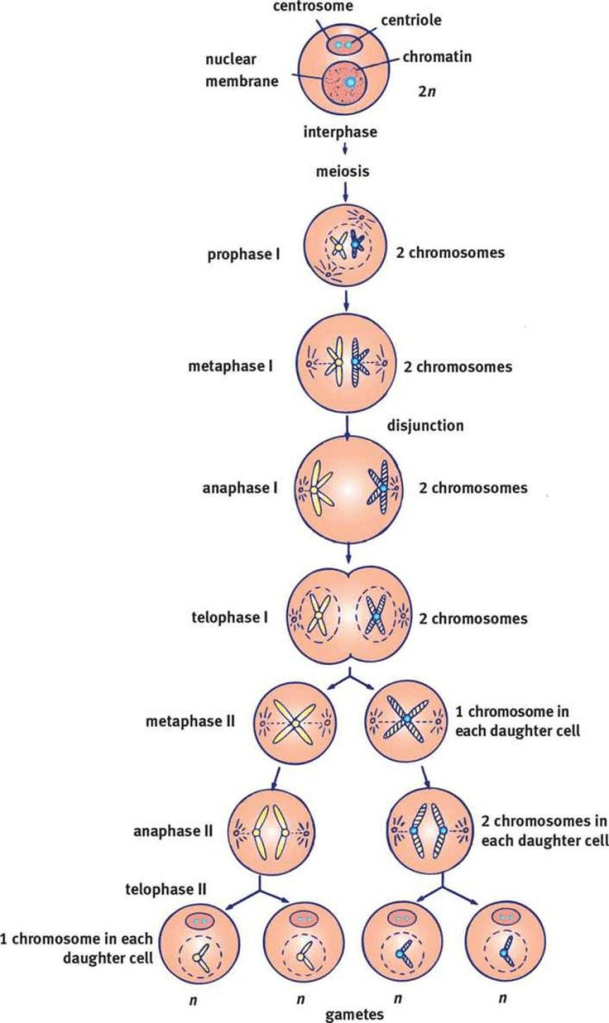
A germ cell undergoes two consecutive divisions, resulting in four gametes (sex cells).
Objective: Creation of sex cells.
Each gamete possesses half the genetic material of the original germ cell.
Prometaphase: The nuclear envelope disintegrates.
Zygote: Formed when two gametes fuse, combining genetic material from each parent to achieve the correct chromosome number.
Genetic Material
- Chromosomes: Structures that hold genetic material, tightly wound around proteins.
- Prokaryotes (e.g., bacteria): Lack a nucleus and possess a single, circular chromosome.
- Eukaryotes: Contain a nucleus with linear chromosomes.
- Chromosome composition: DNA strands coiled around histone proteins.
- Humans possess 23 pairs of chromosomes, totaling 46 individual chromosomes.
- Genes: Segments of DNA that encode instructions for producing proteins. Humans have approximately 25,000 genes.
DNA
DNA (deoxyribonucleic acid): A large molecule housing genetic instructions for protein synthesis, structured in a double-helix form resembling a twisted ladder.
The helix backbone consists of alternating deoxyribose sugar and phosphate groups.

The four nucleotide bases include:
- A (adenine)
- T (thymine)
- G (guanine)
- C (cytosine)
Nucleotide bases form specific pairings: A (adenine) bonds with T (thymine) via two hydrogen bonds, while G (guanine) pairs with C (cytosine) through three hydrogen bonds.
Codon: A trio of nucleotides that encodes a particular amino acid or serves as a stop signal during protein synthesis.
Anticodon: The complementary sequence to a codon, formed by matching base pairs (e.g., if the codon contains A, the anticodon will have T).
Chromatids: Two identical strands of DNA produced prior to the replication process.
RNA
RNA (ribonucleic acid): a single strand of nucleotides that copies genetic instructions from DNA and regulates protein production.
Three RNA types:
- Messenger RNA (mRNA): carries a genetic copy from DNA.
- Transfer RNA (tRNA): delivers amino acids from the cytoplasm to the ribosome.
- Ribosomal RNA (rRNA): oversees the process of translating mRNA into proteins.

The nucleotides are identical, except for thymine, which is replaced by uracil (U).
• Protein production: the process of generating protein molecules. RNA is more compact than DNA, allowing it to exit the nucleus and transport information to the cytoplasm.
• Takes place in two phases:
- Transcription: the process of copying DNA into RNA.
- Translation: the process where RNA is utilized to synthesize proteins.
Genetics and Inheritance
Inheritance: the transfer of characteristics from parents to their offspring.
Mendel’s Three Laws of Heredity (formulated by Gregor Mendel): a framework explaining how traits are passed down, established through Mendel’s experiments involving crossbreeding pea plants with distinct traits.
Law of Segregation: Each hereditary factor exists in pairs, and these factors separate and recombine randomly during fertilization, ensuring that offspring inherit one factor from each parent.
- Genotype: the genetic makeup consisting of two alleles for each gene.
- Homozygous genotype: having two identical alleles for a particular gene.
- Heterozygous genotype: having two different alleles for a specific gene.
- Phenotype: the observable traits or characteristics expressed by the genes, such as eye color, hair color, or blood type.
Law of Independent Assortment: Similar to the Law of Segregation, this principle states that pairs of traits separate during gamete formation and recombine randomly, ensuring that different traits have an equal chance of being inherited together.
Law of Dominance: When two alleles for a gene are present, the dominant allele will be expressed in the offspring, overriding the recessive allele. If both alleles are recessive, either one may be expressed.
- Allele: A variant form of a gene that arises due to mutation, with each gene typically having two alternative alleles.
Punnet Square
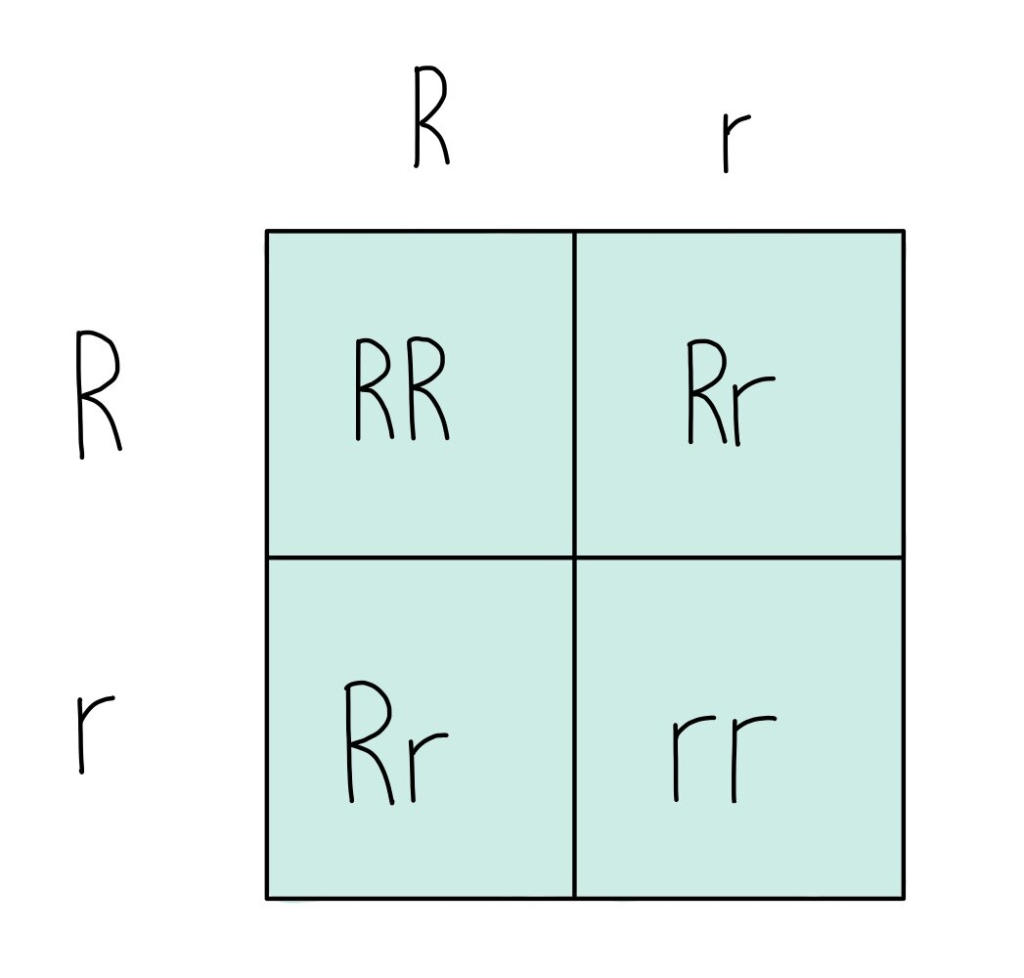
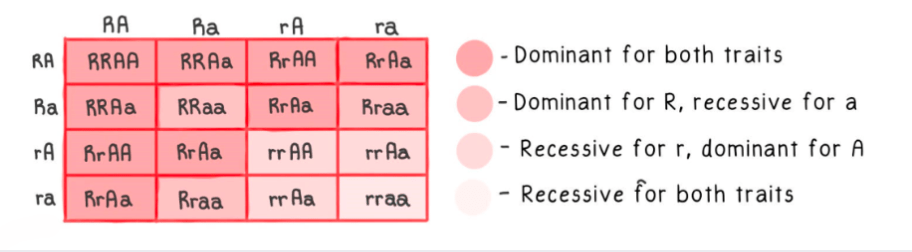
Punnett Square: a diagram used to predict the probability of inheriting specific traits from parents to offspring.
- Uppercase letters represent dominant alleles
- Lowercase letters represent recessive alleles
Disease and Infection
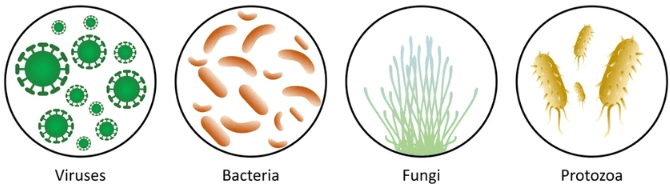
Microorganisms (Microbes)
- Tiny living entities invisible to the naked eye.
- Play key roles in oxygen production, material decomposition, plant nutrient provision, and human health maintenance.
Bacteria
- Single-celled organisms capable of causing illnesses (e.g., tuberculosis, food poisoning) but can also be beneficial.
- Structure: Unicellular, lacking a nucleus (prokaryotic).
- Identification: Differentiated by variations in cell wall composition.
Viruses
- Infectious agents that invade host cells to replicate, causing diseases like influenza, measles, mumps, HIV, and COVID-19.
- Structure: Noncellular, consisting of a nucleic acid core (DNA or RNA) enclosed in a protein shell.
- Classification: Not considered living organisms.
Protozoans
- The largest group of organisms, consuming other cells and responsible for diseases such as dysentery, malaria, and sleeping sickness (African trypanosomiasis).
- Structure: Single-celled with a nucleus (eukaryotic).
Fungi
- Include mushrooms, molds, and yeasts, which decompose organic materials and sometimes cause human diseases (e.g., asthma, athlete’s foot, ringworm, lung or bloodstream infections).
- Structure: Eukaryotic (possess a nucleus).
Animals (Parasites)
- Larger organisms, visible to the naked eye, inhabiting different parts of the body. Examples include tapeworms (intestines) and roundworms (gastrointestinal tract and lymphatic system).
Infectious Diseases
- Also called communicable diseases.
- Transmitted through skin contact, droplets, shared surfaces, or bodily fluids.
- Caused by pathogens like bacteria, viruses, and protozoans.
- Examples: Cholera, chickenpox, COVID-19.
Non-Infectious Diseases
- Cannot be transmitted to others and remain confined to the affected individual.
- Not caused by microorganisms but by factors like aging, nutritional deficiencies, gender, or lifestyle.
- Examples: Diabetes, cancer, asthma.
Microscopes
Light Microscopes
- Rely on a light source and can observe living cells.
- Examples: Bright-field, dark-field, phase-contrast, fluorescence, confocal scanning laser (CSLM), and differential interference contrast (DIC) microscopes.
Electron Microscopes
- Use electron beams for imaging, providing higher resolution but unsuitable for observing living cells.
- Magnification: Up to 150,000 times the specimen’s size.
- Examples: Transmission electron microscope (TEM) and scanning electron microscope (SEM).
 Apperture Labs